

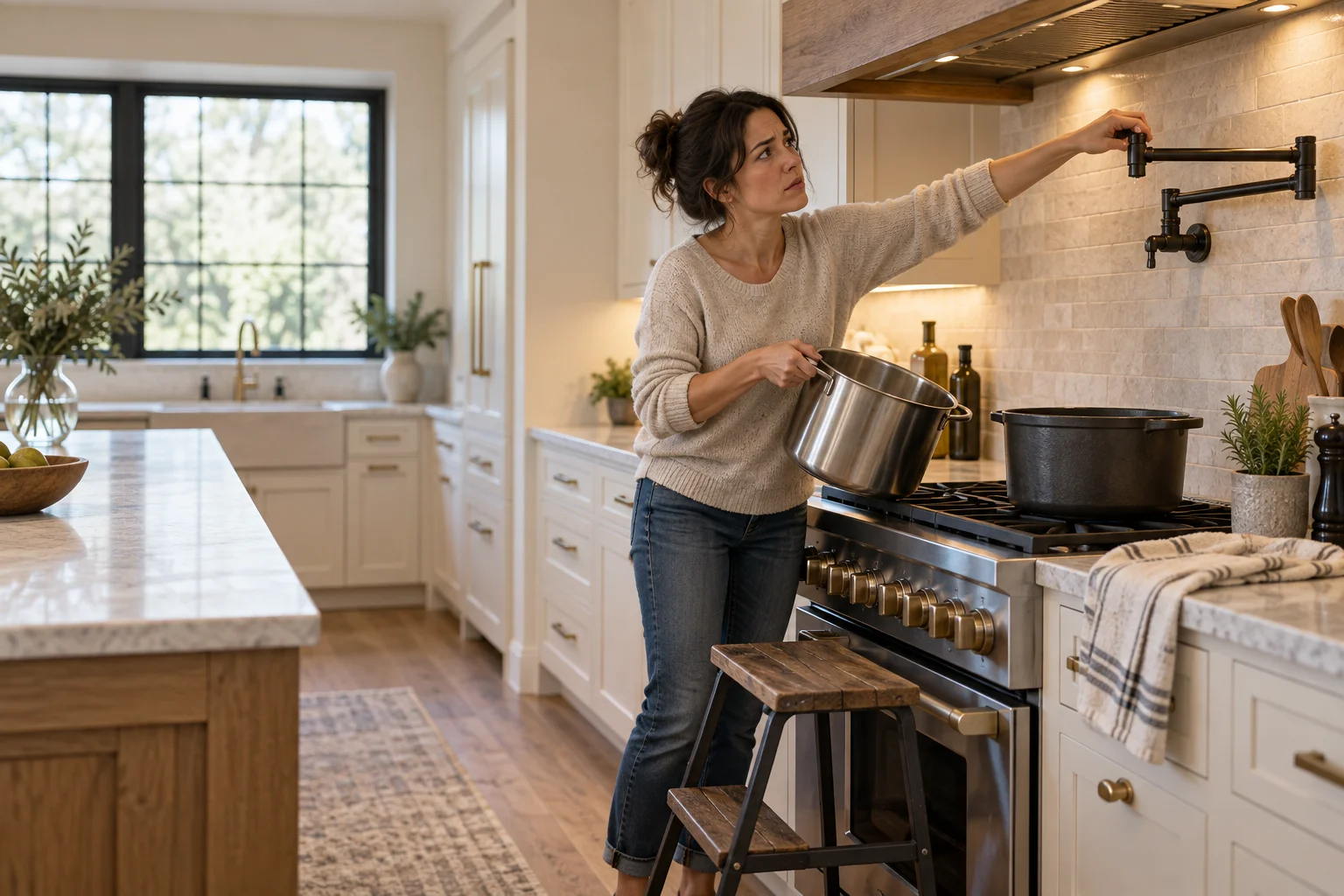
Pot filler regret can happen when a kitchen feature that looked luxurious in photos becomes difficult to clean, costly to maintain, or rarely used. A pot filler gives you water near the range, which can feel convenient when you cook pasta, soups, stocks, or large meals. But it also introduces another water line, another faucet, and another possible leak location above the cooking surface.
For some Ontario and Rancho Cucamonga homeowners, a pot filler becomes a favorite kitchen feature. For others, it becomes an expensive decoration. This guide explains the practical pros and cons, the common reasons for pot filler regret, and how to decide whether it belongs in your kitchen remodel.
Why pot filler regret happens after a kitchen remodel
A pot filler solves one specific problem. It lets you fill a heavy pot at the stove instead of carrying it from the sink. That sounds simple, but the feature only adds value when your cooking habits and kitchen layout support it.
Many homeowners experience pot filler regret because they selected the feature based on appearance instead of daily use. The faucet may look elegant against a tile backsplash, yet the homeowner may cook large pots only a few times each month.
Before adding one, ask:
- Do you regularly fill large pots with water?
- Do you have a large household or entertain often?
- Is your sink far from the range?
- Do you often cook pasta, soups, stews, or stock?
- Will more than one person use the kitchen?
- Do you want another fixture to clean and maintain?
- Does the feature improve your routine enough to justify the plumbing work?
A pot filler should solve a real kitchen problem. It should not become a design decision you regret after the first few months.
The faucet does not replace the sink
A pot filler adds water, but it does not drain the pot. After cooking, you still need to move hot water, food, and cookware to the sink or use a safe draining method.
This limitation surprises some homeowners. Filling a pot at the range can reduce one heavy lift, but the return trip remains. If your main concern involves carrying hot, heavy cookware, a pot filler may solve only half the problem.
The feature can become visual clutter
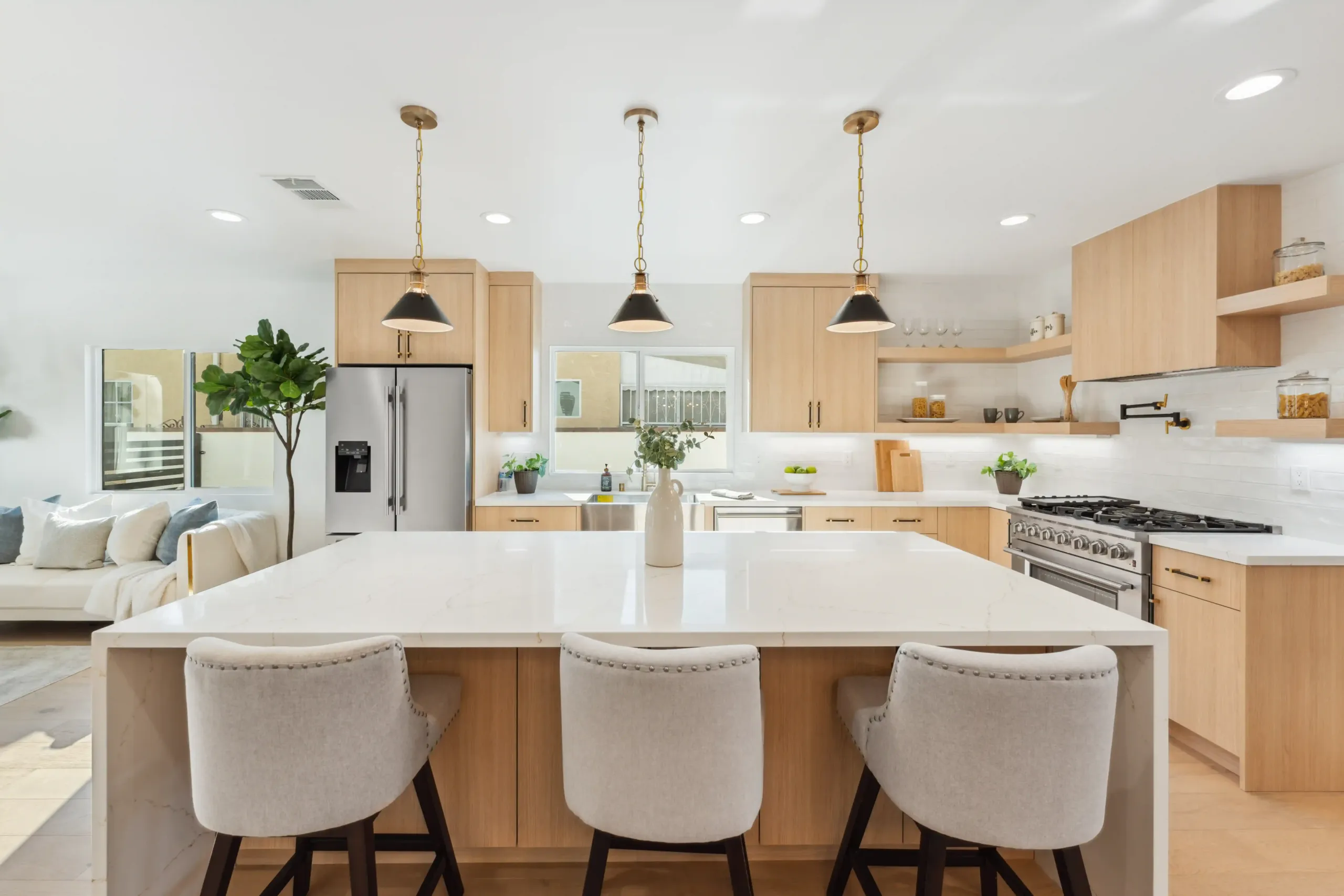
A kitchen range wall often includes a hood, backsplash, lighting, outlets, tile details, and decorative shelving. Adding a large faucet can make the focal wall feel crowded.
A pot filler may work best in a spacious kitchen with a clear wall area. In a compact kitchen, it can compete with the range hood and make the backsplash feel busy. Select the faucet only after you finalize the hood, tile layout, upper cabinets, lighting, and range size.
Pot filler regret and the risk of leaks
Every plumbing fixture can leak. A pot filler adds a water connection inside or behind the wall near the range, which means a future issue may require access to finished materials.
A quality installation can reduce risk, but no fixture eliminates it. Homeowners should understand that a pot filler includes moving parts, seals, handles, joints, and a water supply connection.
A small drip can become a bigger problem
A slow drip may stain grout, damage drywall, affect cabinetry, or create moisture behind the range. Grease and cooking residue can make a small leak harder to notice.
Check the faucet regularly for:
- Dripping from the spout
- Moisture around the wall plate
- Water marks on backsplash tile
- Loose handles or joints
- Reduced water flow
- Discoloration near the wall
- Water collecting behind the range
Do not ignore a small leak because the faucet receives limited use. Early repair usually costs less and protects the surrounding finish work.
Cleaning takes more effort than expected
A pot filler sits above the cooking surface, where steam, oil, grease, and food splatter collect. Unlike a sink faucet, you may not wipe it every day.
The jointed arms can collect grease around hinges and corners. Matte black, brass, chrome, and brushed finishes each show residue differently. Before choosing a finish, ask how it will look after regular cooking.
Choose a model with accessible surfaces and avoid overly complex shapes if you want easier cleaning.
Pot filler regret can start with the plumbing plan
A pot filler needs more than a beautiful faucet. It needs a properly planned water line, secure wall support, accessible shutoff strategy, and coordination with the range wall design.
Confirm the water line before closing the wall
During a kitchen remodel, the contractor may need to open walls, relocate electrical lines, move framing, adjust insulation, and coordinate plumbing. Adding a pot filler after the backsplash and cabinets are complete can require costly demolition.
Talk with the remodeling team early about:
- Water supply route
- Wall depth
- Framing and blocking
- Backsplash material
- Range hood vent path
- Electrical locations
- Access for future maintenance
- Local permit requirements
- Range manufacturer guidance
A licensed plumber and remodeling contractor should review the exact fixture specifications before rough plumbing begins.
For a permitted remodel, review WM Construction’s Ontario CA kitchen remodeling permit guide before finalizing kitchen features and construction scope.
The wall location matters
The faucet needs to reach the center of the pot without hitting the range hood, backsplash features, cabinets, or cookware. The faucet arm also needs room to fold against the wall when not in use.
Measure the following:
- Height above the cooktop
- Distance from the pot center
- Range width and burner locations
- Hood depth
- Backsplash pattern
- Distance from upper cabinets
- Clearance for handles and moving arms
Do not assume every pot filler fits every range wall. Print the fixture specifications and use painter’s tape to mark the size on the wall before installation.
When a pot filler makes sense
A pot filler can work well when the kitchen supports it and the homeowner will actually use it.
It may be a good choice when:
- You cook large pots several times each week
- Your kitchen has a long distance between sink and range
- You have a large household
- You frequently host family meals
- You want to reduce lifting while filling cookware
- Your range wall has enough visual and physical space
- You accept regular cleaning and maintenance
- Your remodel already includes wall access for plumbing
A pot filler can also add a custom look in a high-end kitchen. However, it should not take priority over practical upgrades such as better lighting, ventilation, storage, durable countertops, a functional sink, or a well-designed workflow.
How to avoid pot filler regret before buying
Study your real cooking habits
For two weeks, notice every time you fill a pot. Record the pot size, how far you carry it, how often you cook, and whether you actually struggle with the task.
If you fill a stockpot only a few times each year, a pot filler may not provide enough daily value. If you cook frequently for a large family, it may save time and effort.
Design decisions should reflect the way you live, not only the way a kitchen looks online.
Choose function before finish
Select the faucet based on reach, controls, build quality, cleaning access, and serviceability before you choose the color.
Ask these questions:
- Does the faucet reach the burners you use most?
- Can you operate it with wet or greasy hands?
- Can you easily clean around the joints?
- Does the finish match your cleaning routine?
- Can a plumber obtain replacement parts?
- Does the manufacturer provide clear installation instructions?
- Does the faucet fold back securely?
- Can you shut off water confidently after each use?
A high-end finish does not guarantee a better daily experience.
Plan a full kitchen budget
The fixture cost represents only one part of the decision. Your budget may also include plumbing, wall opening, blocking, waterproofing, tile work, installation, trim, permit coordination, and possible future repairs.
Request a written scope that identifies every item. This approach helps you avoid adding a feature without understanding the complete cost.
Use WM Construction’s guide to comparing contractor bids to identify missing allowances and unclear scope items before construction begins.
Consider alternatives
A pot filler is not the only way to improve kitchen convenience. Depending on your layout, you may gain more value from:
- A larger sink
- A high-function pull-down sink faucet
- Better clearance around the sink
- A prep sink
- Improved counter space beside the range
- Pull-out storage for heavy pots
- A more efficient kitchen layout
- A wider walkway between sink and range
If the kitchen already has a short, clear path from sink to range, another plumbing fixture may not add much benefit.
Pot filler regret in small kitchens
Small kitchens need every wall and counter surface to work hard. A pot filler can pull attention toward a limited backsplash area and use funds that might improve storage, ventilation, or lighting.
In a smaller kitchen, first prioritize:
- A practical sink location
- Efficient storage for pots and pans
- Strong range ventilation
- Adequate task lighting
- Durable and easy-to-clean finishes
- Clear circulation space
- A functional dishwasher location
Once those elements work well, decide whether the pot filler adds meaningful value.
Kitchen investments can support comfort and resale, but no individual fixture guarantees a higher selling price. For a broader view of how improvements can affect buyer interest, read WM Construction’s article on the remodeled home price premium.
What to do if you already regret your pot filler
Repair a leak quickly
Call a qualified plumber if the faucet drips, loses pressure, or shows moisture at the wall. Do not rely on repeated tightening or temporary sealant without identifying the source.
Document any damage before repairs begin, especially when water reaches drywall, cabinetry, tile, or electrical components.
Improve your cleaning routine
Use a non-abrasive cleaner recommended for the finish. Wipe the faucet after heavy cooking and check the joints regularly. Avoid harsh products that can damage specialty finishes.
A simple routine can prevent grease buildup and make the fixture look intentional instead of neglected.
Change the visual balance
If the faucet feels too prominent, you may improve the appearance through surrounding design changes. A larger statement hood, simpler backsplash, adjusted lighting, or fewer open shelves can help rebalance the wall.
Do not add more decoration simply to distract from the faucet. A cleaner design often works better.
Remove the pot filler when necessary
Removal may make sense when the fixture leaks repeatedly, blocks a redesign, no longer fits the kitchen style, or adds stress without real use.
A contractor should inspect the wall before removal. The work may include plumbing capping, wall repair, tile replacement, repainting, and backsplash matching. Keep spare tile from every kitchen remodel when possible because exact replacements may become unavailable.
How WM Construction can help with kitchen planning
WM Construction Co. serves Ontario, Rancho Cucamonga, and Inland Empire homeowners with kitchen remodeling, layout planning, cabinetry, countertops, flooring, tile, and coordinated construction services.
The team can help evaluate:
- Existing kitchen workflow
- Sink-to-range distance
- Pot filler location
- Wall and plumbing access
- Range hood coordination
- Backsplash layout
- Storage requirements
- Permit considerations
- Overall budget and scope
WM Construction does not recommend a feature simply because it appears in current kitchen trends. The best remodel supports how the homeowner cooks, cleans, entertains, and uses the home every day.
Frequently asked questions
What causes pot filler regret
Pot filler regret often comes from low daily use, difficult cleaning, leak concerns, crowded range walls, expensive plumbing changes, and choosing appearance over kitchen workflow.
Are pot fillers likely to leak
Any plumbing fixture can leak over time. A quality fixture and professional installation can reduce risk, but homeowners should inspect the faucet and wall area regularly.
Is a pot filler worth it for a small kitchen
It depends on your cooking habits and layout. In many small kitchens, storage, ventilation, lighting, and sink function may provide greater daily value than a pot filler.
Does a pot filler make cooking easier
It can make filling large pots easier when the sink sits far from the range. It does not eliminate the need to drain or clean heavy cookware at the sink.
Can I add a pot filler after my kitchen remodel
You may be able to add one later, but the work can require opening finished walls, relocating plumbing, and repairing backsplash materials. Planning it before construction usually offers more control.
Should I choose a pot filler with multiple shutoffs
Discuss fixture design, controls, and shutoff access with a licensed plumber. Choose a quality model that you can operate confidently and maintain according to the manufacturer’s instructions.
Can WM Construction install or remove a pot filler
WM Construction can evaluate the kitchen conditions and include accepted plumbing coordination, wall work, tile repair, and related remodeling scope in a written proposal.
Final pot filler regret checklist
Before adding a pot filler, confirm that you have:
- Studied your actual cooking routine
- Measured the range wall and faucet reach
- Planned the range hood and backsplash
- Confirmed plumbing access
- Chosen a serviceable fixture
- Considered cleaning requirements
- Reviewed local permit needs
- Priced the complete installation
- Compared practical alternatives
- Planned future maintenance access
- Received a detailed written scope
- Selected the feature for function, not only appearance
Pot filler regret becomes less likely when the fixture supports a real daily need, fits the range wall, and receives proper plumbing coordination. If the faucet only adds visual appeal, consider investing that budget in ventilation, storage, lighting, or workflow improvements that benefit the kitchen every day.
To discuss a kitchen remodel in Ontario, Rancho Cucamonga, or the Inland Empire, contact WM Construction or call +1 (909) 906-6166.