Introduction
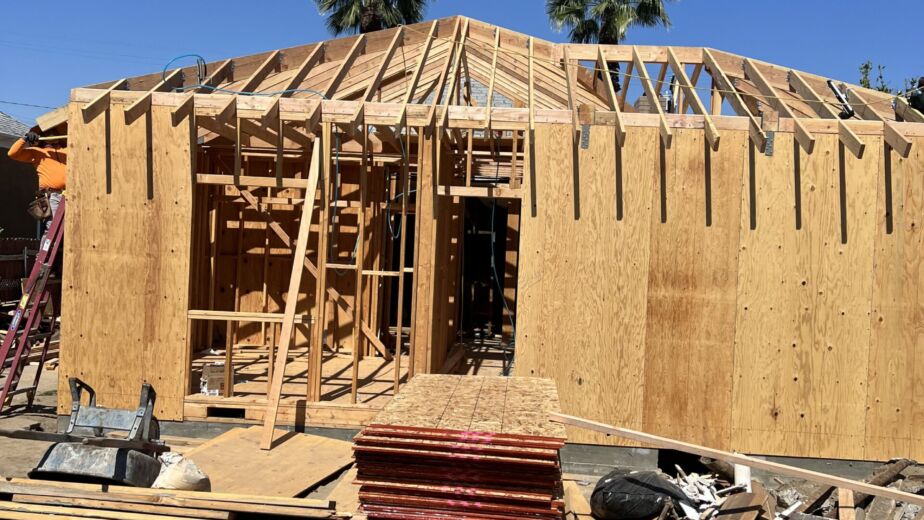
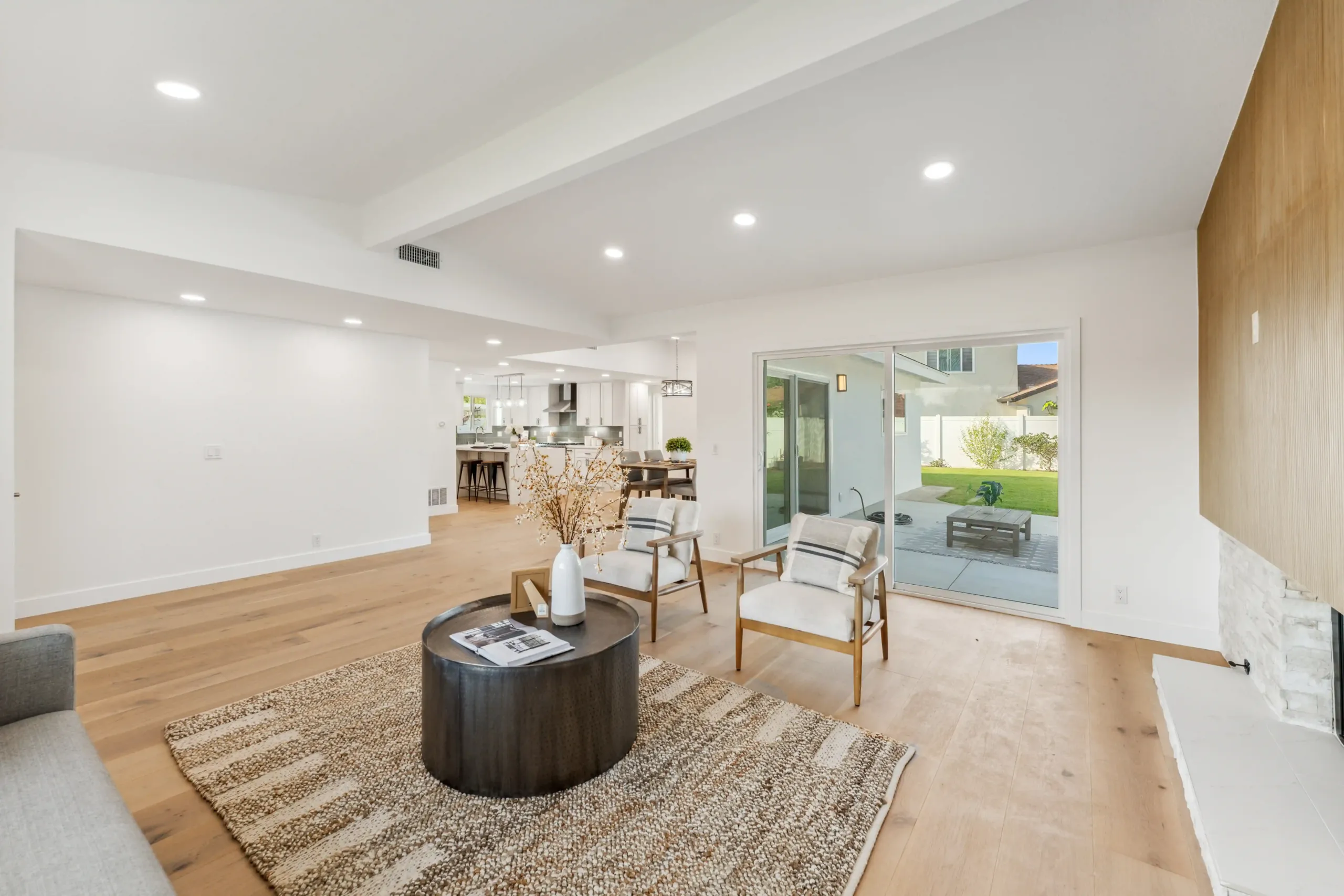
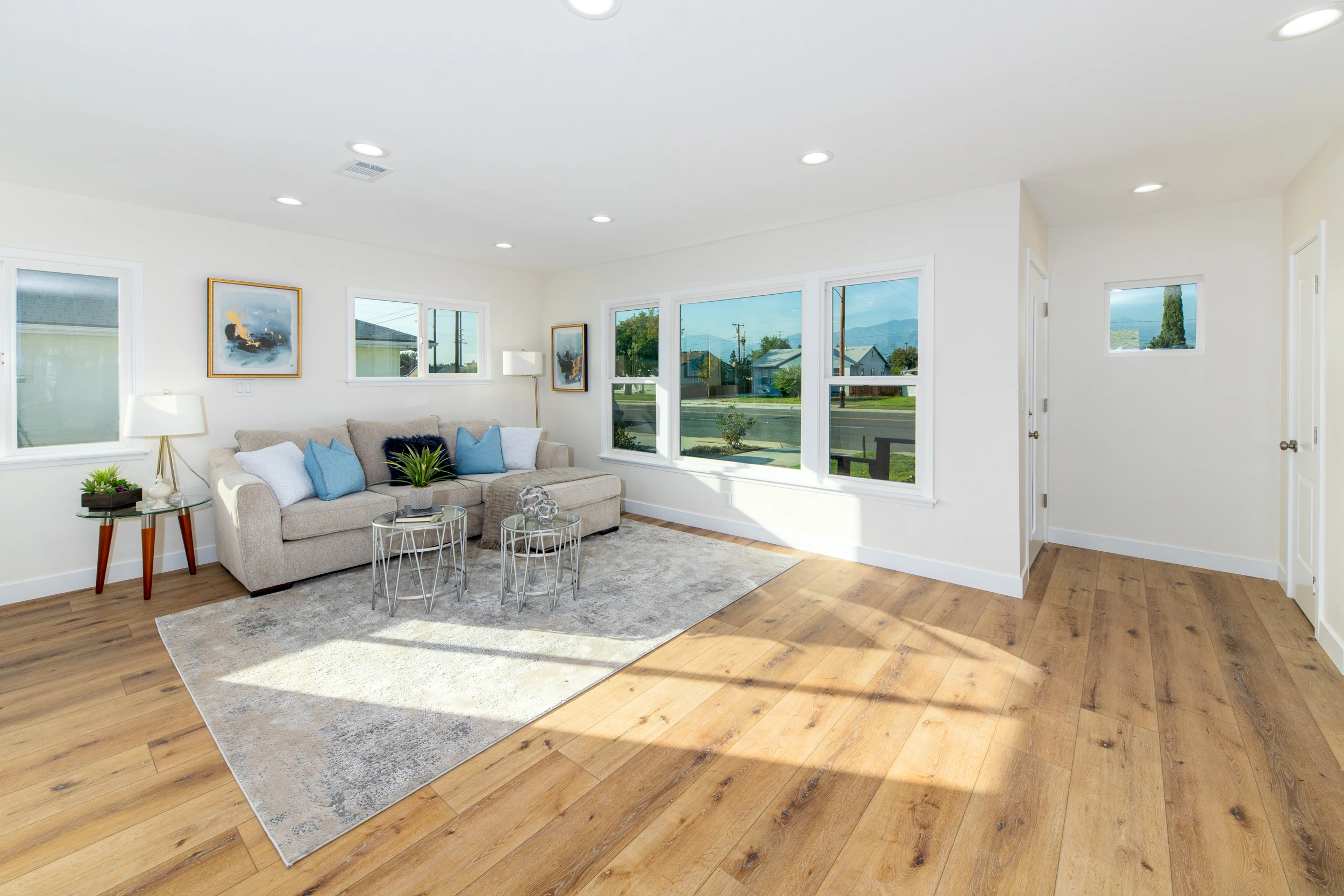
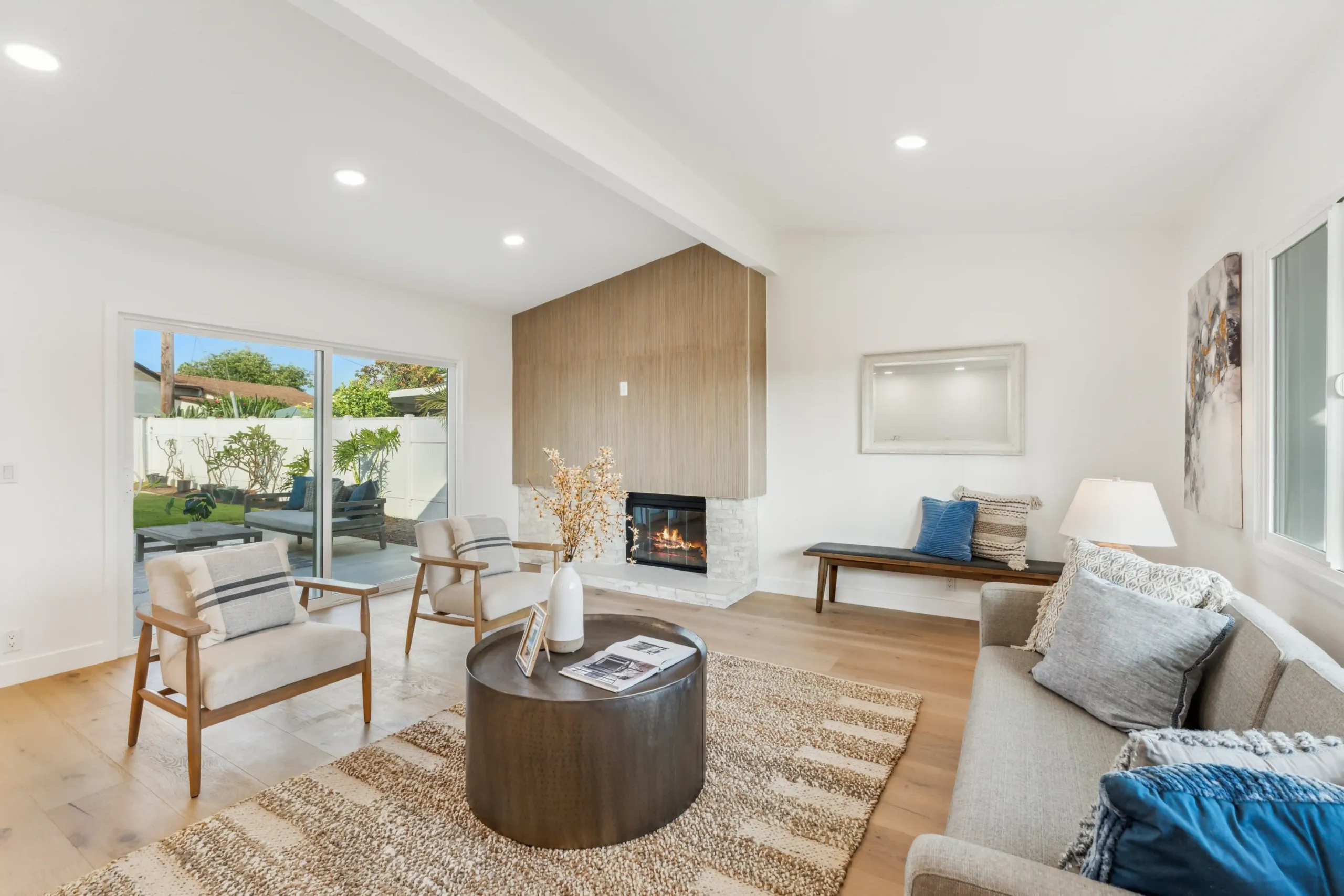
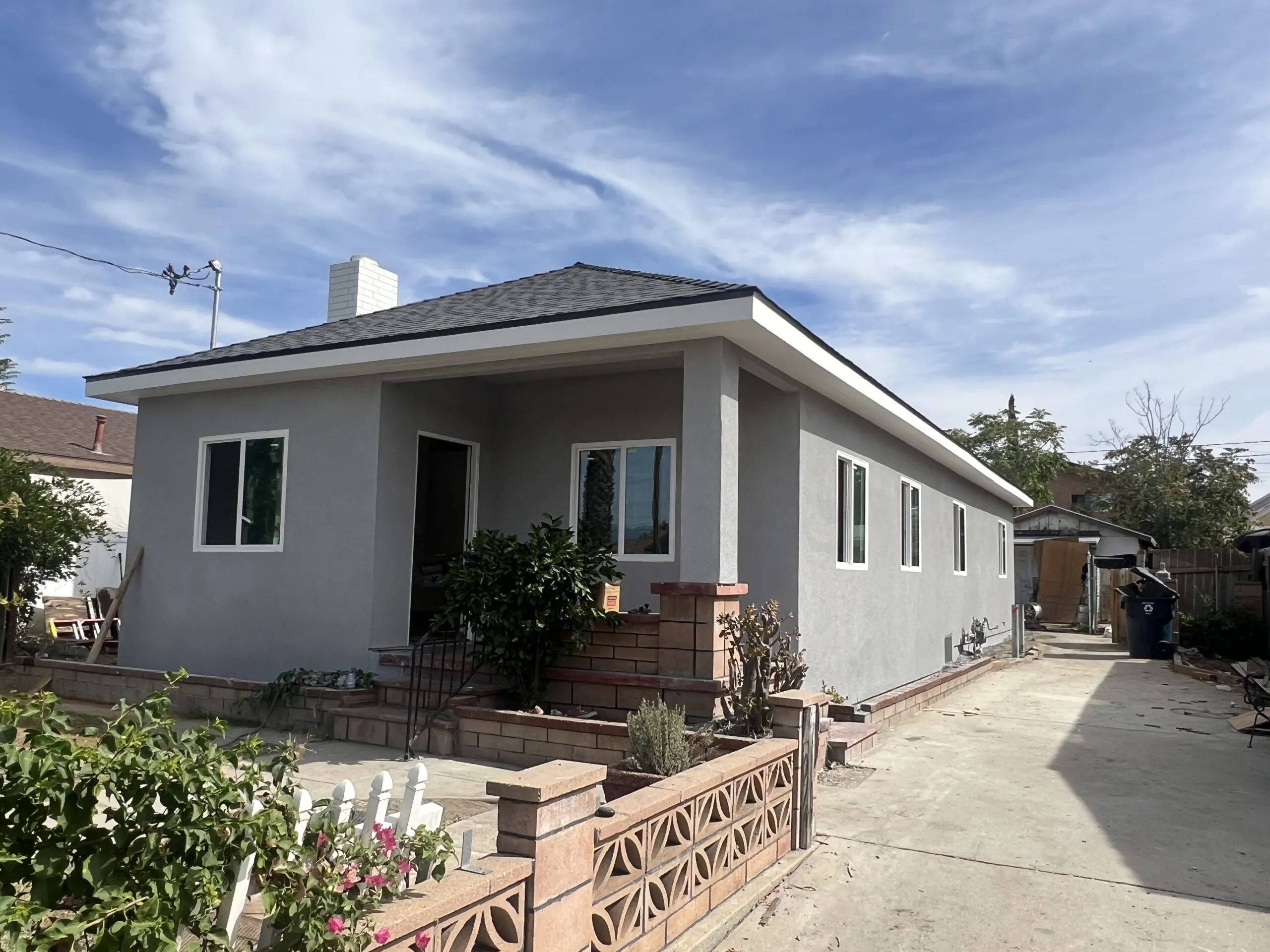
ADU home addition projects transform underutilized property space into valuable living areas that generate rental income, accommodate family members, or provide flexible workspace. Accessory Dwelling Units (ADUs) offer efficient property expansion solutions for homeowners in Rancho Cucamonga, Ontario, and throughout San Bernardino County who need additional space without relocating to larger properties.
ADU home addition projects have surged in popularity as California streamlined ADU regulations, making permits easier to obtain while housing costs continued rising. Homeowners discovered ADUs provide practical solutions for aging parents needing nearby care, adult children requiring affordable housing, remote workers needing dedicated office space, or property owners seeking rental income to offset mortgage costs.
At WM Construction, we’ve been remodeling homes in Rancho Cucamonga and Ontario since 2014—more than 10 years of real work, one home at a time. Every project we finish comes with a signed client form—we’ve completed 127+ home remodels since 2014. We are licensed by the California State License Board—License #1104199. You can check it online at cslb.ca.gov.
In this comprehensive guide, we’ll explore ADU home addition ideas, types of ADUs, design considerations, permitting requirements, construction timelines, how WM Construction approaches ADU projects, and answers to common questions homeowners ask about ADU home addition projects.
What is an ADU Home Addition?
An ADU (Accessory Dwelling Unit) home addition is a secondary dwelling unit on a single-family residential property. ADUs function as complete, independent living spaces with their own kitchens, bathrooms, sleeping areas, and entrances.
ADU Characteristics
ADUs share specific characteristics that distinguish them from other home additions.
Complete Living Space: ADUs include all facilities necessary for independent living—kitchen, bathroom, sleeping area, and living space.
Separate Entrance: ADUs have independent entrances separate from the primary residence, providing privacy for both units.
Same Property: ADUs exist on the same lot as the primary residence but function as distinct dwelling units.
Smaller Than Primary: ADUs are typically smaller than primary residences, ranging from 400 to 1,200 square feet.
Legal Dwelling: ADUs meet building codes and zoning requirements, making them legal dwelling units that can be rented or occupied.
Why Homeowners Choose ADU Home Addition Projects
Homeowners pursue ADU home addition projects for various practical reasons.
Rental Income: ADUs generate monthly rental income that offsets mortgage payments, property taxes, or other expenses.
Family Housing: ADUs provide nearby housing for aging parents, adult children, or other family members while maintaining privacy and independence.
Home Office: ADUs create dedicated workspace separate from the main residence, ideal for remote workers or home-based businesses.
Guest Accommodations: ADUs provide comfortable guest quarters without sacrificing privacy in the main home.
Property Value: ADUs increase property values by adding functional living space and income-generating potential.
Aging in Place: ADUs allow homeowners to downsize into the ADU while renting the main house, or provide caregiver housing.
We’ve been remodeling homes in Rancho Cucamonga and Ontario since 2014—more than 10 years of real work, one home at a time. We understand why homeowners choose ADU home addition projects and how to design ADUs that meet specific goals.
Call +1 951-310-3458 to discuss your ADU home addition ideas.
Types of ADU Home Addition Projects
ADU home addition projects fall into several categories based on configuration and construction approach.
Detached ADUs
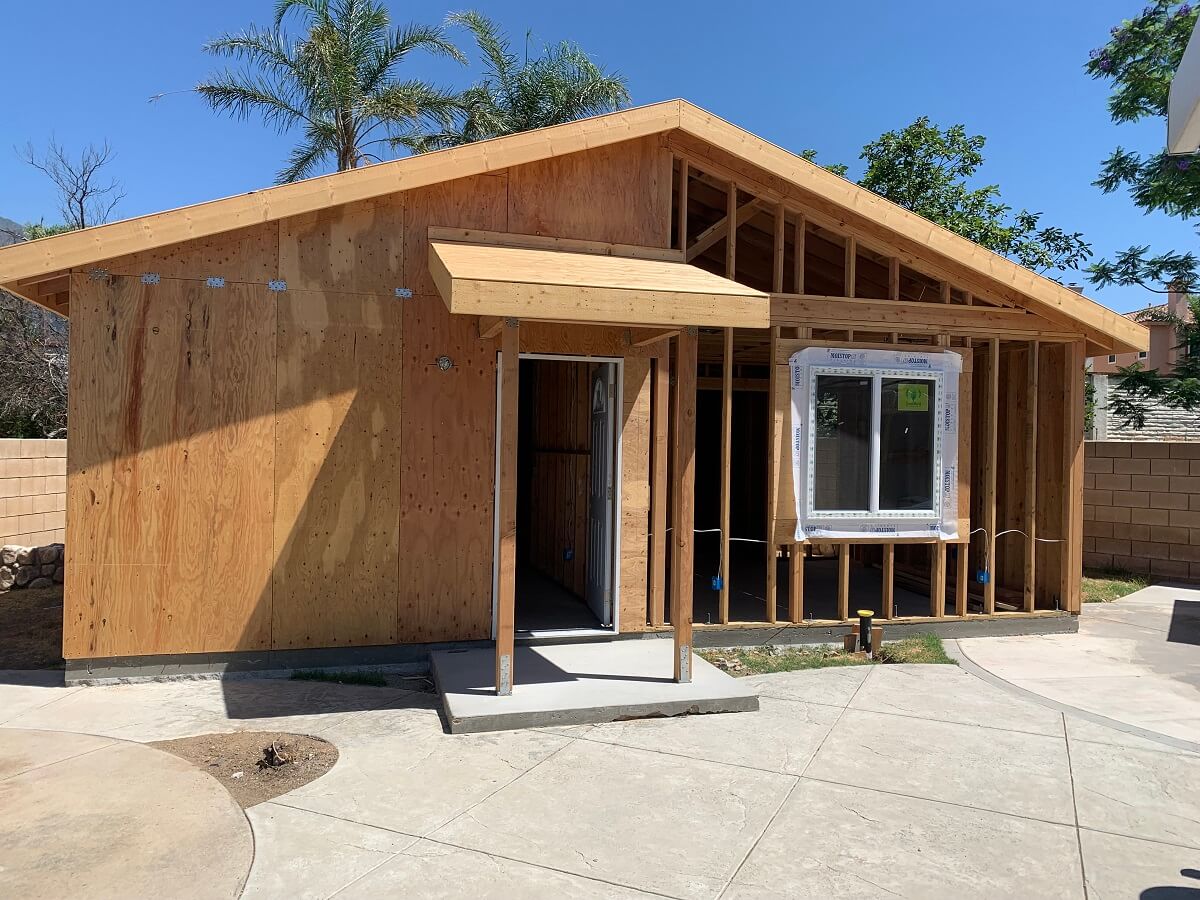
Detached ADUs are freestanding structures separate from the primary residence.
Configuration: Completely separate building with its own foundation, walls, roof, and utilities.
Advantages:
•Maximum privacy for both units
•No impact on existing home structure
•Flexible placement on property
•Can be designed in any architectural style
•Easier to rent as truly independent unit
Considerations:
•Requires adequate yard space
•Higher construction costs than attached or conversion ADUs
•Separate utility connections may be required
•May require more extensive permitting
Best For: Properties with adequate yard space, homeowners seeking maximum privacy, rental income focus
Attached ADUs
Attached ADUs connect to the existing home but maintain separate entrances and living facilities.
Configuration: Addition built onto existing home structure, sharing at least one wall with primary residence.
Advantages:
•Lower construction costs than detached ADUs
•Can share some utilities with main house
•Maximizes use of existing structure
•Smaller building footprint preserves yard space
•Often faster to construct than detached units
Considerations:
•Less privacy than detached ADUs
•May require modifications to existing home
•Architectural style must complement existing home
•Sound insulation between units is critical
Best For: Properties with limited yard space, budget-conscious homeowners, family member housing
Garage Conversion ADUs
Garage conversion ADUs transform existing garages into living spaces.
Configuration: Existing garage structure converted to ADU by adding insulation, utilities, kitchen, and bathroom.
Advantages:
•Lowest cost ADU option (structure already exists)
•Fastest construction timeline
•No additional building footprint
•Existing utilities may be nearby
•Often requires minimal permitting
Considerations:
•Loss of garage parking and storage
•Existing structure may have limitations (ceiling height, layout)
•May require foundation work if garage floor is inadequate
•Architectural integration with main house
Best For: Homeowners with underutilized garages, budget-conscious projects, fastest timeline needs
Above-Garage ADUs
Above-garage ADUs are second-story units built above existing or new garages.
Configuration: Living space constructed above garage, accessed by exterior stairs.
Advantages:
•Preserves garage parking and storage
•Maximizes property use (vertical rather than horizontal expansion)
•Good privacy separation from main house
•Often good natural light and views from elevated position
Considerations:
•Higher construction costs (second-story construction)
•Requires structurally sound garage foundation
•Stair access may not suit all occupants
•More complex permitting and engineering
Best For: Properties needing to preserve parking, homeowners wanting privacy, properties with views from elevated positions
Interior Conversion ADUs
Interior conversion ADUs transform existing interior space (basement, attic, or portion of main house) into separate dwelling units.
Configuration: Existing interior space converted to ADU with separate entrance added.
Advantages:
•No additional building footprint
•Structure already exists (lower costs)
•No yard space consumed
•Shared utilities already in place
Considerations:
•Requires adequate existing space
•Must create separate entrance
•Sound insulation critical
•May require significant interior modifications
•Basement conversions may have ceiling height challenges
Best For: Large homes with underutilized space, properties with limited yard space, budget-conscious homeowners
We specialize in ADUs in Rancho Cucamonga and Ontario—from the first sketch to the final inspection. We help homeowners select the ADU type that best fits their property, goals, and budget.
Call +1 951-310-3458 to discuss which ADU type works for your property.
I Want to Remodel My Kitchen — What’s the First Step?
We come to your home for a free meeting. We sit with you, look at your space, and listen to what you want. Then we create a 3D design — so you can see exactly what it will look like before we start. We build it exactly how you want it.
While this question asks about kitchens, the same process applies to ADU home addition projects. We start with understanding your goals, then create detailed 3D designs so you can visualize the finished ADU before construction begins.
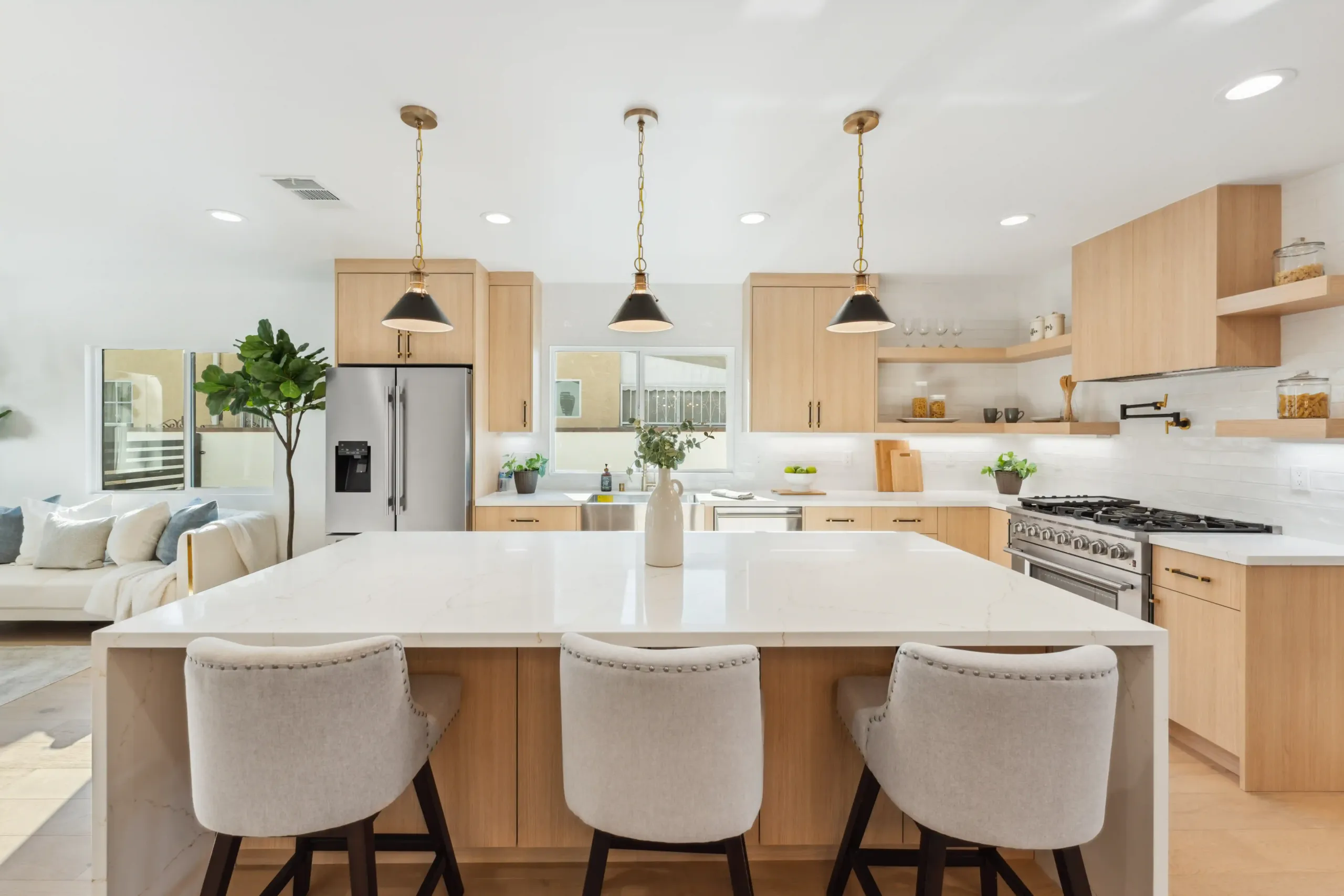
The kitchen in your ADU will be designed the same way—we listen to how you’ll use the space, then design a kitchen that fits the ADU’s purpose (rental unit, family member housing, home office with kitchenette, etc.).
Call +1 951-310-3458 to schedule your free meeting.
Can You Help Me Build an ADU on My Property?
Yes. We specialize in ADUs in Rancho Cucamonga and Ontario—from the first sketch to the final inspection. We handle the design, the permits, the construction, and the final walk-through. You don’t have to call five different people. We do it all.
Our ADU process includes:
Initial Consultation: We visit your property, discuss your goals, evaluate your space, and explain ADU options.
3D Design: We create detailed 3D designs showing exactly what your ADU will look like. You see the design before you pay for construction.
Permit Handling: We prepare and submit all permit applications, working with city planning departments to secure approvals.
Construction: We build your ADU with weekly photo and video updates so you always know what’s happening.
Final Inspection: We coordinate final inspections and walk through the completed ADU with you. We don’t say “it’s done” until you say it’s right.
We’ve been remodeling homes in Rancho Cucamonga and Ontario since 2014—more than 10 years of real work, one home at a time. We’ve completed 127+ home remodels since 2014, including numerous ADU projects.
Call +1 951-310-3458 to start your ADU project.
How Long Does a Full Home Remodel Take?
Most projects take 8 to 12 weeks from start to finish. We give you a clear timeline on day one — and we send you weekly photos and videos. You won’t be left wondering what’s happening.
ADU home addition projects typically follow similar timelines, though specific duration depends on ADU type:
Garage Conversion ADUs: 6-10 weeks (structure exists, primarily interior work)
Attached ADUs: 10-14 weeks (new construction attached to existing structure)
Detached ADUs: 12-16 weeks (complete new structure with separate utilities)
Above-Garage ADUs: 14-18 weeks (second-story construction complexity)
Interior Conversion ADUs: 8-12 weeks (existing space, primarily interior modifications)
These timelines assume normal permitting processes and no major complications. We provide detailed timelines specific to your project during the design phase.
Throughout construction, we send weekly photo and video updates. You always know what’s happening and how the project is progressing.
Call +1 951-310-3458 to discuss your ADU timeline.
What Makes You Different from Other Contractors?
We don’t disappear after you pay and don’t say “trust us” without showing you proof. WM don’t say “it’s done” until you say it’s right.
Here’s what makes WM Construction different:
Free 3D Design Before You Pay
We’re the only company in Rancho Cucamonga and Ontario that offers a free 3D design before you pay a dime. You see exactly what your ADU will look like before construction begins. No surprises. No guessing.
Weekly Photo and Video Updates
We send weekly photo and video updates throughout construction. You always know what’s happening. You’re never left wondering about progress or whether work is being done.
Written Contract — No Hidden Changes
We start with a written contract—every detail is there. No hidden changes. No surprises. You know exactly what you’re getting and what it will cost before we start.
Guarantee: We Won’t Finish Until You’re Happy
We don’t say “it’s done” until you say it’s right and guarantee your satisfaction. WM won’t finish the job until you’re happy with every detail.
Licensed and Verifiable
We are licensed by the California State License Board—License #1104199. You can check it online at cslb.ca.gov. We’re not hiding. We’re a legitimate, licensed contractor you can verify.
10+ Years, 127+ Projects
We’ve been remodeling homes in Rancho Cucamonga and Ontario since 2014—more than 10 years of real work, one home at a time. Every project we finish comes with a signed client form—we’ve completed 127+ home remodels since 2014.
Call +1 951-310-3458 to experience the WM Construction difference.
I’m Scared to Pay Upfront — What If You Disappear?
We start with a written contract—every detail is there. The timeline. The materials. The payment schedule. Everything. And we won’t finish the job until you’re happy. We don’t say “it’s done” and leave. We stay until you say: “Yes, this is exactly what I wanted.”
Our payment structure protects homeowners:
Deposit: Small initial deposit to begin design and permit work
Progress Payments: Payments tied to specific milestones (foundation complete, framing complete, etc.)
Final Payment: Final payment only after you’ve inspected and approved the completed ADU
Written Contract: Everything documented in writing before work begins
Weekly Updates: Regular photo and video updates show progress and verify work is being done
Licensed and Bonded: Our license (#1104199) provides additional protection through the California State License Board
We understand the fear of paying contractors who disappear. That’s why we structure projects to protect homeowners while ensuring we can complete quality work.
Call +1 951-310-3458 to discuss our payment structure and contract terms.
ADU Design Considerations
Successful ADU home addition projects require careful design consideration of multiple factors.
Purpose and Occupant Needs
ADU design should reflect intended use and occupant needs.
Rental Unit: Design for broad appeal with neutral finishes, durable materials, efficient layouts, and low-maintenance features.
Family Member (Aging Parent): Include accessibility features (zero-step entry, wider doorways, grab bars, walk-in shower), single-story layout, bedroom and bathroom on main level.
Family Member (Adult Child): Design for independence with full kitchen, separate entrance, adequate storage, and privacy from main house.
Home Office: Include dedicated office space, strong internet connectivity, soundproofing, and small kitchenette rather than full kitchen.
Guest Quarters: Design for comfort with quality finishes, full amenities, and privacy features.
Size and Layout
ADU size affects construction costs, rental income potential, and permitting requirements.
Studio Layout (400-500 sq ft): Open plan with combined living/sleeping area, separate bathroom, kitchenette. Most affordable option. Works for single occupants or couples.
One-Bedroom (500-750 sq ft): Separate bedroom, living area, full kitchen, bathroom. Good rental appeal. Accommodates couples or small families.
Two-Bedroom (750-1,200 sq ft): Two bedrooms, living area, full kitchen, one or two bathrooms. Maximum rental income. Accommodates families.
Efficiency Considerations: Efficient layouts maximize usable space. Open floor plans make small ADUs feel larger. Built-in storage preserves floor space.
Architectural Style
ADU architecture should complement the primary residence while meeting functional needs.
Matching Style: ADUs that match the main house architecture create cohesive property appearance. This approach often simplifies permitting.
Complementary Style: ADUs can use complementary (not identical) styles that harmonize with the main house without exactly matching.
Modern/Contemporary: Clean lines, simple forms, and modern materials work well for ADUs regardless of main house style, particularly in urban settings.
Considerations: Some municipalities require ADUs to match or complement main house architecture. Check local requirements during design.
Utilities and Systems
ADU utilities require careful planning.
Separate Meters: Some municipalities require separate utility meters for ADUs. This allows separate billing if renting.
Shared Systems: Some ADUs share utilities with main house (particularly attached ADUs). This reduces installation costs but complicates billing for rentals.
HVAC: ADUs need independent heating and cooling systems. High-efficiency systems reduce operating costs.
Water Heater: Tankless water heaters save space in small ADUs while providing adequate hot water.
Electrical: ADUs require adequate electrical service. May require main panel upgrade if existing service is insufficient.
Internet/Cable: Plan for strong internet connectivity, particularly for home office ADUs.
Outdoor Space
Even small ADUs benefit from outdoor space.
Patio or Deck: Small patio or deck extends living space and provides outdoor area for ADU occupants.
Privacy Screening: Fencing, landscaping, or architectural features create privacy between ADU and main house.
Parking: Some municipalities require dedicated parking for ADUs. Plan parking location during design.
Landscaping: Landscaping around ADUs creates attractive appearance and defines ADU space.
We create detailed 3D designs for every ADU project. You see exactly what your ADU will look like, including exterior appearance, interior layout, and how it fits on your property.
Call +1 951-310-3458 to discuss your ADU design.
ADU Permitting and Regulations
ADU home addition projects require permits and must comply with local regulations.
California ADU Laws
California has streamlined ADU regulations to encourage ADU construction.
Ministerial Approval: Most ADUs qualify for ministerial (administrative) approval, meaning cities cannot deny permits if ADUs meet objective standards.
Reduced Fees: California limits impact fees for ADUs under 750 square feet.
Parking Requirements: California prohibits parking requirements for ADUs in many situations (within 1/2 mile of transit, in historic districts, etc.).
Setback Reductions: State law allows reduced setbacks for ADUs (4 feet in many cases).
Expedited Processing: Cities must approve or deny ADU permits within 60 days.
Local Requirements
Despite state laws, local jurisdictions maintain some regulatory authority.
Zoning: Verify ADUs are allowed in your zone. Most single-family zones allow ADUs, but confirm with your city.
Size Limits: Cities may limit ADU size (typically 850-1,200 square feet maximum).
Height Limits: Cities may limit ADU height (typically 16-25 feet).
Setbacks: While state law allows reduced setbacks, local requirements may be more restrictive in some situations.
Design Standards: Some cities require ADUs to match or complement main house architecture.
Owner Occupancy: Some cities require property owners to occupy either the main house or ADU (not both rented).
Permit Process
The ADU permit process involves several steps.
Pre-Application Meeting: Meet with planning department to discuss ADU plans and requirements.
Design and Plans: Prepare detailed architectural plans, site plans, and engineering documents.
Permit Application: Submit complete permit application with plans, fees, and required documents.
Plan Review: City reviews plans for code compliance (typically 30-60 days).
Permit Issuance: Once approved, permits are issued and construction can begin.
Inspections: Multiple inspections occur during construction (foundation, framing, electrical, plumbing, final).
Certificate of Occupancy: Final inspection results in certificate of occupancy, allowing ADU to be occupied.
We handle the design, the permits, the construction, and the final walk-through. You don’t have to call five different people. We do it all. We’ve navigated the permit process for 127+ projects since 2014.
Call +1 951-310-3458 to discuss ADU permitting.
ADU Home Addition Ideas by Property Type
Different properties suit different ADU approaches.
Large Lot Properties
Properties with substantial yard space have maximum ADU flexibility.
Detached ADU: Build freestanding ADU in backyard for maximum privacy and rental appeal.
Above-Garage ADU: Build second-story ADU above new or existing garage to preserve yard space.
Multiple ADUs: California allows both attached and detached ADUs on single properties. Large lots can accommodate both.
Landscaping Integration: Ample space allows attractive landscaping around ADU, creating private outdoor areas.
Standard Suburban Lots
Typical suburban lots (6,000-10,000 square feet) accommodate various ADU types.
Detached ADU: Smaller detached ADU (500-800 square feet) fits in typical backyard while preserving outdoor space.
Garage Conversion: Convert existing garage to ADU if parking can be accommodated elsewhere.
Attached ADU: Build ADU attached to main house to preserve yard space.
Small Urban Lots
Smaller urban lots require creative ADU solutions.
Garage Conversion: Convert garage to ADU (most common small-lot solution).
Above-Garage ADU: Build second-story ADU above garage to preserve ground-level space.
Attached ADU: Attach ADU to main house to minimize building footprint.
Interior Conversion: Convert basement or portion of main house to ADU.
Properties with Existing Garages
Properties with garages have built-in ADU opportunities.
Garage Conversion: Convert garage to ADU (fastest, most affordable option).
Above-Garage Addition: Add second-story ADU above existing garage.
Garage Replacement: Replace garage with new structure that includes garage on first floor and ADU above.
Sloped Properties
Sloped properties present challenges and opportunities.
Daylight Basement ADU: Build ADU into slope with walk-out entry on downhill side.
Elevated ADU: Build ADU on stilts or posts to accommodate slope.
Terraced Design: Design ADU to follow property contours with terraced outdoor spaces.
We’ve been remodeling homes in Rancho Cucamonga and Ontario since 2014—more than 10 years of real work, one home at a time. We understand how to design ADUs that work with your specific property characteristics.
Call +1 951-310-3458 to discuss ADU ideas for your property.
Real ADU Project Examples
Here are examples of ADU home addition projects we’ve completed in Rancho Cucamonga and Ontario.
Rancho Cucamonga Detached ADU
Property: Standard suburban lot with large backyard
ADU Type: Detached, one-bedroom ADU
Size: 650 square feet
Purpose: Rental income
Features:
•Open living/kitchen area
•Separate bedroom
•Full bathroom with walk-in shower
•Covered patio
•Separate driveway and parking
•Modern exterior matching main house style
Timeline: 14 weeks from permit to completion
Outcome: Homeowner rents ADU, generating monthly income that covers property tax and part of mortgage payment.
Ontario Garage Conversion ADU
Property: Standard suburban lot with underutilized two-car garage
ADU Type: Garage conversion
Size: 480 square feet
Purpose: Housing for adult daughter
Features:
•Studio layout with sleeping area
•Full kitchen
•Full bathroom
•Built-in storage
•Separate entrance from side yard
•Carport added for parking
Timeline: 8 weeks from permit to completion
Outcome: Adult daughter lives independently in ADU while remaining close to family. Parents preserved privacy in main house.
Rancho Cucamonga Above-Garage ADU
Property: Standard lot with existing two-car garage
ADU Type: Second-story addition above existing garage
Size: 720 square feet
Purpose: Aging parent housing
Features:
•One bedroom
•Living area
•Full kitchen
•Accessible bathroom with walk-in shower and grab bars
•Exterior staircase with handrails
•Balcony overlooking backyard
Timeline: 16 weeks from permit to completion
Outcome: Elderly parent lives independently in ADU with family nearby for assistance. Garage parking preserved.
Every project we finish comes with a signed client form—we’ve completed 127+ home remodels since 2014. These real examples show how ADU home addition projects solve real problems for real families.
Call +1 951-310-3458 to discuss your ADU project.
Take Action: Start Your ADU Home Addition Project
Whether you need rental income, family housing, home office space, or property value increase, ADU home addition projects provide efficient solutions that expand your property’s functionality without relocating.
At WM Construction, we’ve been remodeling homes in Rancho Cucamonga and Ontario since 2014—more than 10 years of real work, one home at a time. Every project we finish comes with a signed client form—we’ve completed 127+ home remodels since 2014. We are licensed by the California State License Board—License #1104199 You can check it online at cslb.ca.gov.
Ready to start your ADU project?
Call us today at +1 951-310-3458
We’ll schedule a free meeting at your home. We’ll look at your space, listen to your goals, and create a 3D design so you can see exactly what your ADU will look like before construction begins.
Visit our website: agl.4d0.myftpupload.com/
We’re the only company in Rancho Cucamonga and Ontario that offers:
•Free 3D design before you pay a dime
•Weekly photo and video updates throughout construction
•Written contract with no hidden changes or surprises
•Guarantee: we won’t finish until you say you’re happy
About WM Construction
WM Construction has been remodeling homes in Rancho Cucamonga and Ontario since 2014. With more than 10 years of real work, one home at a time, we specialize in Home Remodeling, ADU, Additions, and 3D Design.
Every project we finish comes with a signed client form—we’ve completed 127+ home remodels since 2014. We are licensed by the California State License Board—License #1104199. You can check it online at cslb.ca.gov.
Contact WM Construction:
•Phone: +1 951-310-3458
•Website: https://wmconstructionco.com/
•License: #1104199 (California State License Board)
•Location: Serving Rancho Cucamonga, Ontario, CA and San Bernardino County