Introduction
San Bernardino County weather home renovation planning requires understanding how the region’s unique climate—characterized by hot, dry summers, mild winters, occasional Santa Ana winds, and minimal rainfall—affects construction timelines, material selection, and project scheduling. Whether you’re remodeling a kitchen in Rancho Cucamonga, building an ADU in Ontario, or completing a full home renovation in Fontana, San Bernardino County weather patterns significantly impact when to start projects, which materials perform best, and how to avoid weather-related delays and complications.
San Bernardino County’s inland location creates distinct weather patterns different from coastal California. Summer temperatures regularly exceed 95-100°F, creating challenges for outdoor work and material installation. Winter brings mild temperatures but occasional rain that can delay exterior projects. Spring and fall offer ideal conditions for most renovation work. Understanding these patterns and planning accordingly ensures projects stay on schedule, within budget, and deliver quality results.
At WM Construction, we’ve been remodeling homes in Rancho Cucamonga and Ontario since 2014—more than 10 years of real work, one home at a time. We are licensed by the California State License Board—License #1104199 You can check it online. Every project we finish comes with a signed client form—we’ve completed 127+ home remodels since 2014. This experience means we understand exactly how San Bernardino County weather home renovation planning works and how to schedule projects for success.
In this comprehensive guide, we’ll explore how San Bernardino County weather impacts home renovation planning including seasonal considerations, best times for different project types, weather-related challenges, material selection for climate conditions, and strategies for minimizing weather delays.
Understanding San Bernardino County Weather Patterns
San Bernardino County weather home renovation planning starts with understanding the region’s climate patterns.
Summer (June-September)
Temperature: 90-105°F daytime, 65-75°F nighttime Rainfall: Minimal (0.1-0.5 inches monthly) Humidity: Low (20-40%) Conditions: Hot, dry, clear skies
•Extreme heat affects outdoor work comfort and safety
•Concrete and paint cure quickly (can be pro or con)
•Minimal rain delays for exterior work
•HVAC systems stressed during interior work
•Workers need frequent breaks and hydration
•Some materials (asphalt, certain adhesives) can be difficult to work with in extreme heat
Best For: Interior projects, roofing (if heat managed), concrete work (with proper curing)
Challenges: Worker comfort, material heat sensitivity, increased cooling costs during construction
Fall (October-November)
Temperature: 70-85°F daytime, 50-65°F nighttime Rainfall: Minimal (0.3-1 inch monthly) Humidity: Low to moderate (30-50%) Conditions: Pleasant, mild, mostly clear
•Ideal temperatures for most construction work
•Comfortable working conditions
•Materials cure and set optimally
•Longer daylight than winter
Best For: All project types—ideal renovation season
Challenges: Minimal—this is peak renovation season
Winter (December-March)
Temperature: 60-70°F daytime, 40-50°F nighttime Rainfall: Moderate (1-3 inches monthly, concentrated in Dec-Feb) Humidity: Moderate (40-60%) Conditions: Mild with occasional rain
•Mild temperatures comfortable for work
•Rain can delay exterior projects
•Shorter daylight hours limit work time
•Concrete and paint cure more slowly
•Occasional cold snaps affect some materials
Best For: Interior projects, planning and design
Challenges: Rain delays for exterior work, slower material curing, shorter work days
Spring (April-May)
Temperature: 75-90°F daytime, 55-65°F nighttime Rainfall: Minimal (0.3-0.8 inches monthly) Humidity: Low to moderate (30-50%) Conditions: Warm, dry, pleasant
•Excellent temperatures for construction
•Comfortable working conditions
Best For: All project types—second-best season after fall
Challenges: Occasional late-season rain, increasing demand (schedule early)
According to National Weather Service data, San Bernardino County averages 300+ sunny days annually, making it one of California’s most construction-friendly climates overall.
How Long Does a Full Home Remodel Take?
Most projects take 8 to 12 weeks from the day we break ground to the day you get your keys. But the whole process—from design to final inspection—usually takes 6 to 9 months.
•Design and permits: 2-4 months (we handle everything)
•Construction: 2-3 months (we’re there every day)
•Final inspections: 1-2 weeks (we schedule everything)
When planning San Bernardino County weather home renovation timing, we schedule construction phases to avoid weather complications. Summer heat? We focus on interior work. Winter rain forecast? We complete exterior work first or wait for clear weather.
You won’t be left wondering what’s happening. We send you weekly photo and video updates. You’ll see the progress every single week.
Best Times for Different Renovation Types
San Bernardino County weather home renovation planning varies by project type.
Kitchen Remodeling
Best Seasons: Fall, Spring, Winter (interior work) Duration: 6-10 weeks construction Weather Considerations: Minimal—mostly interior work unaffected by weather
•Kitchen remodeling is primarily interior work
•Any season works, but fall/spring offer comfortable temperatures if windows/doors open during work
•Avoid summer if possible (heat makes living without kitchen more difficult)
•Winter works well (holidays may affect scheduling)
•Delivery delays possible during rare winter storms
•Comfortable temperatures make construction more pleasant
Bathroom Remodeling
Best Seasons: Any season (interior work) Duration: 3-6 weeks construction Weather Considerations: Minimal—interior work
•Bathroom remodeling is entirely interior
•Weather doesn’t significantly affect timeline
•Schedule based on personal convenience rather than weather
•Humidity from weather doesn’t significantly affect bathroom work
ADU Construction
Best Seasons: Spring, Fall (optimal); Summer, Winter (manageable with planning) Duration: 8-14 weeks construction Weather Considerations: Significant—extensive exterior work
•Comfortable temperatures for outdoor work
•Optimal conditions for concrete, framing, roofing
•Foundation work proceeds smoothly
•Extreme heat affects worker productivity
•Early morning starts recommended
•Concrete requires careful curing to prevent cracking
•Roofing challenging in extreme heat
•Rain can delay foundation, framing, roofing
•Shorter days limit work hours
•Mild temperatures otherwise acceptable
•Plan for potential weather delays
•Foundation: Rain delays, heat affects curing
•Framing: Rain delays, wind concerns
•Roofing: Heat or rain affects installation
•Exterior finishes: Temperature and humidity affect paint, stucco
Home Additions
Best Seasons: Spring, Fall Duration: 8-16 weeks construction Weather Considerations: Significant—major exterior work
Similar to ADU Construction:
•Extensive exterior work affected by weather
•Foundation, framing, roofing weather-dependent
•Spring and fall provide optimal conditions
•Summer heat and winter rain create challenges
Additional Considerations:
•Additions often require opening existing walls to weather temporarily
•Timing critical to minimize home exposure
•Weather protection measures essential
Roofing
Best Seasons: Spring, Fall, Summer (early morning) Duration: 1-3 days for most residential roofs Weather Considerations: Critical—entirely weather-dependent
•Dry weather essential (no rain)
•Moderate temperatures ideal
•Summer possible with early starts (before extreme heat)
•Winter risky (rain probability)
•Rain: Complete stop work (roof exposed)
•Extreme heat: Asphalt shingles difficult to work with, safety concerns
•Wind: Dangerous working conditions
•Cold: Some materials don’t install properly below certain temperatures
Exterior Painting
Best Seasons: Spring, Fall Duration: 3-7 days for most homes Weather Considerations: Critical—weather-dependent
•Moderate temperatures (60-85°F) ideal for paint curing
•Low humidity helps paint dry properly
•Paint adheres and cures optimally
•Extreme heat causes paint to dry too quickly (poor adhesion)
•Direct sun on fresh paint problematic
•Early morning or late afternoon work only
•Cold temperatures slow curing
•High humidity affects drying
•Some paints require minimum temperatures (50°F+)
•Temperature: Affects curing and adhesion
•Humidity: Affects drying time
•Direct sun: Causes too-rapid drying
Landscaping and Hardscaping
Best Seasons: Fall, Spring Duration: 2-8 weeks depending on scope Weather Considerations: Moderate to significant
•Moderate temperatures comfortable for outdoor work
•Plant establishment easier (not extreme heat or cold)
•Soil workable (not waterlogged or baked hard)
•Concrete and pavers set optimally
•Extreme heat stresses new plants
•Concrete requires careful curing
•Increased watering needs for new plantings
•Soil may be too wet to work
I’m Scared to Pay Upfront — What If You Disappear?
We start with a written contract—every detail is there. The price, the timeline, what we’re building, what materials we’re using. No surprises. No hidden changes.
We don’t ask for everything upfront. California law protects you—we can only ask for 10% down (whichever is less) for projects under $5,000, and reasonable deposits for larger projects. We follow the law.
And we won’t finish the job until you’re happy. We don’t say “it’s done” until you say it’s right.
When it comes to San Bernardino County weather home renovation planning, we build weather contingencies into contracts. If rain delays exterior work, we adjust schedules. You’re never left wondering what’s happening.
Weather-Related Challenges in San Bernardino County Home Renovation
Understanding specific San Bernardino County weather home renovation challenges helps in planning and mitigation.
Extreme Summer Heat
Challenge: Temperatures exceeding 100°F create safety concerns, reduce worker productivity, and affect materials.
•Worker fatigue and heat-related illness risk
•Reduced productivity (frequent breaks needed)
•Asphalt roofing difficult to install (too soft)
•Paint dries too quickly (poor adhesion)
•Concrete requires intensive curing to prevent cracking
•Adhesives may not perform properly
•HVAC systems stressed when home opened during construction
•Early morning starts (6am-2pm) during extreme heat
•Frequent breaks and hydration for workers
•Shade structures for outdoor work areas
•Careful material selection (heat-appropriate products)
•Intensive concrete curing (wet burlap, curing compounds)
•Schedule heat-sensitive work for cooler months
•Temporary cooling for occupied areas during construction
Winter Rain
Challenge: While San Bernardino County receives minimal rain (10-15 inches annually), winter storms can delay exterior work.
•Foundation work delayed (can’t pour in rain)
•Framing exposed to moisture
•Roofing installation impossible
•Exterior painting delayed
•Site becomes muddy (access issues)
•Materials need weather protection
•Weather monitoring and flexible scheduling
•Weather protection (tarps, temporary covers)
•Material storage in dry areas
•Schedule exterior work during dry forecasts
•Build buffer time into winter schedules
•Focus on interior work during rain
Santa Ana Winds
Challenge: Occasional strong, dry winds (typically fall/winter) create safety hazards and affect certain work.
•Roofing work dangerous (wind can lift workers, materials)
•Scaffolding and ladders unsafe
•Dust and debris blown around site
•Temporary structures (tarps, covers) can blow away
•Stop work when winds exceed safe thresholds (typically 25-30 mph)
•Secure all materials and equipment
•Reschedule wind-sensitive work
•Extra securing of temporary protection
Low Humidity
Challenge: San Bernardino County’s typically low humidity (20-40%) affects certain materials and processes.
•Concrete cures quickly (can crack without proper curing)
•Paint and stains dry rapidly
•Wood materials may shrink or warp
•Dust control more difficult
•Intensive concrete curing (keep moist)
•Proper paint application techniques
•Material acclimation (let wood adjust to humidity before installation)
•Dust control measures (water spray, barriers)
Material Selection for San Bernardino County Climate
San Bernardino County weather home renovation planning includes selecting materials suited to the climate.
Roofing Materials
•Performance: Good in San Bernardino County climate
•Considerations: Choose heat-resistant varieties, light colors reflect heat
•Lifespan: 20-30 years in this climate
•Performance: Excellent—heat resistant, durable, long-lasting
•Considerations: Heavy (structure must support), expensive
•Performance: Excellent—reflects heat, durable, lightweight
•Considerations: Higher initial cost, noise during rare rain
Exterior Paint
•Performance: Excellent for San Bernardino County
•Considerations: Flexible, resists fading, breathable
•Brands: Sherwin-Williams Duration, Behr Premium Plus Ultra
•Application: Best in spring/fall (60-85°F)
•Performance: Excellent—highly flexible, fills small cracks
•Considerations: Thicker application, more expensive
•Best For: Stucco homes (common in San Bernardino County)
Flooring
Tile (Porcelain, Ceramic):
•Performance: Excellent—stays cool, durable, moisture-resistant
•Considerations: Hard underfoot, cold in winter (rarely an issue here)
•Best For: Kitchens, bathrooms, high-traffic areas
•Performance: Very good—durable, comfortable, realistic wood appearance
•Considerations: Quality varies by brand
•Best For: Bedrooms, living areas, whole-home
•Performance: Good with proper acclimation
•Considerations: Must acclimate to low humidity, can shrink/gap
•Best For: Living areas, bedrooms (not bathrooms/kitchens)
Windows
•Performance: Excellent for San Bernardino County
•Considerations: Low-E coating reflects heat, reduces cooling costs
•Energy Savings: 20-30% on cooling costs
•Performance: Excellent—low maintenance, energy efficient, durable
•Considerations: Less expensive than wood, good insulation
•Best For: Most San Bernardino County homes
What Makes WM Construction Different from Other Contractors?
We don’t disappear after you pay and stay in touch through the whole project—you get weekly photo and video updates so you always know what’s happening and don’t say “it’s done” until you say it’s right.
What NO ONE ELSE in Rancho Cucamonga and Ontario Offers
Free 3D Design Before You Pay a Dime:
We create a complete 3D design of your project before you commit to anything. You’ll see exactly what your renovation will look like—no guessing, no surprises.
Weather-Smart Scheduling:
With over 10 years of experience in San Bernardino County, we understand exactly how San Bernardino County weather home renovation planning works. We schedule projects to avoid weather complications, build buffer time for weather delays, and adjust schedules when forecasts change. You’re never left wondering why work stopped or when it will resume.
Weekly Photo and Video Updates:
You always know what’s happening. Every week, we send photos and videos showing progress. You won’t wonder “what are they doing?” or “when will this be done?” You’ll see everything.
Written Contract with No Hidden Changes:
Everything is in writing—the price, the timeline, the materials, the design. What we agree to is what you get.
Guarantee: We Won’t Finish Until You’re Happy:
We don’t say “it’s done” until you say you’re happy. If something isn’t right, we fix it. No arguments. No excuses. Your satisfaction is how we measure success.
Licensed and Proven Track Record:
We are licensed by the California State License Board—License #1104199. We’ve completed 127+ home remodels since 2014. Every project comes with a signed client form documenting completion and satisfaction.
Local Expertise in San Bernardino County:
We’ve been working in Rancho Cucamonga, Ontario, and surrounding areas for over 10 years. We know local building codes, weather patterns, and what works in this climate. We handle all permits and inspections—you don’t worry about paperwork.
Real San Bernardino County Weather Home Renovation Examples
These examples demonstrate how San Bernardino County weather home renovation planning affects real projects.
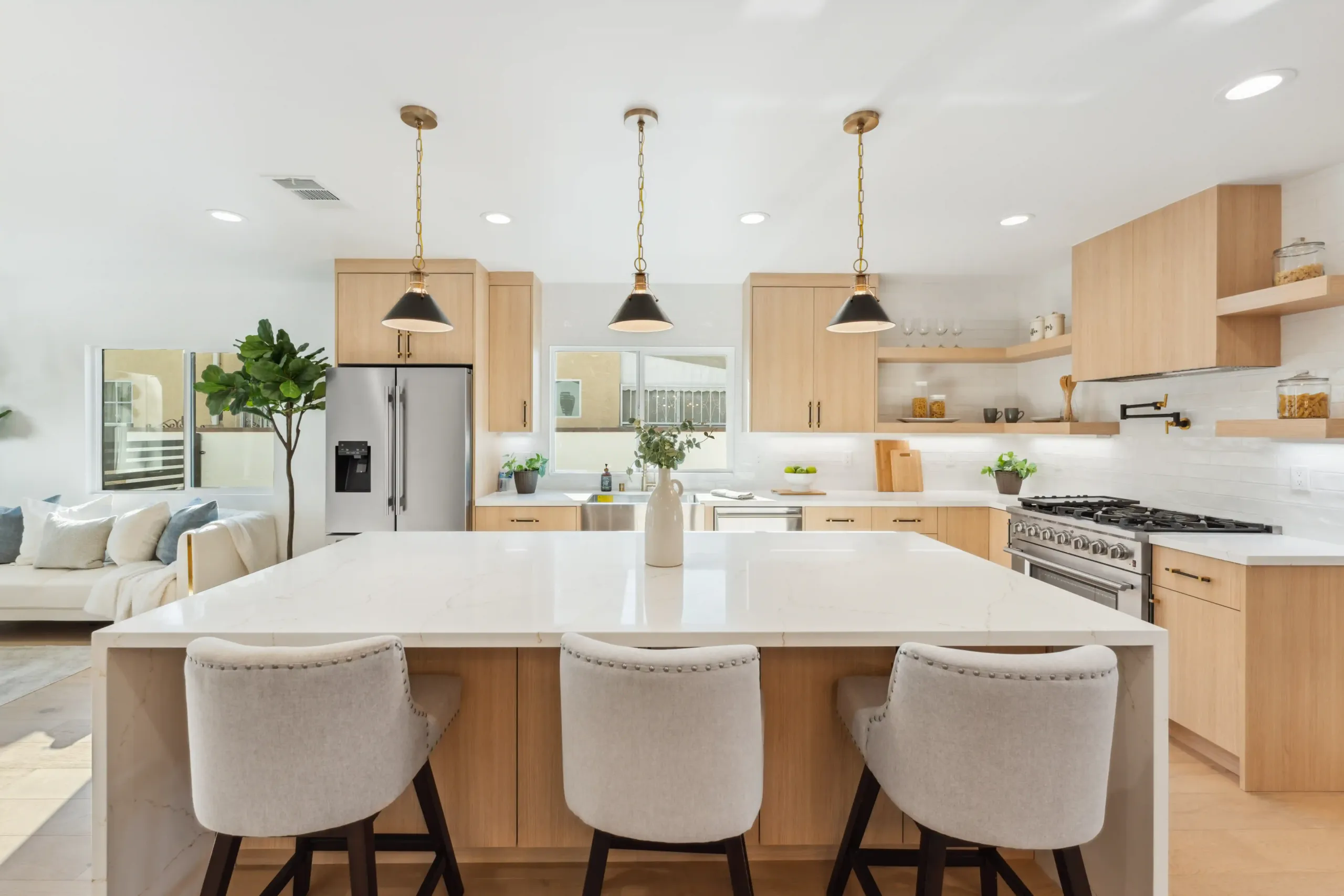
Rancho Cucamonga Kitchen Remodel (Fall Project)
Project: Complete kitchen remodel Timing: Started October, completed December Duration: 9 weeks
•Interior project minimally affected by weather
•Fall timing provided comfortable temperatures
•Thanksgiving holiday built into schedule
•None—interior work unaffected
•Comfortable temperatures when doors open for material delivery
•No weather-related issues
•Homeowner quote: “WM Construction scheduled our kitchen remodel perfectly. Starting in October meant comfortable temperatures when doors were open for deliveries. The timing worked perfectly—we had our new kitchen ready before the holidays. They completed everything on schedule with no weather delays.”
Ontario ADU Construction (Spring Start)
Project: 650 sq ft detached ADU Timing: Started April, completed August Duration: 18 weeks (includes permits)
•Spring start avoided summer heat for foundation and framing
•Summer heat during interior work (less critical)
•One day delay (unexpected late-season rain in May)
•Summer heat during interior work (manageable)
•Overall minimal weather impact
•Foundation poured in April (optimal temperatures)
•Framing completed May-June (before extreme heat)
•Roofing completed early July (early morning starts)
•Interior work during July-August heat (less critical)
•Completed on schedule (one-day weather delay)
•Strategic scheduling minimized weather impacts
•Homeowner quote: “WM Construction’s experience with San Bernardino County weather really showed. They scheduled the foundation and framing for spring when temperatures were perfect. By the time summer heat arrived, they were working on interior finishes where heat mattered less. Only one rain delay in five months. Their planning made a huge difference.”
Fontana Whole-Home Remodel (Poor Timing Example)
Project: Complete home renovation Original Timing: Started December Actual Duration: 16 weeks (planned 12 weeks)
•Winter start meant rain risk for exterior work
•Exterior painting scheduled for January-February (risky)
•Three weeks of delays from winter rain
•Exterior painting delayed multiple times
•Frustration from weather delays
•Should have started in fall or waited until spring
•Exterior work in winter San Bernardino County is risky
•Better planning would have avoided delays
•Complete interior work in winter
•Schedule exterior work for spring/summer
•Build weather buffer into winter schedules
•Completed 4 weeks late due to weather
•Quality work but frustrating delays
•Demonstrates importance of San Bernardino County weather home renovation planning
Strategies for Minimizing Weather Delays
Effective San Bernardino County weather home renovation planning minimizes weather-related delays.
Seasonal Scheduling
Strategy: Schedule projects to align with optimal weather for project type.
•Exterior projects: Spring or fall
•Interior projects: Any season
•Roofing: Spring, fall, or early summer
•Painting: Spring or fall
•ADUs/additions: Start spring or early fall
Benefits: Minimizes weather delays, optimal working conditions, predictable timelines
Flexible Sequencing
Strategy: Sequence work to accommodate weather changes.
•Complete exterior work during clear weather forecasts
•Shift to interior work when weather deteriorates
•Have multiple work fronts ready (can pivot based on weather)
Benefits: Keeps project moving despite weather changes
Weather Monitoring
Strategy: Actively monitor weather forecasts and adjust schedules.
•Check extended forecasts weekly
•Adjust schedules based on predictions
•Communicate changes to homeowners
•Reschedule weather-sensitive work when needed
Benefits: Proactive rather than reactive, fewer surprises
Weather Protection
Strategy: Protect work and materials from weather.
•Tarps and temporary covers for exposed areas
•Material storage in dry, shaded areas
•Temporary enclosures for work areas
•Quick-deploy protection systems
Benefits: Minimizes weather damage, allows work in marginal conditions
Buffer Time
Strategy: Build weather contingency time into schedules.
•Add 1-2 weeks to winter exterior projects
•Add 3-5 days to summer projects (heat delays)
•Communicate realistic timelines including buffers
Benefits: Sets realistic expectations, reduces stress when delays occur
Communication
Strategy: Keep homeowners informed about weather impacts.
•Explain weather considerations during planning
•Communicate when weather affects schedule
•Provide updated timelines when delays occur
•Weekly updates include weather considerations
Benefits: Manages expectations, reduces frustration, builds trust
Take the Next Step: Plan Your Weather-Smart Renovation
San Bernardino County weather home renovation planning ensures projects stay on schedule, within budget, and deliver quality results by understanding how the region’s climate affects construction timing, material selection, and project sequencing.
At WM Construction, we’ve been remodeling homes in Rancho Cucamonga and Ontario since 2014—more than 10 years of real work, one home at a time. We are licensed by the California State License Board—License #1104199. We’ve completed 127+ home remodels since 2014, and we understand exactly how San Bernardino County weather impacts renovation projects.
Ready to start your renovation with weather-smart planning?
Call us today at +1 951-310-3458 for a free consultation
We’ll discuss your project, explain how weather affects your specific renovation type, and create a timeline that works with San Bernardino County’s climate. Whether you’re planning a kitchen remodel, ADU construction, or complete home renovation, we’ll schedule your project for success.
About WM Construction
WM Construction is Rancho Cucamonga and Ontario’s trusted home remodeling company, serving San Bernardino County since 2014. Licensed by the California State License Board (License #1104199), we specialize in kitchen remodeling, bathroom remodeling, ADUs, home additions, and complete home renovations. With 127+ completed projects and a commitment to customer satisfaction, we provide quality craftsmanship, transparent communication, and guaranteed results.
•License: #1104199 (California State License Board)
•Location: Serving Rancho Cucamonga, Ontario, Fontana, Chino, and San Bernardino County