



The useful answer to “do I need a permit to remodel my bathroom?” begins with what you plan to change. Repainting a room is not the same proposed work as relocating fixtures, altering electrical work or changing a wall. Calling every project a bathroom update leaves too much unexplained.
For a property in Ontario, CA, confirm the requirements with the City’s Building Department before starting. Your contractor’s scope and the information you provide should describe the actual work rather than assume that a small room means a simple approval process.
Write down the proposed work first
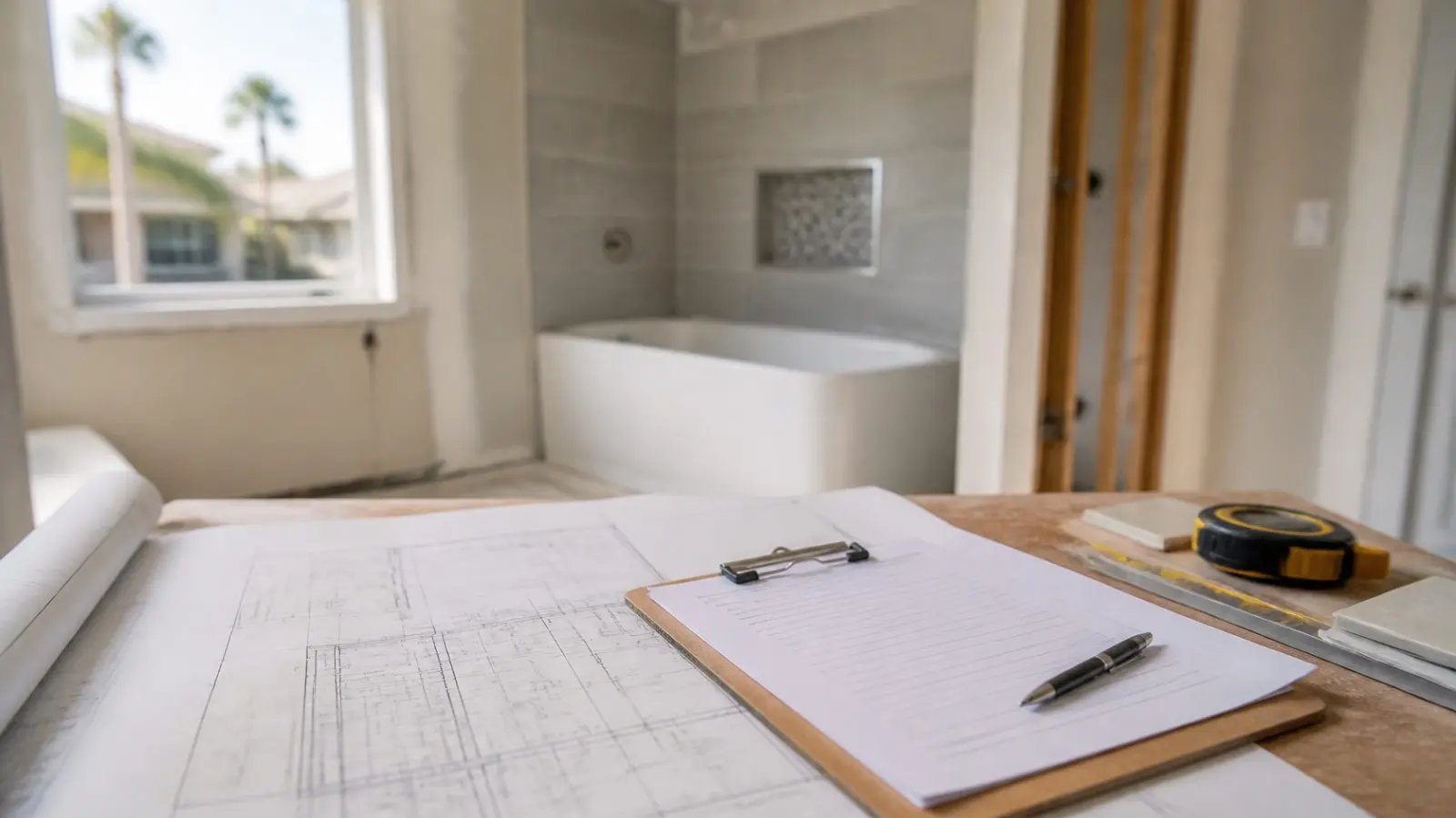
Create a short list that identifies the existing fixtures and intended changes. Note whether the layout stays, whether the wet area will be rebuilt and whether the project involves plumbing, electrical, ventilation or structural work.
Take photographs and gather any available plans. The person reviewing your question needs to understand the project, not just hear that you want a modern bathroom. Different tasks may raise different questions about plans, permits or inspections.
This guide does not provide a blanket exemption list. The address, existing conditions and proposed work should be checked through the appropriate local process.
Ask the right department for the right decision
The City of Ontario Building Permit FAQs provide a starting point for questions about the process and related requirements. Use the City’s current guidance and contact information rather than applying instructions from a different California city.
Explain the work and ask which applications, drawings and inspection stages apply. If a response depends on details that are not yet known, record what must be clarified before construction.
Ontario, California should also be stated clearly in your research. Search results for Ontario can refer to Canada, where the process and governing requirements are different.
Agree on who handles each step
Do not leave “permits included” unexplained in a proposal. Ask who prepares the submission, who is responsible for the permit, which fees are included and who coordinates required inspections.
The arrangement should also explain the homeowner’s role. You may need to provide property information, review drawings or approve changes. Knowing what the team needs from you helps keep the planning organized.
CSLB’s consumer guidance recommends documenting permit responsibilities in the home improvement contract. Keep that responsibility clear alongside the work and payment terms rather than treating it as an afterthought.
Keep approval and construction milestones connected
Where review or inspection is required, it affects the sequence of work. Ask the project team to identify when work can begin and which stages need to remain available for inspection before they are covered.
A contractor’s construction estimate is not a promise about the reviewing authority’s decisions or response time. Separate those parts of the schedule. Changes to the agreed design may also need to be checked before they are carried out.
Our bathroom remodeling service is a starting point for discussing scope. The local authority determines the requirements applicable to that scope.
Do not confuse a product replacement with the entire project
A proposal may emphasize a new vanity or shower, while the actual work includes additional changes behind the finish. Ask whether moving connections, changing a wall or altering the ventilation arrangement is part of the plan.
The reverse is also useful: do not assume every small cosmetic task has the same paperwork as a complete renovation. Describe the work accurately and obtain the appropriate answer before committing to a construction sequence.
For a clearer understanding of what may be rebuilt, review the shower preparation and waterproofing questions.
Retain the project records
Keep the approved documents, permit information, inspection records where applicable and any written changes with your contract. Ask what completion documentation will be provided for the agreed work.
Organized records help you understand what was completed. They are also more useful than a verbal assurance that a previous owner or contractor “handled everything.” If earlier work is uncertain, ask how that affects the current proposal before covering it again.
Bathroom permit questions
Can I remodel my bathroom without a permit
Do not assume that the entire project is exempt. Describe each proposed task to the City of Ontario and confirm which requirements apply before work begins. The answer should relate to your actual scope.
What happens if required work is done without a permit
The response depends on the work and the authority’s assessment. It may involve additional review or corrective steps. Ask the Building Department how to address the particular situation rather than relying on a general claim that it can be ignored.
Can a homeowner apply for a permit
Ontario publishes information about homeowner applications. Read the current conditions and responsibilities before choosing that route. Applying as an owner is not a way to make the project’s obligations disappear.
Do I need a permit to replace drywall
Describe the extent and reason for the work, including any concealed system changes, to the local department. A broad question about drywall does not establish how the complete bathroom project should be handled.
How much should I budget for permits
Confirm the applicable current fees for your project and identify what the contractor has included. Do not treat a fee found for another city or another type of work as your total. Our bathroom cost guide shows where these questions fit in a wider budget.
Clarify the scope before you start
Contact WM Construction to discuss the bathroom work you are considering. Bring your questions about the process so responsibilities can be addressed alongside design and pricing.