


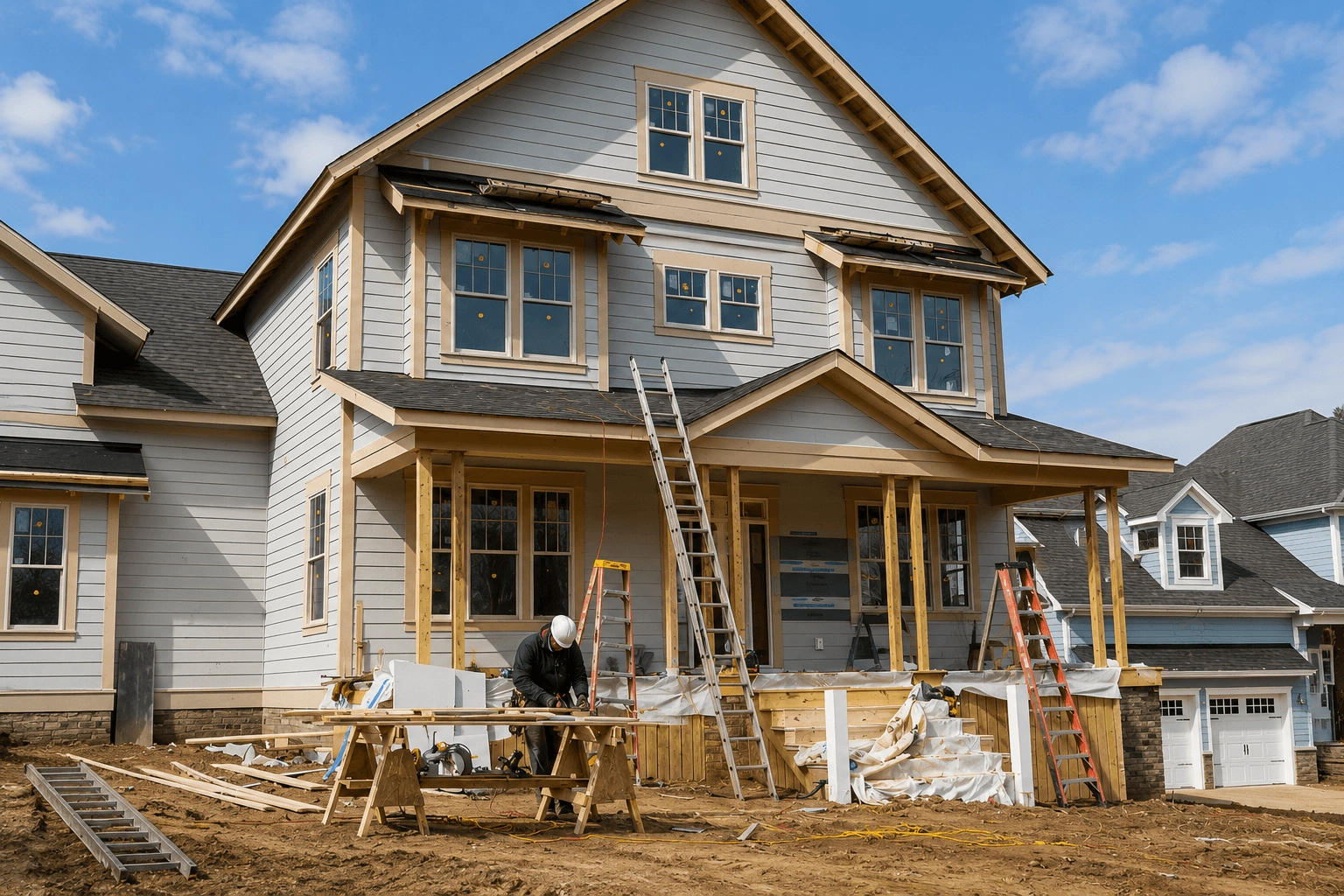
A home remodel can improve your house for years, but hiring the wrong contractor can turn a kitchen, bathroom, ADU, or home addition into delays, surprise bills, permit problems, and unfinished work. The most damaging contractor red flags Rancho Cucamonga homeowners face are rarely subtle — they usually surface early, in a license number that cannot be verified, a demand for too much money upfront, a vague contract, pressure to skip permits, or a refusal to put promises in writing. California gives homeowners real protection, but that protection works best when you vet the contractor before you sign anything.
This guide shows you how to spot bad contractor behavior, which warning signs matter most under current California rules, and exactly what to confirm before you hand anyone a deposit — so a single conversation can save you months of expensive trouble.
Red Flag 1 — No Verifiable California License Number
This is the first check to make. In California, a contractor generally must hold a current CSLB license if the project requires a building permit, uses employee labor, or the combined labor and material value is $1,000 or more.
Do not stop because a contractor prints a number on a business card. Use the CSLB license lookup and confirm that the license is active, the business name matches the company you are hiring, the classification is appropriate for the work, and the bond and workers’ compensation information shown on the record make sense for the business.
A contractor who says, “You don’t need to check me,” or gives you a number belonging to another company is showing one of the clearest contractor red flags Rancho Cucamonga homeowners encounter. If you want a broader hiring checklist, review WM Construction’s guide on how to choose a home remodeling contractor in Rancho Cucamonga.
Red Flag 2 — Huge Deposit Demanded Before Work Starts
California has a specific home-improvement down-payment rule. For most home improvement contracts, including ADU work, the down payment cannot be more than $1,000 or 10% of the contract price, whichever is less. CSLB notes that a rare blanket performance and payment bond can create an exception, but most contractors do not have that arrangement.
So if a contractor asks for 30%, 50%, or the entire project price before work begins, do not assume that is normal. Ask why, check the CSLB record, and do not let a story about “special-order materials” pressure you into ignoring the law. CSLB specifically states that special-order materials do not create a normal exception to the standard down-payment limit.
Knowing typical home renovation costs in San Bernardino also makes an inflated upfront demand easier to spot. Later payments should follow a written schedule tied to completed work or delivered materials — not pressure to pay early.
Red Flag 3 — Vague or Incomplete Written Contract
A professional remodel should not depend on memory, text messages, or a handshake. California home-improvement contracts should clearly identify the contractor and license number and describe the work, price, payment schedule, approximate start and completion dates, and responsibility for permits. Changes should be documented through written change orders.
A vague scope creates room for arguments such as:
- That fixture was never included.
- Demolition did not include haul-away.
- The tile allowance was lower than you thought.
- Permit fees were extra.
- That wall repair is a change order.
Before signing, compare the agreement with WM Construction’s guide to what should be in a home remodeling contract. If the contractor refuses to clarify exclusions, allowances, materials, or payment milestones in writing, treat that as a serious warning.
Red Flag 4 — Contractor Says Permits Are Optional
Some of the most expensive contractor problems begin with one sentence: “Nobody pulls a permit for this.” Building permits exist to make sure applicable construction is reviewed and inspected for code compliance. CSLB accepts complaints against contractors who fail to pull required permits.
For structural changes, additions, ADUs, and many electrical, plumbing, mechanical, or significant remodeling scopes, permit requirements should be discussed before construction — not after an inspector appears at the property.
Another warning sign is a contractor pushing you to sign the permit as an owner-builder simply to avoid using the contractor’s license. CSLB warns that an owner-builder assumes responsibility for the project, including permits, inspections, payment of workers and suppliers, and other obligations.
If your project involves a major renovation, read the San Bernardino County building permit guide before work starts.
Red Flag 5 — Payments Run Ahead of Work
Pay attention not only to the initial deposit but also to what happens after construction begins. CSLB says additional payments should not exceed the value of work performed or materials delivered.
A dangerous schedule looks like this: half the project price is paid before demolition, another large payment is due before materials arrive, and most of the contract is paid while substantial work remains unfinished.
A healthier schedule connects payments to measurable milestones. Depending on the project, those milestones might include completed demolition, framing, rough inspections, drywall, cabinetry, tile, or other clearly defined phases. Locking terms into a fixed-price quote with milestone payments makes an escalating pay schedule much harder to hide.
If you cannot look at the jobsite and understand what the payment is for, ask for clarification before paying. Never let “we need cash today to keep your place on the schedule” replace a written payment milestone.
Red Flag 6 — Every Change Stays Verbal
Remodeling projects change. A wall may hide damaged framing. A homeowner may upgrade a countertop. An electrical panel may need additional work. The red flag is not the existence of a change — it is the absence of documentation.
CSLB advises that changes to the contract should be handled through written change orders signed before the changed work is performed. A good change order explains what is changing, whether the price increases or decreases, and whether the schedule changes.
Without that paper trail, a $2,000 verbal adjustment can become a $7,000 disagreement at the end of the job. If a contractor repeatedly says, “We’ll figure it out later,” you may be watching a budget problem develop in real time.
WM Construction’s kitchen remodel budget overrun guide explains why scope control and documented decisions matter before and during construction.
Red Flag 7 — No Local Work or References
Beautiful online photos are useful, but they are not enough. Ask whether the contractor can show completed work they actually performed and provide recent local references when appropriate. CSLB’s homeowner checklist recommends getting at least three local references and checking completed work.
Look for consistency between the company name, website, license, project photos, reviews, and the people communicating with you. If every image looks like a stock photo, project addresses are impossible to verify, and references never answer the phone, slow down.
One practical way to evaluate a remodeler is to compare the claims made during the sales conversation with the company’s actual project gallery and public project history.
Red Flag 8 — Pressure to Sign Immediately
“This price disappears tonight.” “Another homeowner wants your slot.” “Sign now or materials will double tomorrow.” High-pressure sales language is not proof of fraud, but it is a reason to stop and read carefully.
Before signing a major remodel, understand the scope, price, payment schedule, permit responsibility, allowances, timeline, and cancellation terms. It helps to know what to know before hiring a renovation company so you are not making a rushed decision under pressure.
CSLB’s homeowner checklist also reminds consumers to determine whether California’s three-day cancellation right applies to their contract, and whether the five-day cancellation right for qualifying homeowners age 65 or older applies.
If someone discourages you from reading the contract, comparing bids, or checking the license, slow down.
Red Flag 9 — Dodges Bonding, Insurance, and Lien Questions
You do not need to become a construction lawyer to ask basic risk questions. A contractor should be able to explain who will perform the work, how subcontractors are managed, and what information appears on the CSLB license record.
California licensed contractors are required to maintain a contractor license bond. CSLB currently identifies the standard contractor license bond amount as $25,000. Workers’ compensation status can also be reviewed on CSLB license records, although requirements can depend on how the business is staffed and its classification.
Homeowners should also understand mechanics liens. CSLB explains that unpaid contractors, subcontractors, laborers, or material suppliers may have lien rights against the property, and in some situations a homeowner can face problems even after paying the prime contractor.
Ask how lien releases will be handled as payments are made. A contractor who becomes angry when you ask about payment documentation, subcontractors, or lien releases is creating unnecessary risk.
Red Flag 10 — Suspiciously Low Bid, Unclear Scope
The lowest estimate is not always the least expensive project. One contractor may include permits, demolition, disposal, waterproofing, electrical work, paint, cleanup, and finish materials while another leaves half of those items out.
A bid that is 30% lower can look attractive until change orders begin. Compare scope line by line rather than comparing only the number at the bottom of the page.
This is one of the most common ways homeowners trying to avoid a contractor scam in California get trapped: the proposal looks inexpensive because important work is missing, undefined, or listed as an allowance that is unrealistic for the homeowner’s selections.
Review WM Construction’s article on common home remodeling mistakes before choosing a contractor based on price alone.
Contractor Red Flags Rancho Cucamonga Quick Check
Before paying a deposit, run through this short contractor red flags Rancho Cucamonga checklist:
- Verify the exact contractor license number through CSLB.
- Confirm the business name matches the company signing your contract.
- Review the license status, classification, bond, and workers’ compensation information shown by CSLB.
- Read the entire written scope and exclusions.
- Confirm who is responsible for permits.
- Check that the down payment follows California rules.
- Make sure progress payments correspond to actual work or delivered materials.
- Request recent local references and review completed projects.
- Require written change orders for scope or price changes.
- Keep copies of the contract, payments, changes, permits, inspection records, and project communications.
If a contractor fails multiple items, do not explain the warning signs away because the salesperson is friendly or the price is attractive. For a deeper vetting process, see how to find a reliable remodeling contractor in Rancho Cucamonga.
What Makes WM Construction Different for Homeowners
With over 10 years of experience, we’ve been remodeling homes in Rancho Cucamonga and Ontario since 2014 — more than a decade of real work, one home at a time.
Customer satisfaction is our #1 priority. Every project we finish comes with a signed client form, and we’ve completed 127+ home remodels since 2014. We get the job done right.
WM Construction is licensed by the California State License Board — License 1104199. You can check it online.
WM Construction’s stated project process includes:
- A free 3D Design before you pay a dime
- Weekly photo and video updates — so you always know what’s happening
- A written contract — no hidden changes, no surprises
- A homeowner-focused final walkthrough before the project is treated as complete
Learn more about WM Construction, review the company’s home remodeling services, or see local guidance for kitchen remodeling in Rancho Cucamonga.
Contractor Red Flags Rancho Cucamonga FAQ
How do I know whether a contractor is licensed in California?
Use the official CSLB license lookup and search the license number or contractor information. Confirm that the license is active and that the business name and classification match the company and work you are considering.
How much can a contractor ask for upfront in California?
For most home improvement projects, California limits the down payment to $1,000 or 10% of the contract price, whichever is less. CSLB notes a rare exception for contractors with a qualifying blanket performance and payment bond on file.
I want to remodel my kitchen — what’s the first step?
We come to your home for a free meeting. We review what you want, measure the space, discuss the plan and 3D Design, and build it exactly how you want it according to the approved scope.
Can you help me build an ADU on my property?
Yes. We specialize in ADUs in Rancho Cucamonga and Ontario — from the first sketch to the final inspection. We help you plan the guest house, review the property, coordinate the permit process, and build from the approved plan.
How long does a full home remodel take?
Most projects take 8 to 12 weeks, depending on scope, permits, inspections, material selections, and site conditions. You won’t be left wondering what’s happening because the process includes regular project updates.
What makes you different from other contractors?
We don’t disappear after you pay. WM Construction uses a written contract, free 3D Design, and weekly photo and video updates. We don’t say “it’s done” until you say it’s right.
I’m scared to pay upfront — what if you disappear?
We start with a written contract — every detail is there. WM Construction’s website lists California State License Board License 1104199, and the project process includes documented updates. We won’t finish the job until you’re happy with the agreed work.
The Biggest Red Flag Is Ignoring Your Questions
The most important contractor red flags Rancho Cucamonga homeowners should remember all point in the same direction: lack of verification. A trustworthy contractor should expect you to check the license, read the contract, understand the payment schedule, ask who pulls permits, review past work, and put changes in writing.
If a contractor tells you those questions are unnecessary, that is your reason to ask more — not less.
Book a consult with a licensed contractor. Call +1 951-310-3458 or schedule a free consultation with WM Construction for a home remodeling project in Rancho Cucamonga or the Inland Empire.