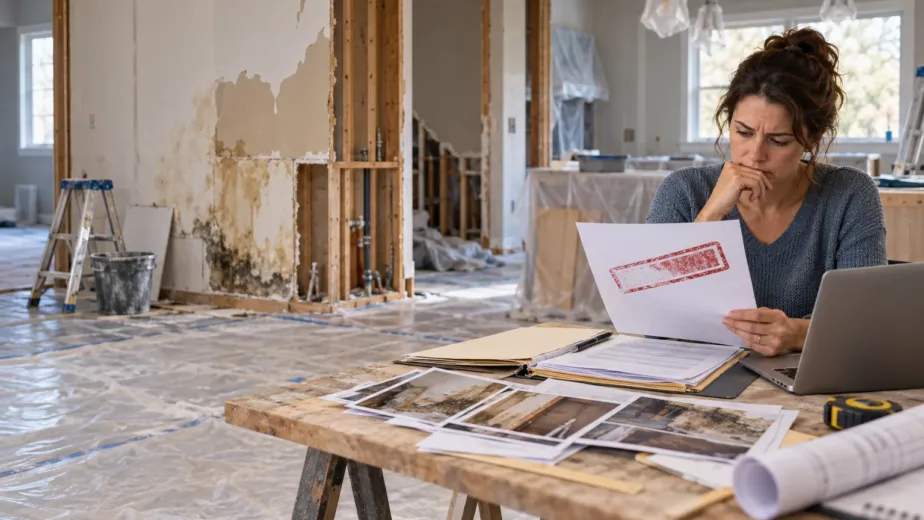




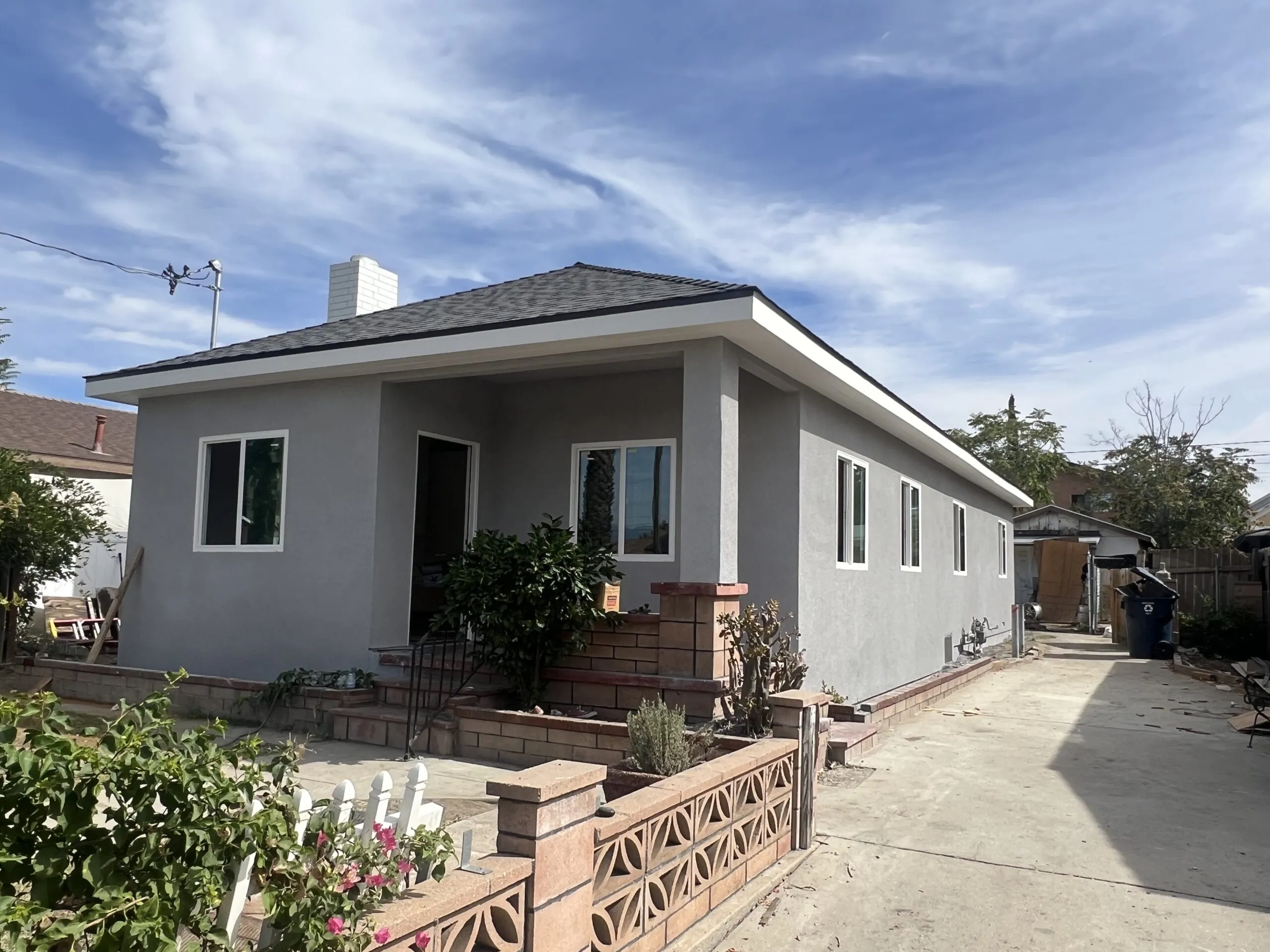
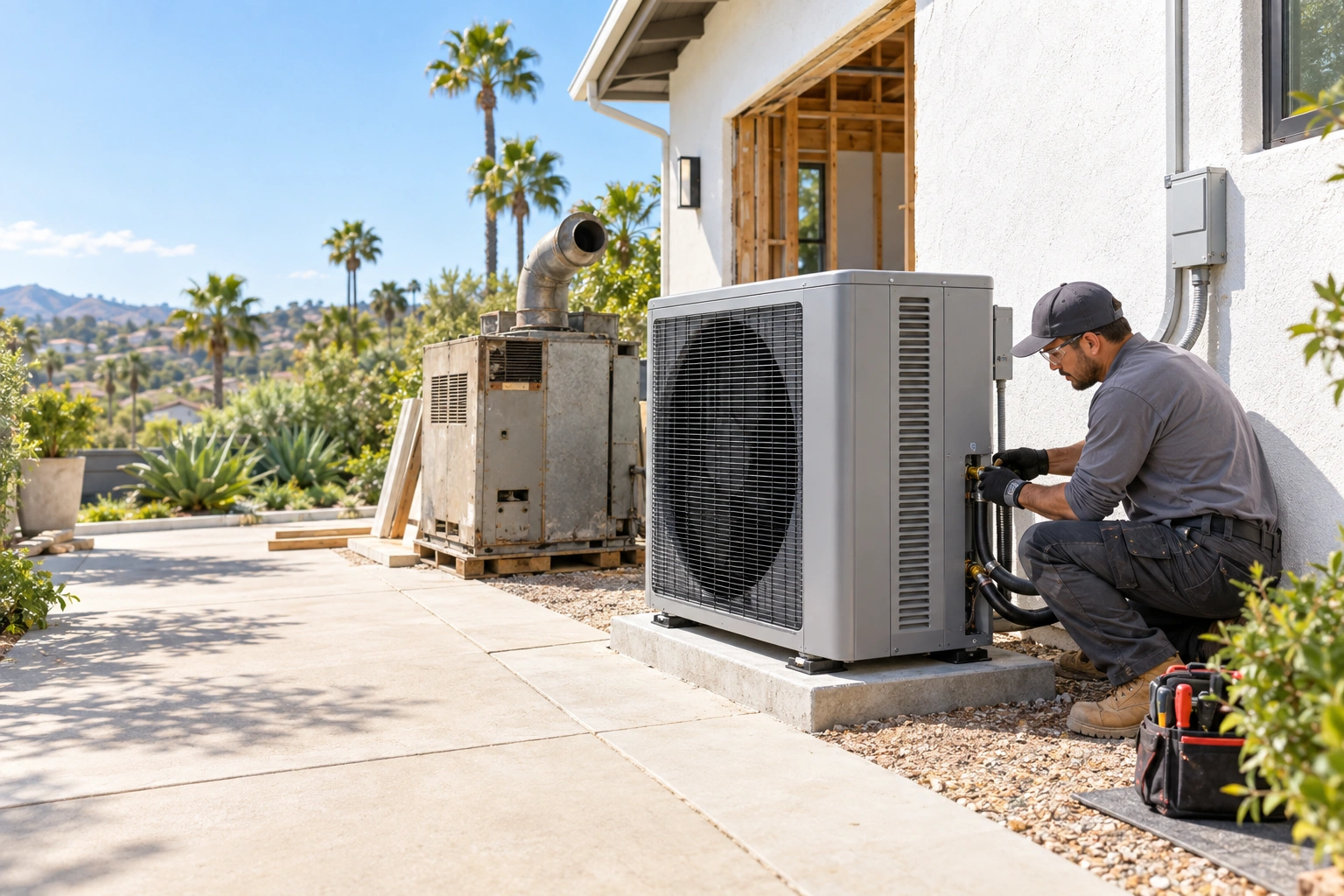
A heat pump conversion remodel in California can improve comfort, reduce dependence on natural gas, and coordinate heating and cooling with a larger home renovation. The timing matters, though. If you wait until the walls are closed, the electrical panel is finished, or the new flooring is installed, you may pay for duplicate labor and repairs.
For homeowners in Ontario, Rancho Cucamonga, and the Inland Empire, the best time to evaluate a heat pump is before demolition and before the contractor finalizes the remodeling scope. A proper plan should coordinate HVAC design, electrical capacity, ductwork, permits, rebates, drywall repairs, and finish work.
This guide explains when to convert, how 2026 California incentives work, and what to ask before signing a remodeling contract.
Heat Pump Conversion Remodel California Begins With a Home Assessment
An air-source heat pump can provide both cooling and heating by moving heat instead of creating it through combustion. In Inland Empire homes, the cooling side often carries a major part of the annual workload, while heating demand remains more moderate than in colder states.
That does not mean every home needs the same system. A qualified HVAC professional should review:
- Existing furnace and air conditioner age
- Cooling and heating loads by room
- Duct condition, size, insulation, and leakage
- Electrical service size and available capacity
- Panel location and the distance to the outdoor unit
- Thermostat wiring and zoning requirements
- Condensate drainage and equipment clearances
- Indoor air quality and filtration needs
- Future additions, ADUs, or room conversions
Do not choose equipment from square footage alone. Oversized equipment can cycle too often, create uneven temperatures, and reduce comfort. Undersized equipment may run continuously without meeting the load.
Your remodeling contractor can coordinate access, framing, drywall, flooring, and finish repairs, but a properly licensed HVAC professional should design and install the mechanical system. Ask for the HVAC proposal before the remodeling contract reaches its final price.
Why Remodel Timing Matters for HVAC Electrification Inland Empire
HVAC electrification affects more than the outdoor condenser. A full conversion may involve an indoor air handler, refrigerant lines, electrical circuits, disconnects, condensate piping, duct transitions, thermostats, equipment platforms, and wall or ceiling access.
If the remodel already includes open walls or ceilings, the crew may be able to:
- Route new electrical wiring before drywall installation
- Install or conceal refrigerant lines more neatly
- Repair or replace damaged ductwork
- Add returns or supply registers
- Relocate equipment for better service access
- Coordinate condensate drains with plumbing work
- Patch walls once instead of opening finished surfaces later
- Protect new flooring from a second installation phase
This is why HVAC electrification Inland Empire projects often work best inside a broader remodeling schedule. The savings do not come from a guaranteed percentage. They come from avoiding repeated mobilization, duplicated drywall repairs, extra painting, and difficult access.
Some companies advertise that bundling can reduce installation cost by 25% to 35%. Treat that figure as a claim that requires an itemized estimate. The actual savings depend on the home, equipment location, electrical work, duct condition, and the amount of finish work already included.
What a Heat Pump Conversion Remodel California Scope Includes
A complete heat pump conversion remodel California homeowners can evaluate should separate the HVAC work from general remodeling work. Your written scope should identify who handles each item.
Equipment selection
The proposal should state the heat pump model, efficiency ratings, capacity, indoor air handler, thermostat, and warranty terms. Ask whether the system uses staged or variable-speed operation and how it performs during hot Inland Empire summers.
Indoor and outdoor installation
The scope should show the outdoor pad or mounting method, service clearances, electrical disconnect, line-set route, indoor equipment location, and condensate drain. Poor placement can increase noise, maintenance difficulty, or future repair cost.
Ductwork and airflow
An existing duct system may need sealing, insulation repairs, resizing, or replacement. Ask whether the installer will test airflow and static pressure rather than simply connect the new equipment to old ducts.
Electrical work
A heat pump may require a dedicated circuit, disconnect, breaker, or panel modifications. Some homes may need a service or panel upgrade. The electrician should complete a load review instead of assuming the existing panel has enough capacity.
Finish repairs
If walls, ceilings, cabinets, or flooring need removal, identify the responsible trade. Include drywall, texture, paint, trim, and flooring repairs in the written scope so the final price reflects the complete project.
Commissioning
The installer should start, test, and document the equipment. Ask for thermostat instructions, filter size, maintenance requirements, emergency shutoff information, and warranty registration responsibilities.
You can compare the remodeling side of the project through WM Construction’s construction services in Rancho Cucamonga.
Heat Pump Timing Home Remodel Decision Points
The right installation window depends on the construction sequence.
| Remodel stage | Heat pump planning action | Main advantage |
|---|---|---|
| Before design approval | Complete load, duct, and electrical review | Prevents late scope changes |
| Before demolition | Confirm equipment locations and line-set routes | Protects walls and ceilings |
| During open-wall work | Install wiring, drains, and concealed lines | Reduces finish repairs |
| Before drywall | Inspect rough-ins and obtain required approvals | Catches conflicts early |
| Before final flooring | Complete heavy HVAC work and testing | Protects finished surfaces |
| During final inspection | Verify operation and homeowner controls | Confirms the system works as planned |
If you are planning a kitchen remodel, bathroom remodel, addition, or ADU, discuss the HVAC plan during design. A new room can change the heating and cooling load, and an addition may need a separate zone or ductless equipment.
For larger projects, review WM’s home additions service and Rancho Cucamonga home remodeling pages before requesting a coordinated estimate.
California Heat Pump Rebate 2026 Math Without Overpromising
California incentives change by program, income level, utility territory, equipment type, contractor participation, and available funding. Do not deduct a rebate from your budget until you confirm eligibility and understand the application process.
The TECH Clean California HEEHRA rebate information currently lists potential single-family heat pump HVAC rebates of up to $8,000 for qualifying low-income households and up to $4,000 for qualifying moderate-income households when replacing an existing primary heating source.
A simplified example looks like this:
- Eligible installed heat pump HVAC scope: $18,000
- Potential low-income HEEHRA rebate: up to $8,000
- Remaining eligible cost before other work: approximately $10,000
This example does not guarantee approval. The equipment, contractor, property, income documentation, installation sequence, and program funding must meet the current rules. Some homeowners may qualify for less, while others may not qualify at all.
The TECH Clean California related programs page explains that certain incentive programs can layer in specific situations. Layering does not mean you can automatically combine every rebate. Confirm whether programs allow combined funding for the same equipment and cost.
Ontario homeowners should also check current options through Southern California Edison rebates and SoCalGas rebates and incentives. Eligibility can depend on the service address, existing fuel, equipment specifications, income, and whether the application must occur before installation.
Ask these questions before ordering equipment:
- Which program is paying the incentive?
- Does the contractor participate in that program?
- Does the application require pre-approval?
- Must the existing furnace remain until inspection?
- Which model numbers qualify?
- Can another utility or local incentive legally be combined?
- Who submits the paperwork?
- What happens if the program runs out of funds?
A contractor should not promise a rebate as guaranteed savings unless the program has approved your project.
When Bundling Lowers Real Project Costs
A heat pump conversion remodel can make financial sense when several scopes overlap. The strongest opportunities usually involve shared access and shared finish work.
Bundling may help when you are already:
- Opening walls for an addition
- Replacing ceilings after water damage
- Remodeling a kitchen or large open-plan area
- Replacing flooring throughout the house
- Moving a furnace or air handler
- Upgrading a service panel for other electric appliances
- Adding an ADU or converting a garage
- Replacing old ductwork during demolition
Bundling does not always mean buying every service from one company. It means coordinating the schedule, responsibilities, inspections, and finish repairs. WM Construction can manage remodeling construction and coordinate with licensed HVAC and electrical specialists when the project requires those trades.
Use WM’s kitchen remodeling service when the HVAC work affects an open kitchen ceiling, cabinet soffit, or wall. Ask every contractor to identify exclusions so you do not receive separate invoices for patching, painting, or electrical changes.
Electrical and Ductwork Checks Before You Order
Many homeowners focus on the heat pump’s efficiency rating and overlook the house systems around it.
Check the electrical service
A 200-amp panel does not automatically have spare capacity. The electrician should review existing breakers, service demand, conductor condition, and future electric loads such as an induction range, electric dryer, EV charger, or heat pump water heater.
Inspect the duct system
A heat pump may expose old duct problems that an aging furnace concealed. Leaks, undersized returns, crushed flex duct, and poor insulation can create comfort complaints even with efficient equipment.
Plan for backup operation
Ask how the system will operate during unusual cold weather, equipment failure, or a power outage. Electric backup heat may affect electrical demand. A dual-fuel design may make sense for some households, while others may prefer a full-electric system.
Review noise and placement
Outdoor units need airflow and service clearance. Keep bedroom windows, property lines, walkways, and outdoor living areas in mind. Confirm the expected sound level and maintenance access before selecting a location.
How Ontario Permits and Inspections Affect the Schedule
Mechanical and electrical work may require permits and inspections. The City of Ontario explains that permitted construction can involve inspections for work such as electrical, plumbing, ventilation, and framing. Review the City of Ontario building permit FAQs and confirm the requirements for your exact project.
Schedule rough inspections before covering wiring, ducts, drains, or line-set penetrations. If the contractor closes walls before the required inspection, the city may require access to concealed work.
Your written schedule should identify:
- Permit responsibility
- HVAC and electrical trade responsibility
- Rough inspection dates
- Equipment delivery timing
- Startup and commissioning
- Final inspection
- Finish repairs after equipment approval
Good project communication matters during this stage. WM Construction lists weekly photo and video updates as part of its project communication approach. Ask for progress documentation that shows rough-ins before drywall closes.
Heat Pump Conversion Remodel California Questions to Ask
Use this checklist during contractor interviews:
- Have you coordinated a heat pump with a whole-home remodel?
- Who performs the load calculation?
- Will a licensed HVAC professional design the system?
- Will the electrician complete a service-load review?
- Can the existing ducts support the new airflow?
- Where will the line set, drain, disconnect, and outdoor unit go?
- Which permits and inspections apply?
- Does the rebate require pre-approval?
- Which contractor submits the incentive paperwork?
- What work does your price exclude?
- Who repairs drywall, paint, cabinets, trim, and flooring?
- How will you protect finished areas?
- What startup documents will you provide?
- What happens if equipment delivery delays the remodel?
A clear answer is more valuable than a low initial number. Compare the equipment, labor, permits, finish work, warranty, and rebate assumptions line by line.
Frequently Asked Questions About Heat Pump Conversion Remodel California
Is a heat pump a good choice for an Ontario California home?
It can be a strong option for homes that need new cooling equipment, have an aging furnace, or already plan electrical and remodeling work. A professional load calculation and duct review should confirm the design.
Should I install the heat pump before remodeling?
Usually, you should plan it before remodeling begins. Heavy HVAC work often fits best before drywall, cabinets, flooring, and final paint. The exact installation stage depends on the equipment route and permit sequence.
Can I combine a California heat pump rebate with a utility incentive?
Sometimes, but not automatically. Program rules may limit stacking or require separate applications. Confirm the current terms with the program administrator and utility before signing the equipment order.
Does a heat pump require a new electrical panel?
Not always. Some homes have enough capacity for the selected equipment, while others need a circuit, breaker, wiring, or service upgrade. An electrician should perform a load review instead of guessing.
Can I keep my existing gas furnace?
A dual-fuel or hybrid arrangement may work in some homes, but the contractor must design compatible controls and equipment. If your goal is full electrification, ask how the proposal handles backup heat and future gas service.
How much can bundling a heat pump with a remodel save?
There is no universal percentage. Bundling may reduce duplicated access, patching, and mobilization, but the contractor should show those savings in an itemized estimate rather than promise a fixed 25% to 35% reduction.
Get a Heat Pump Bundle Quote
A heat pump conversion remodel California homeowners can trust starts with coordinated design, accurate load calculations, electrical planning, permit timing, and clear rebate assumptions.
WM Construction serves Ontario, Rancho Cucamonga, and the Inland Empire. The company has operated since 2014 and lists California contractor license number 1104199. Ask WM to prepare a remodeling scope that identifies HVAC, electrical, permits, finish repairs, and coordination with licensed specialists.
Call 951-310-3458 or visit the WM Construction contact page to request a consultation and discuss your heat pump bundle plan.