





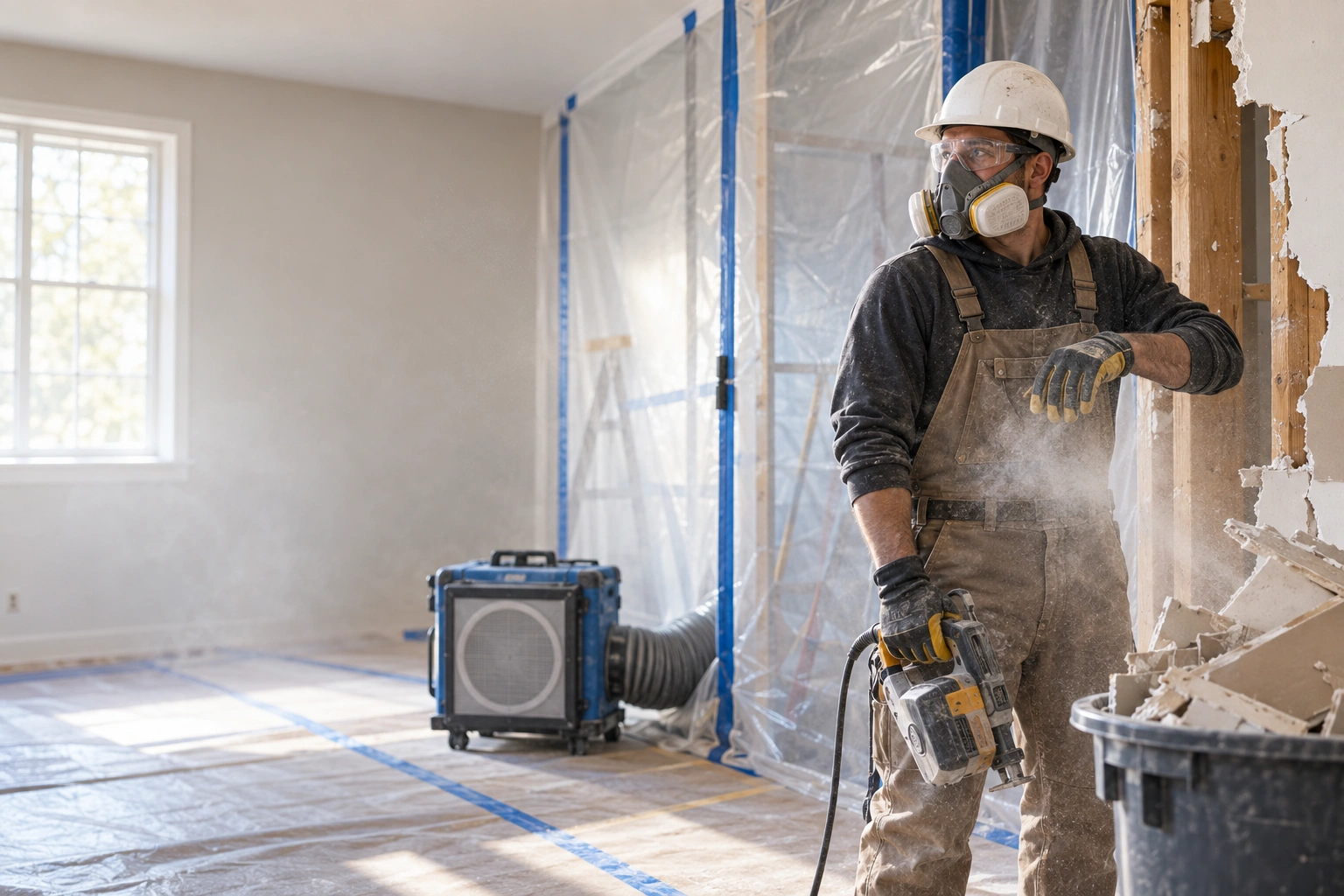
A remodel can improve your Ontario home, but construction dust can create real concerns for your family. Dust from drywall, tile, concrete, wood, insulation, old paint, and demolition debris can travel beyond the work area if the crew does not contain it.
Construction dust health risks matter most when children, older adults, pets, or people with asthma spend time near active work. The right controls can reduce exposure, protect your belongings, and make the project easier to live through.
Construction Dust Health Risks in an Ontario Remodel
Not all dust has the same risk. Light drywall dust may irritate the eyes and throat, while concrete, brick, and tile dust may contain respirable crystalline silica. Sanding old painted surfaces can create lead dust in pre-1978 homes. Demolition can also disturb insulation, mold, or other materials that require special handling.
Construction dust health risks usually come from several exposure paths:
- Breathing airborne particles during demolition, cutting, sanding, or cleanup
- Tracking dust through hallways, bedrooms, and other living areas
- Allowing dust to enter HVAC returns and circulate through the home
- Touching contaminated surfaces and then touching the eyes, nose, or mouth
- Leaving settled dust on toys, furniture, bedding, and food preparation areas
A visible layer of dust does not show the full exposure. Smaller particles can remain airborne after the room looks clean. That makes containment, ventilation, and cleanup important parts of the remodeling plan.
People with persistent coughing, wheezing, chest tightness, or breathing difficulty should follow their clinician’s advice. This article cannot diagnose a medical condition or determine an individual’s risk.
Construction Dust Health Risks and Who Needs Extra Protection
Every household should limit unnecessary exposure, but some occupants need a more conservative plan. Consider arranging another place to stay during the dustiest phases if your household includes:
- A child with asthma or recurring respiratory symptoms
- An older adult with reduced lung function
- Someone with COPD or another chronic breathing condition
- A person with significant allergies or strong sensitivity to dust
- Anyone recovering from illness or surgery
- A family member whose doctor has recommended avoiding airborne irritants
The safest decision depends on the project, the home’s layout, the barrier system, and the person’s health plan. A small bathroom renovation with a sealed work zone creates a different situation from whole-home demolition.
If someone develops severe shortness of breath, blue lips, confusion, or rapidly worsening symptoms, seek urgent medical help. For less severe but persistent symptoms, contact a qualified healthcare professional.
Silica Dust Remodel California Homeowners Should Understand
A silica dust remodel in California can involve cutting or grinding tile, concrete, brick, mortar, stone, or cement-based products. These materials can release respirable crystalline silica, which is small enough to travel deep into the lungs.
The OSHA respirable crystalline silica construction standard focuses on occupational exposure. It requires covered employers to use controls that limit worker exposure. Homeowners still benefit from asking how the contractor will protect workers and occupants.
Before tile or masonry work begins, ask whether the crew will use:
- Wet cutting methods that keep dust from becoming airborne
- Local dust collection attached to the cutting equipment
- A properly maintained HEPA vacuum
- Outdoor cutting when site conditions allow
- A cleanup process that avoids unnecessary dry sweeping
OSHA guidance also discourages dry sweeping or dry brushing when wet methods or HEPA vacuuming can control the dust. A contractor should explain the method for your specific material and location.
Silica dust is only one part of construction dust health risks. Lead paint, asbestos-containing materials, and mold require separate hazard assessments and procedures. Do not assume a general dust barrier makes those materials safe to disturb.
Dust Containment Remodel Checklist
A dust containment remodel plan should appear in the written scope of work. Ask the contractor to describe how the crew will separate the work zone from occupied rooms and how they will clean the area each day.
A practical checklist includes:
Seal the work zone
Use floor-to-ceiling plastic barriers, a secure zipper entrance, and sealed edges around walls and floors. The barrier should remain closed when workers are not moving materials.
Control air movement
Ask whether the project needs negative air or an exhaust fan that sends filtered air outdoors. Do not block required HVAC returns or create unsafe pressure conditions without a qualified plan.
Protect the HVAC system
Discuss whether the crew will shut down nearby returns, cover vents appropriately, or isolate the system during demolition. A barrier cannot protect the home if dust travels through open ductwork.
Create a clean worker path
Choose one route for workers, tools, and debris. Protect floors along that path and keep debris in covered containers when practical.
Clean with the right equipment
The crew should use HEPA vacuuming and damp cleaning for settled dust. Ordinary household vacuums may release fine particles back into the air.
Set a daily inspection routine
Ask who checks the barrier, nearby rooms, door gaps, floors, and HVAC areas. Include the cleanup schedule and the conditions required before the family reenters the space.
Put the plan in writing
Your agreement should identify barrier locations, cleaning responsibilities, work hours, debris removal, and the process for reporting a dust escape. Written details prevent disagreements later.
A dust containment remodel cannot remove every particle, but it can greatly reduce migration when the crew maintains it correctly.
Remodel Dust Asthma Concerns and When to Leave
Remodel dust asthma concerns deserve a decision before demolition begins. The National Heart, Lung, and Blood Institute explains that asthma involves airway inflammation and narrowing, and different triggers can worsen symptoms.
Use the project’s intensity to decide whether staying home makes sense.
| Project condition | Staying home may be possible | Consider leaving the home |
|---|---|---|
| Small, isolated bathroom work | The work zone stays sealed and another bathroom remains available | Barriers fail or dust enters bedrooms |
| Kitchen cabinet installation | Cutting occurs outdoors or in a controlled area | Repeated sanding occurs beside occupied rooms |
| Tile cutting | Sensitive occupants leave during cutting and cleanup | Cutting happens indoors without effective controls |
| Drywall sanding | The area remains isolated and cleaned before reentry | Dust reaches HVAC returns or living spaces |
| Whole-home demolition | Rarely practical for an occupied household | Plan temporary housing for the active phase |
Anyone with asthma should keep prescribed medication available and follow the personal action plan provided by their clinician. Do not rely on a plastic barrier alone if symptoms worsen.
What Ontario Families Should Ask the Contractor
Ask these questions before signing the remodeling agreement:
- Which tasks will create the most dust?
- Will tile, concrete, or masonry be cut on site?
- What wet-cutting or dust-collection method will the crew use?
- Where will the barriers and worker entrance go?
- How will the crew protect HVAC returns and unaffected rooms?
- Who performs daily HEPA vacuuming and damp cleaning?
- What happens if dust escapes the work zone?
- Does the home’s age require lead-safe renovation practices?
- Which permits and inspections apply to the project?
- Can you receive photo or video updates during the work?
For homes built before 1978, review the EPA Renovation, Repair and Painting program. Paid firms that disturb painted surfaces in covered pre-1978 homes generally need EPA RRP certification and trained workers. Ask the contractor whether the rule applies and request documentation when required. Do not assume every remodeling company holds that certification.
Ontario’s building permit FAQ explains that permitted work can require inspections for areas such as framing, plumbing, electrical, and ventilation. Ask how inspection timing affects the work sequence and when areas can safely reopen.
WM Construction serves Ontario, Rancho Cucamonga, and nearby Inland Empire communities. The company has operated since 2014 and lists CSLB license number 1104199. WM also offers kitchen, bathroom, flooring, addition, and ADU remodeling services. You can review bathroom remodeling in Rancho Cucamonga, kitchen remodeling in Rancho Cucamonga, and construction services in Rancho Cucamonga.
Ask WM to include dust containment, cleanup, access routes, and occupant protection in the written scope instead of treating them as informal promises.
How to Protect Your House Before Work Starts
Homeowners can reduce construction dust health risks by preparing before the crew arrives.
- Remove toys, bedding, curtains, rugs, and unnecessary furniture from nearby rooms.
- Store food, dishes, toiletries, and medications in sealed cabinets or containers.
- Move pets and sensitive family members away from active work.
- Close doors to rooms that will remain occupied.
- Photograph valuable items before work begins.
- Identify an alternate bathroom, kitchen, sleeping area, or workspace.
- Ask how workers will enter and exit without crossing clean areas.
- Keep children away from tools, debris, barriers, and stored materials.
- Do not clean suspected lead or asbestos dust yourself without professional guidance.
For flooring projects, review WM’s flooring services and ask how removal, cutting, and daily cleanup will affect adjacent rooms.
When Construction Dust Requires Medical Attention
Construction dust health risks become more urgent when symptoms continue after leaving the work area. Contact a healthcare professional if someone experiences persistent cough, wheezing, unusual fatigue, throat irritation, or worsening allergy symptoms.
Seek urgent care for serious breathing difficulty, chest pressure, fainting, confusion, or symptoms that escalate quickly. If a household member has asthma, follow the clinician’s written action plan and keep emergency medication accessible.
Do not wait for a visible dust cloud before responding. Fine particles may remain after cutting stops, especially when workers open barriers, remove debris, or restart HVAC equipment.
Frequently Asked Questions About Construction Dust Health Risks
What are construction dust health risks?
Construction dust health risks include eye and throat irritation, aggravated asthma symptoms, exposure to silica from masonry products, and lead exposure when old painted surfaces are disturbed. The risk depends on the material, task, duration, and controls.
Is silica dust from tile cutting dangerous?
Tile cutting can create respirable crystalline silica. Ask for wet cutting, effective dust collection, HEPA cleanup, and a plan that keeps occupants away from the active work zone.
Can I stay home during a dusty remodel?
Sometimes, but the decision depends on the project. A sealed bathroom work zone may allow occupancy, while whole-home demolition or uncontrolled sanding often makes temporary housing safer.
Does a plastic barrier remove all dust?
No. A barrier reduces migration only when workers seal gaps, control airflow, maintain the entrance, and clean correctly. Dust can still escape through HVAC systems, doors, footwear, and debris routes.
What does OSHA require from remodel contractors?
OSHA construction rules address covered occupational exposures, including respirable crystalline silica. Ask the contractor which controls apply to the tasks and how those controls protect workers and occupants.
Should I leave if someone has asthma?
Leave during high-dust tasks if the work zone cannot stay isolated or symptoms worsen. Follow the person’s medical action plan and ask their healthcare professional for project-specific guidance.
Book a Consult for Dust Containment Planning
Before demolition, ask WM Construction for a written access, ventilation, containment, and cleanup plan. A clear plan helps your family understand when rooms remain usable, when occupants should leave, and how the crew will protect finished areas.
WM Construction serves Ontario, Rancho Cucamonga, and the Inland Empire. Call 951-310-3458 or use the WM Construction contact page to schedule a remodeling consultation.