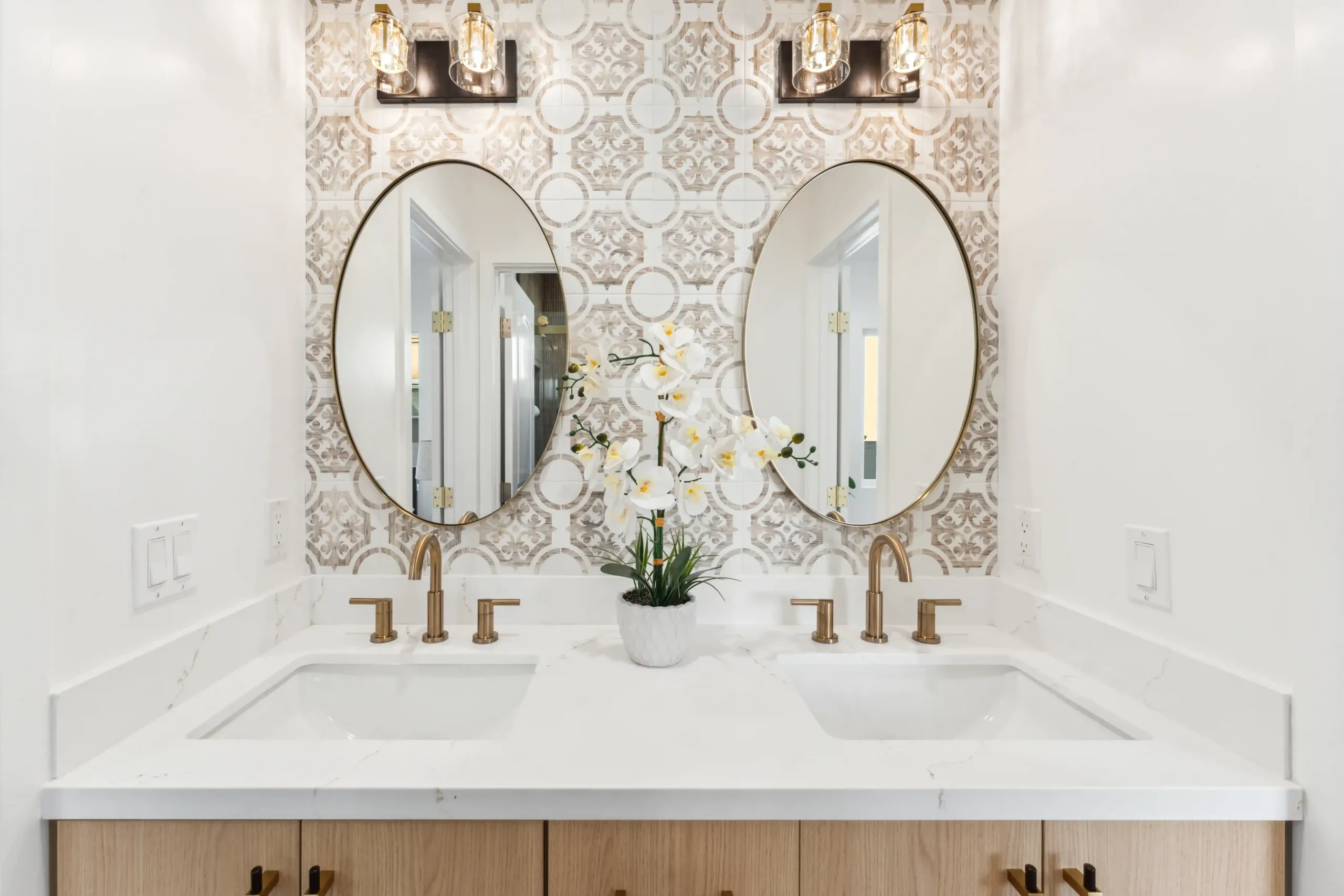
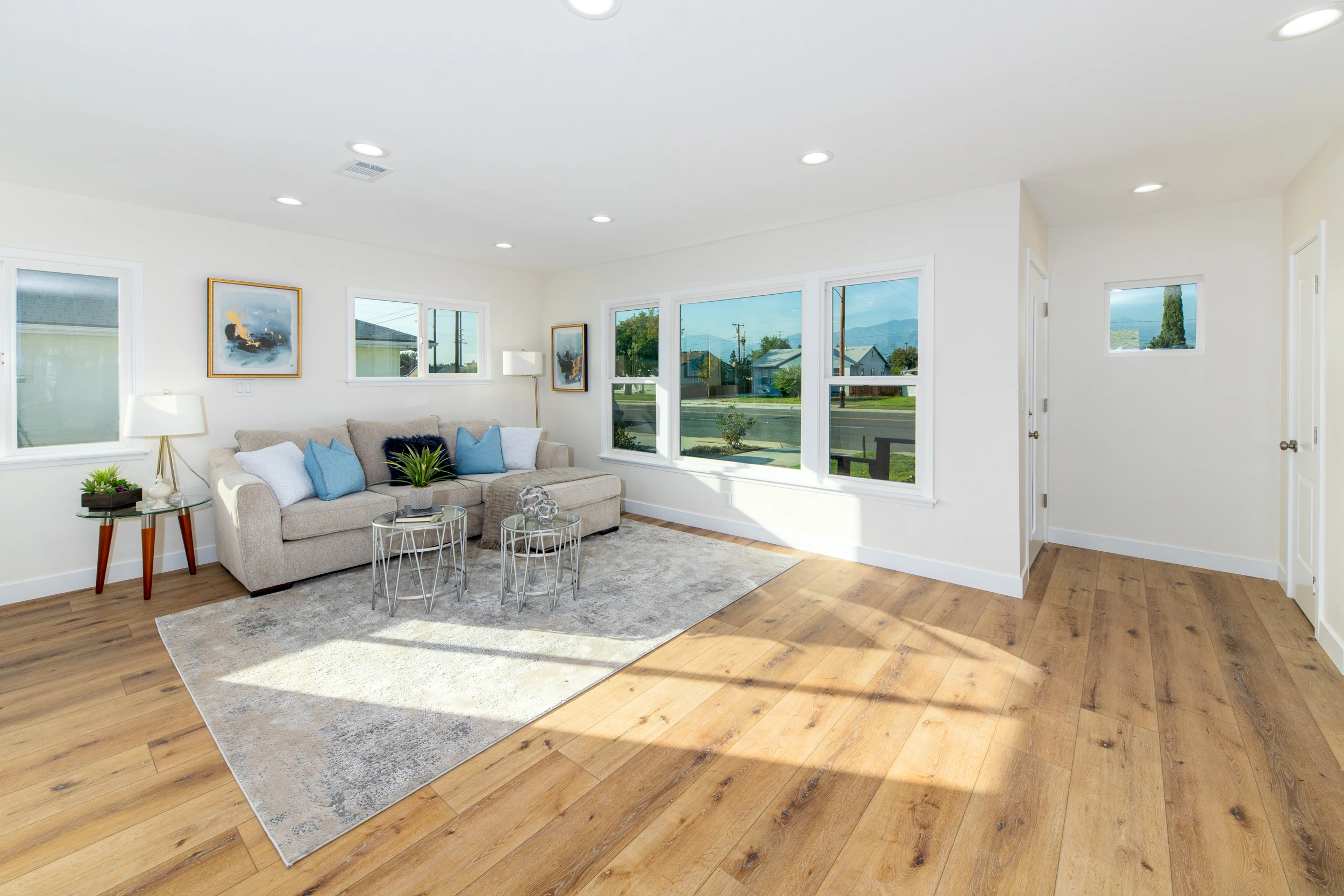
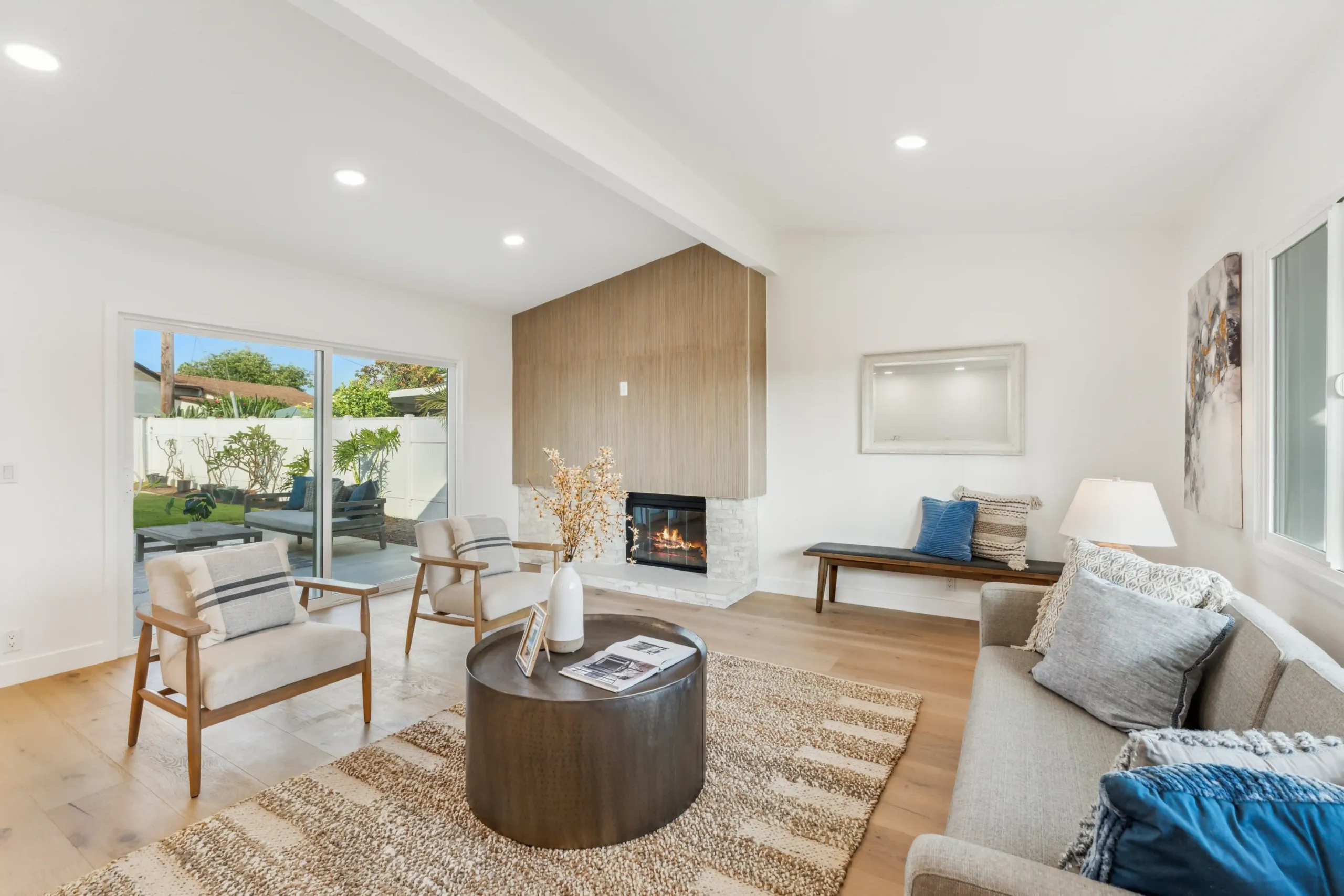
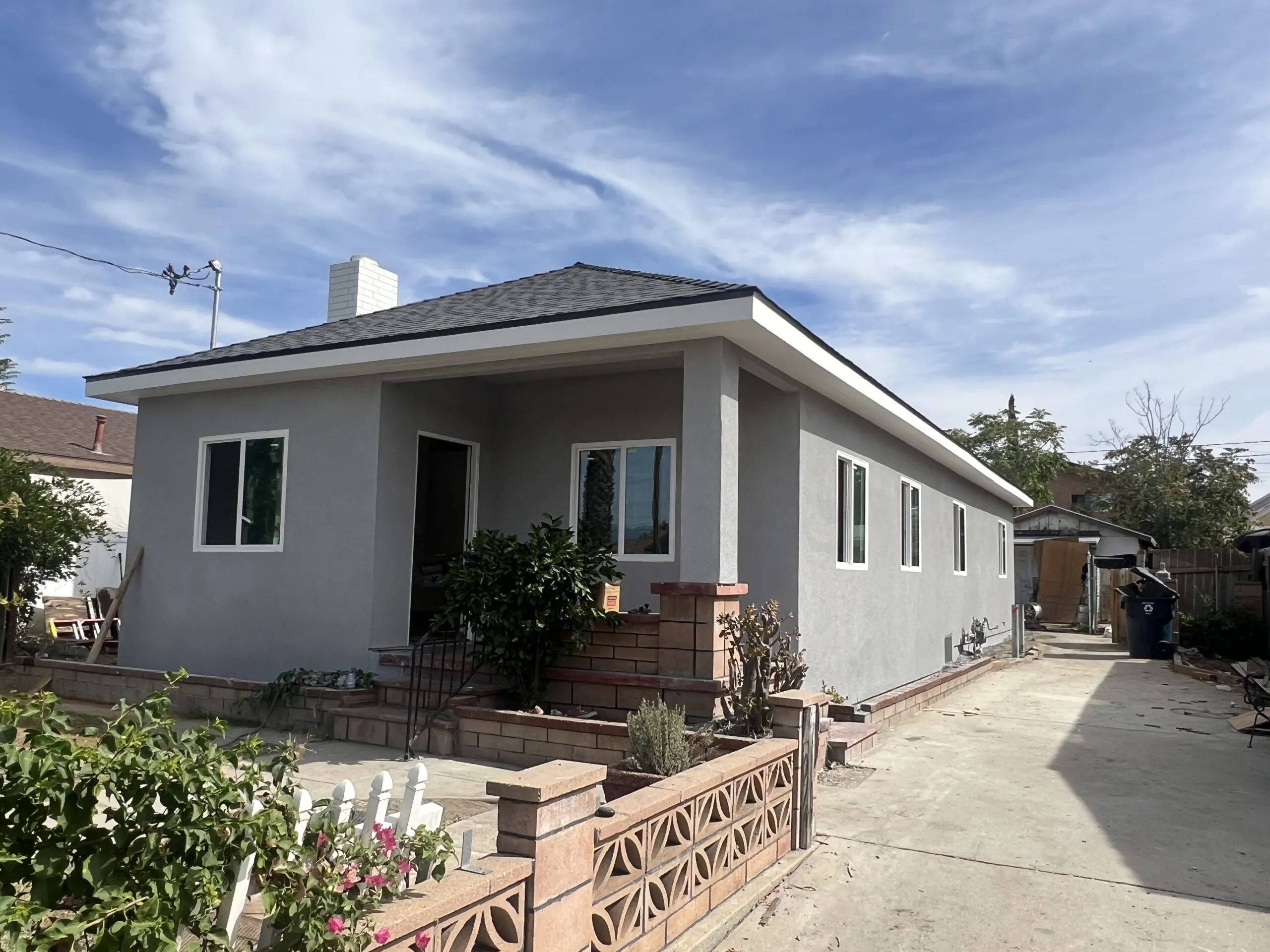
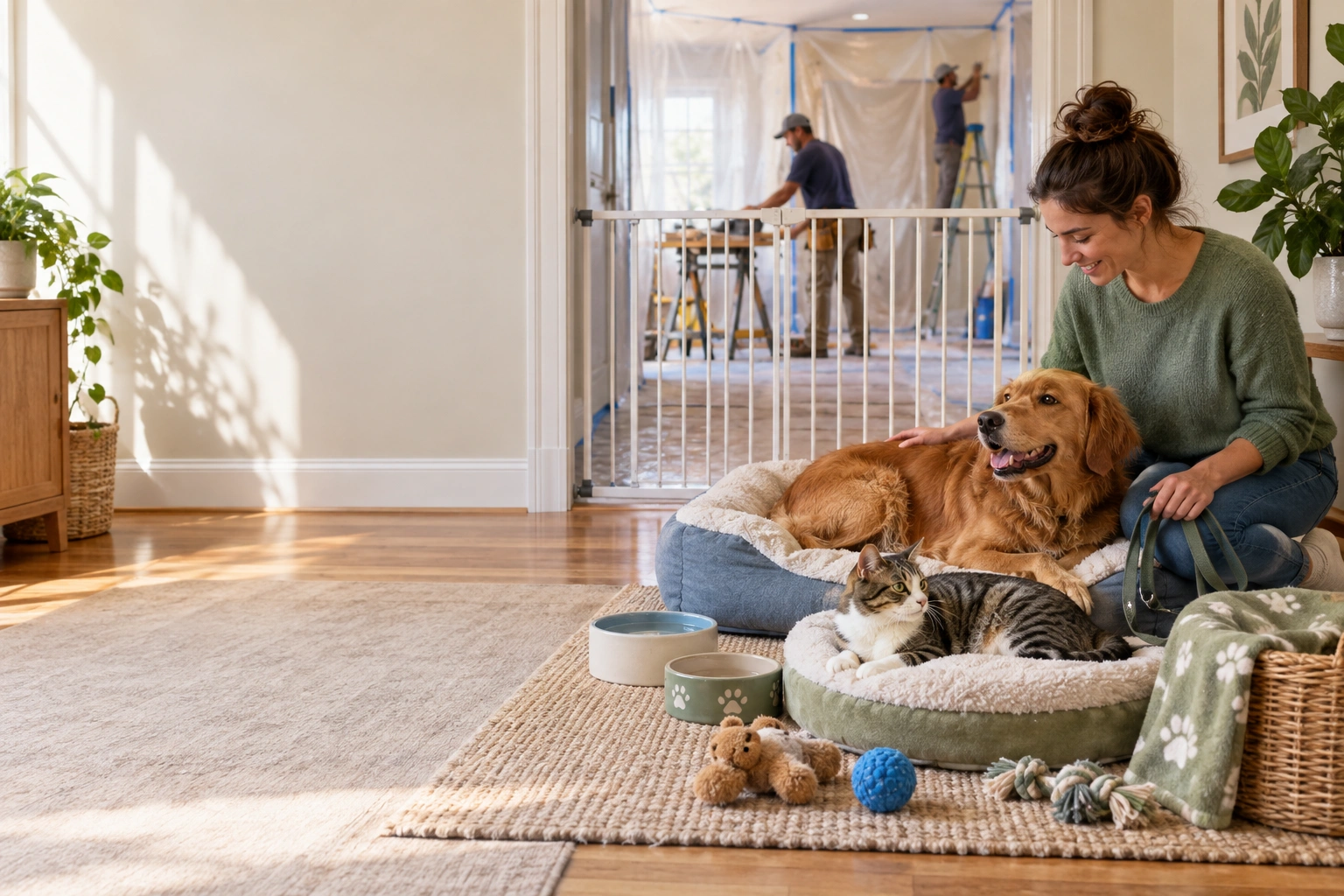
A remodeling project can be exciting for your family, but construction can feel confusing and frightening to a dog or cat. Workers arrive early, doors stay open, tools make unfamiliar sounds, and dust or chemical odors move through areas that once felt safe. Pets during home remodel projects face risks that homeowners may not notice until something goes wrong. A dog can escape through an open gate. A cat can crawl into an unfinished wall. A pet can chew a cord, step on a nail, or become overwhelmed by constant noise.
A simple plan before demolition can protect your animals and help the project move more smoothly. This guide explains how to create safe zones, manage routines, communicate with your contractor, and decide when your pet should stay elsewhere during construction in Ontario and Rancho Cucamonga.
Pets During Home Remodel Safety Plan
Start the plan before workers arrive. Do not wait until the first demolition day to decide where your dog or cat will stay.
Create a Closed Safe Zone
Choose a room away from the active work area. A bedroom, finished bathroom, laundry room, or secure office may work if it has adequate ventilation and a closing door.
Place these items inside:
- Food and water
- Bedding
- Favorite toys
- Medication
- Litter box or puppy pads
- Familiar clothing or blankets
- A crate if your pet already uses one comfortably
Put a clear sign on the door that says the room contains a pet and workers must not open it. A locked room works better than a verbal reminder because construction crews change throughout a project.
Secure Every Possible Exit
Construction creates more escape routes than most homeowners expect. Workers may open front doors, side gates, windows, garage doors, crawl-space openings, or temporary access points.
Before the workday begins:
- Confirm that collars and identification tags fit correctly.
- Make sure your pet has a current microchip registration.
- Keep cats indoors and dogs on a leash near workers.
- Check gates after deliveries and material movement.
- Inspect new openings in walls, ceilings, floors, and fences.
- Never assume a pet will remain calm because it normally stays close to home.
Veterinarians at VCA Animal Hospitals warn that open doors, windows, vents, and unfinished wall openings can create escape or entrapment hazards during repairs.
Dog Stress Home Construction Signs
Dogs often show stress through behavior before owners recognize the problem. A normally relaxed dog may pace, bark, hide, tremble, refuse food, chew furniture, or try to rush through doors.
A predictable daily routine can reduce that stress. Feed your dog at the normal time, take walks before loud work begins, and give the dog calm attention after the crew leaves. Puzzle toys and familiar bedding may help occupy the dog while workers operate nearby.
Do not force a dog to remain near loud tools. If demolition, drilling, or framing creates intense noise, move the dog to a quiet room or arrange daycare, boarding, or care with a trusted person.
If your dog stops eating, vomits, has diarrhea, struggles to breathe, becomes unusually aggressive, or seems disoriented, contact a veterinarian. Do not assume every change comes from construction stress.
Cat Construction Safety Requires Extra Planning
Cats can hide in small spaces and may investigate areas that look inaccessible to people. An unfinished wall, open ceiling, cabinet cavity, or floor opening can become a serious trap.
Keep cats in a secure room with the door closed. Check that the room has no open vents, loose screens, exposed insulation, or gaps behind appliances. Keep the litter box, food, water, and bedding together so the cat does not need to cross the job site.
A cat may react to construction by hiding, refusing food, urinating outside the litter box, vocalizing more often, or attempting to escape. Keep the routine familiar and provide a high resting place, covered bed, or hiding box inside the safe room.
Never release a cat into a newly completed area until the contractor removes debris, secures openings, cleans dust, and confirms that paint, adhesives, and other products have dried according to their instructions.
When Pets During Home Remodel Should Leave the House
A safe room may not provide enough protection during every phase. Arrange another location when the work creates sustained noise, strong odors, heavy dust, or repeated access through the entire home.
Temporary care makes sense during:
- Demolition with hammers, saws, or concrete cutting
- Spray foam, solvents, strong adhesives, or coatings
- Flooring installation with noticeable odors
- Drywall sanding and high-dust work
- Whole-house HVAC or ductwork work
- Structural openings that affect several rooms
- Exterior work with open gates and frequent deliveries
- Electrical or plumbing shutdowns that make the home uncomfortable
- A day when workers cannot maintain a closed pet zone
A dog daycare, trusted family member, boarding facility, or pet sitter may work for a loud day. For longer phases, compare the cost of boarding with the cost of a furnished rental where the entire family can stay together.
For a bathroom remodeling project, a pet may remain at home if the crew can isolate the bathroom and keep the pet away from the work path. A whole-home renovation, however, may justify moving the pet for several weeks.
Pet Safe Remodel Inland Empire Planning
An Inland Empire remodel can involve open doors, dust, heat, deliveries, and several trades working in one area. Your pet plan should match the actual project phase instead of relying on one arrangement for the entire job.
| Project phase | Main pet risk | Better protection |
|---|---|---|
| Demolition | Noise, sharp debris, open walls, escape routes | Remove the pet from the home or use a distant secure room |
| Framing and rough-ins | Exposed wires, pipes, nails, and wall openings | Keep the pet behind a closed barrier and inspect daily |
| Drywall and sanding | Fine dust and repeated worker traffic | Keep the pet away until cleanup and ventilation finish |
| Painting and flooring | Odors, wet surfaces, and chemical exposure | Follow product instructions and keep pets away during curing |
| Cabinet and finish installation | Open doors, tools, small hardware, and deliveries | Use a labeled safe room and controlled access |
| Final walkthrough | Loose debris and unfinished details | Release the pet only after the area passes a safety check |
If the project includes a kitchen remodel, ask where the temporary refrigerator, food storage, and worker entrance will be located. Food smells and open doors can make the kitchen especially attractive to curious pets.
What to Tell Your Contractor About Pets During Home Remodel
Tell the contractor about every pet before the contract starts. Include the species, number of animals, temperament, escape behavior, medical needs, and the room where you plan to keep them.
Add these items to the project discussion:
- The pet-safe room and who controls access
- The preferred worker entrance
- Daily start and finish times
- Gate and door procedures
- Whether the pet will leave during demolition
- Storage for medications and food
- The person responsible for checking the pet
- The process for reporting an escape or injury
- The cleaning standard before a room reopens
Workers should not act as pet sitters. The homeowner remains responsible for the animal, but the contractor should understand the boundaries and work around them.
Ask for a current schedule so you can arrange daycare or boarding on the loudest days. WM Construction provides weekly project photo and video updates, which can help homeowners see when a room moves from demolition into a safer finish phase.
Protect Pets From Dust Chemicals and Debris
Do not allow pets to roam through an active work zone, even after the crew leaves. Nails, screws, blades, insulation, sawdust, drywall compound, paint chips, cords, and packaging can injure or poison an animal.
Keep chemicals in closed containers and ask workers to clean spills immediately. Do not bring a pet into a newly painted or refinished room until the product instructions allow normal occupancy.
If the home was built before 1978 and workers disturb painted surfaces, ask whether the EPA Renovation, Repair and Painting rule applies. Lead dust can affect people and animals, so the project should use the appropriate containment and cleanup practices.
Good ventilation helps, but ventilation does not replace physical separation. A fan cannot make an active demolition area safe for a curious cat or an anxious dog.
A Daily Pet Check Keeps Small Problems From Growing
Assign one adult to check the pet at least twice during the workday. Look for:
- Normal food and water intake
- Normal bathroom habits
- Excessive hiding or pacing
- Coughing, sneezing, or breathing changes
- Dust or residue on paws and fur
- Cuts, limping, or signs of pain
- Open doors, damaged gates, or new wall openings
Take photos of unusual symptoms or possible exposures. If a pet chews a product, swallows hardware, steps on a nail, or develops breathing problems, call a veterinarian promptly. Do not give human medication or induce vomiting unless a veterinary professional specifically instructs you.
Keep the Routine Familiar
Construction changes the home, but you can preserve familiar parts of your pet’s day.
Feed meals at the normal times. Keep walks, play, and bedtime as consistent as possible. Use the same food, bowls, bedding, and commands. Spend a few quiet minutes with your pet after workers leave so the animal does not associate every household interaction with noise and strangers.
If the project lasts several weeks, reassess the arrangement. A safe room that worked during cabinet installation may not work during floor sanding or whole-house painting.
Frequently Asked Questions
How can I protect pets during home remodel work
Keep pets away from active work zones, create a closed safe room, secure doors and gates, remove tools and chemicals, maintain routines, and use boarding or daycare during demolition and strong-odor phases.
Should my dog stay home during construction
Your dog may stay home when the contractor can isolate the work area, keep doors secure, and maintain a calm room away from noise and dust. Move the dog elsewhere during demolition, intense drilling, chemical use, or any phase that causes severe stress.
What does cat construction safety involve
Keep the cat in a closed room with food, water, litter, bedding, and hiding places. Check for gaps, open vents, unfinished walls, and doors that workers may leave open. Do not allow the cat to inspect the job site.
What are common signs of dog stress home construction
Pacing, barking, hiding, trembling, refusing food, destructive behavior, door-dashing, unusual aggression, and changes in bathroom habits may indicate stress. Illness, injury, or breathing changes require veterinary attention.
Can pets stay in the house during a bathroom remodel
They may stay if another room provides a secure, quiet area and the contractor can isolate the bathroom. Remove pets during demolition, waterproofing products, strong adhesives, or any work that creates dust and open access routes.
Who is responsible for pet safety on a remodel site
The homeowner remains responsible for securing the pet, while the contractor should follow agreed access and containment rules. Put the safe-room location, worker entrance, and daily schedule in writing before construction begins.
Book a Consult for Pet Safe Zones
WM Construction serves Ontario, Rancho Cucamonga, and nearby Inland Empire communities with kitchens, bathrooms, flooring, additions, and ADU construction. The team can discuss your household needs and help coordinate a project plan that protects living areas, pets, and finishes.
If you are planning a home addition or a full interior renovation, ask for pet-safe zones and daily access rules before work begins. Contact WM Construction to book a consultation, or call 951-310-3458.