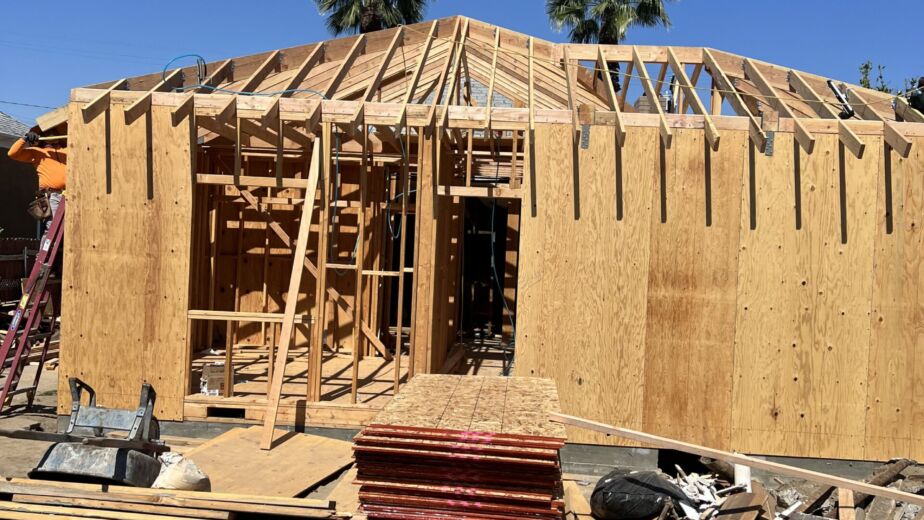




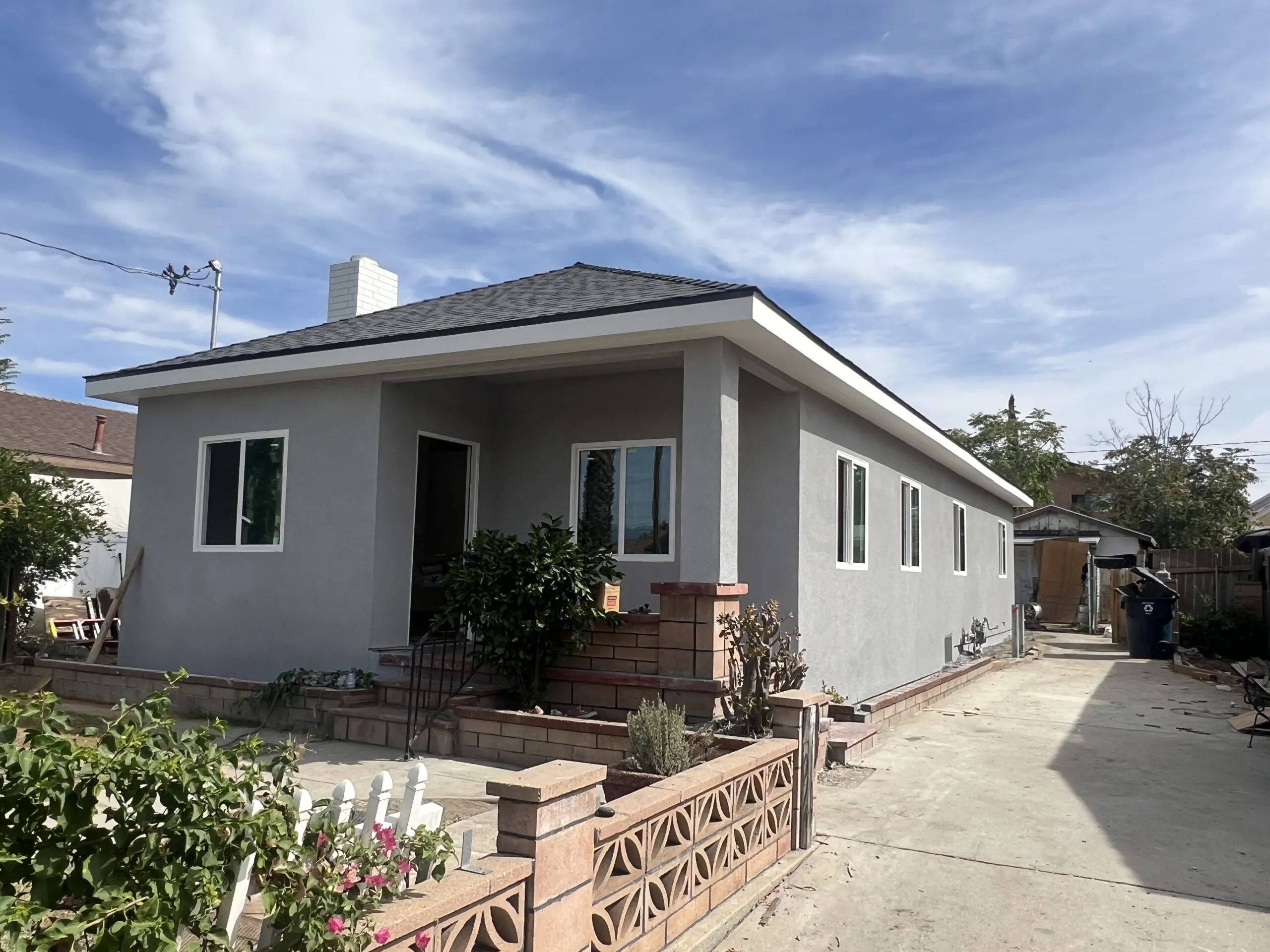

A contractor should not be paid simply because a date arrived on the calendar. In California, a legal home-improvement payment plan must tie money to work actually completed and materials actually delivered — and that single rule is what separates a fair contractor payment schedule California homeowners can rely on from a front-loaded plan that leaves them exposed. For a kitchen remodel, bathroom remodel, ADU, home addition, or whole-house renovation in the Inland Empire, a sound schedule answers three questions before work begins: how much is due upfront, what exact milestone triggers each progress payment, and what must be finished before final payment.
This guide explains the current California rules, shows what a milestone-based plan should look like, and flags the practices Rancho Cucamonga and Ontario homeowners should question — starting with what to know before hiring a renovation company — so you never end up financing unfinished work.
How Much Upfront Can a California Contractor Charge?
For most California home-improvement contracts, the down payment is limited to $1,000 or 10% of the contract price, whichever is less. So if your project costs $80,000, 10% would be $8,000 — but the standard maximum down payment is still $1,000.
This rule comes from California Business and Professions Code Sections 7159 and 7159.5 and is repeated in the CSLB guidance on home-improvement contracts.
That answers the common question of how much upfront a contractor in California can request: normally, not 20%, 30%, or “half to reserve your spot.” There is also no ordinary special-order-material exception to the standard down-payment cap. Comparing your project against typical home renovation costs in San Bernardino makes an inflated upfront demand easier to recognize.
Does California Require Set Contractor Payment Milestones?
California does not prescribe one universal list such as “20% after demolition, 30% after framing.” Every project has a different cost structure. What the law requires is more important: if the contract uses progress payments, each payment must be stated in dollars and cents and tied to specific work, services, materials, or equipment.
The California Business and Professions Code Section 7159.5 also says that, apart from the lawful down payment, a contractor may not request or accept a payment that exceeds the value of work performed or material delivered.
That means good contractor payment milestones should be based on measurable progress, not vague dates such as “second payment due two weeks after start.”
What a Contractor Payment Schedule California Should Include
A strong payment schedule is easy for the homeowner and contractor to verify. Instead of saying “30% at Phase 2,” it should describe what Phase 2 actually means.
| Payment Stage | What the Contract Should Identify | When Payment Should Be Due |
|---|---|---|
| Down payment | The exact dollar amount | At signing, within California’s legal limit |
| Progress milestone 1 | Specific completed work or delivered materials | After that value has actually been provided |
| Progress milestone 2 | The next clearly described phase | After the stated work/material milestone is reached |
| Later milestones | Measurable construction phases | Only as the corresponding value is completed or delivered |
| Final payment | Remaining contract balance | After agreed completion requirements are satisfied |
This is not a required percentage template. The dollar amounts should reflect the real value of each project phase. A $200,000 ADU and a $40,000 bathroom remodel should not use the same percentages automatically.
Before signing, compare the schedule with WM Construction’s guide to what should be included in a home remodeling contract.
Why Paying Ahead of Contractor Milestones Is Risky
A contractor may say an early payment is needed to “keep the crew moving,” “cover payroll,” or “order the next phase.” The problem is that California’s payment rules are designed specifically to prevent the homeowner from being far ahead of the value received.
CSLB’s current payment reminder states that additional payments cannot exceed the value of work performed or materials delivered. The rule even extends to advance payment made through a lender or financing company.
If you have paid 80% while only about half the work is complete, your leverage is weak. A clear contractor payment schedule California homeowners can check against visible progress is far safer than a front-loaded plan. Locking the job into a fixed-price quote with milestone-based payments makes it much harder for money to run ahead of the work.
How Change Orders Affect the Contractor Payment Schedule
Changes happen during remodeling, but they should not become surprise invoices. California home-improvement contract rules require extra work and change orders to be documented in writing and signed before the changed work begins, subject to the applicable legal requirements.
A proper change order should explain:
- The added, removed, or changed scope
- The amount added to or subtracted from the contract
- How the change affects the progress-payment schedule
- Whether the completion date changes
If a contractor says, “Don’t worry about the price — we’ll settle up at the end,” the payment schedule has stopped doing its job.
For homeowners trying to control costs, WM Construction’s remodeling budget overrun guide explains why written scope changes matter as much as the original estimate.
Do Contractor Deposit Rules Cover Early Materials?
This is where many homeowners get confused about contractor deposit rules. A legitimate project may require expensive cabinets, windows, appliances, fixtures, or custom products long before installation. That does not automatically allow a contractor to ignore California’s payment restrictions.
The contract should identify how material-related milestones will be handled while complying with the rule against collecting for materials not yet delivered. Do not accept “all contractors do it this way” as the explanation for a payment request that appears to conflict with CSLB rules.
Tie Lien Releases to Contractor Payment Milestones
Yes, ask for lien releases — particularly on projects involving subcontractors and material suppliers. Paying the general contractor does not automatically prove that everyone downstream was paid.
CSLB explains that homeowners can use conditional and unconditional lien waivers and releases to track payment. Before a progress payment, a conditional release may be appropriate from potential lien claimants. After payment clears, unconditional releases can document payment for the covered work.
The CSLB mechanics-lien prevention guidance states that a homeowner may withhold further payments until requested unconditional releases for previously paid work are furnished.
For a major home renovation or addition, this should be part of the payment conversation — not something discovered after a preliminary notice arrives in the mail.
When Should You Release the Final Contractor Payment?
Final payment should represent the remaining value — not a large amount due merely because the project is “basically finished.” Before releasing it, confirm the contracted work and agreed punch-list items are complete, required inspections are finished, and contract documentation has been provided.
CSLB consumer guidance recommends not making final payment before the final inspection has been conducted, the permit has been completed by the building department where applicable, and the homeowner is satisfied with the work. Reviewing the current San Bernardino County permit requirements helps you confirm what “permit completed” actually means for your project.
Keep your signed contract, change orders, invoices, receipts, permit records, inspection documents, photographs, and lien releases together after completion.
Warning Signs of a Bad Contractor Payment Schedule
The following should make a homeowner stop and ask questions:
- A 30% to 50% deposit on an ordinary California home-improvement contract
- Large payments triggered only by calendar dates
- Payments due before the described work is completed
- Requests for money for materials that have not been delivered
- A contract that lists percentages but does not describe the corresponding work
- Verbal demands that do not match the written schedule
- Change-order work performed before the price is documented
- A nearly paid-off contract while major construction remains unfinished
If you are comparing contractors, review how to choose a remodeling contractor in Rancho Cucamonga before focusing only on the lowest bid.
Are There Exceptions to Contractor Deposit Rules?
There is a narrow exception for contractors using certain performance-and-payment bonds, bond equivalents, or approved joint-control arrangements that satisfy CSLB requirements. CSLB describes this blanket bond arrangement as rare.
That is very different from a contractor simply claiming to be “bonded.” A normal contractor license bond is not automatically the special arrangement that removes the usual down-payment and progress-payment restrictions.
If someone claims an exception and asks for a large advance, verify the exact basis with CSLB before paying.
How WM Construction Structures Its Payment Milestones
With over 10 years of experience, we’ve been remodeling homes in Rancho Cucamonga and Ontario since 2014 — more than a decade of real work, one home at a time.
Customer satisfaction is our #1 priority. Every project we finish comes with a signed client form, and we’ve completed 127+ home remodels since 2014. We get the job done right.
WM Construction is licensed by the California State License Board — License 1104199. You can check it online.
WM Construction’s stated project process includes a written contract, a defined project scope, a free 3D Design before payment for that design, and weekly photo and video updates during construction. Payment terms for an individual project should always be read directly in the signed contract rather than assumed from a website article.
You can review completed work in the WM Construction project gallery, learn more about WM Construction, or explore the company’s home remodeling services.
Frequently Asked Contractor Payment Schedule California Questions
How Much Upfront Should You Pay a California Contractor?
For most home-improvement contracts, the standard maximum down payment is $1,000 or 10% of the contract amount, whichever is less. A rare CSLB-approved performance-and-payment bond or similar arrangement can create an exception.
Can a Contractor Ask for a 50% Deposit?
For an ordinary California home-improvement contract subject to the standard rules, a 50% deposit would normally conflict with the $1,000-or-10% limit. Verify any claimed exception directly with CSLB before paying.
I want to remodel my kitchen — what’s the first step?
We come to your home for a free meeting, review your goals, measurements, layout, budget, and 3D Design. We build it exactly how you want it according to the approved scope. You can also review WM Construction’s Rancho Cucamonga kitchen remodeling process.
Can you help me build an ADU on my property?
Yes. We specialize in ADUs in Rancho Cucamonga and Ontario — from the first sketch to the final inspection. For local planning, see WM Construction’s ADU services in Rancho Cucamonga.
How long does a full home remodel take?
Most projects take 8 to 12 weeks, depending on scope, permits, inspections, material selections, and site conditions. You won’t be left wondering what’s happening because the project process includes regular updates.
What makes you different from other contractors?
We don’t disappear after you pay. WM Construction uses a written contract, free 3D Design, and weekly photo and video updates. We don’t say “it’s done” until you say it’s right.
I’m scared to pay upfront — what if you disappear?
We start with a written contract — every detail is there. WM Construction’s website lists California State License Board License 1104199, and the project process includes documented updates. The payment schedule should stay tied to the written contract and actual progress.
A Fair Contractor Payment Schedule Balances Both Sides
A fair contractor payment schedule California homeowners can trust does not require blind faith. The down payment follows California limits. Progress payments identify real phases in dollars and cents. Money does not run ahead of completed work or delivered materials. Change orders stay in writing. Final payment comes after the agreed completion conditions are met.
That structure protects both sides: the contractor is paid as value is delivered, and the homeowner is not financing unfinished work far in advance.
See our fixed-milestone contract. Call +1 951-310-3458 or schedule a free consultation with WM Construction to discuss the written scope and payment milestones for your home remodeling project in Rancho Cucamonga, Ontario, or the Inland Empire.