

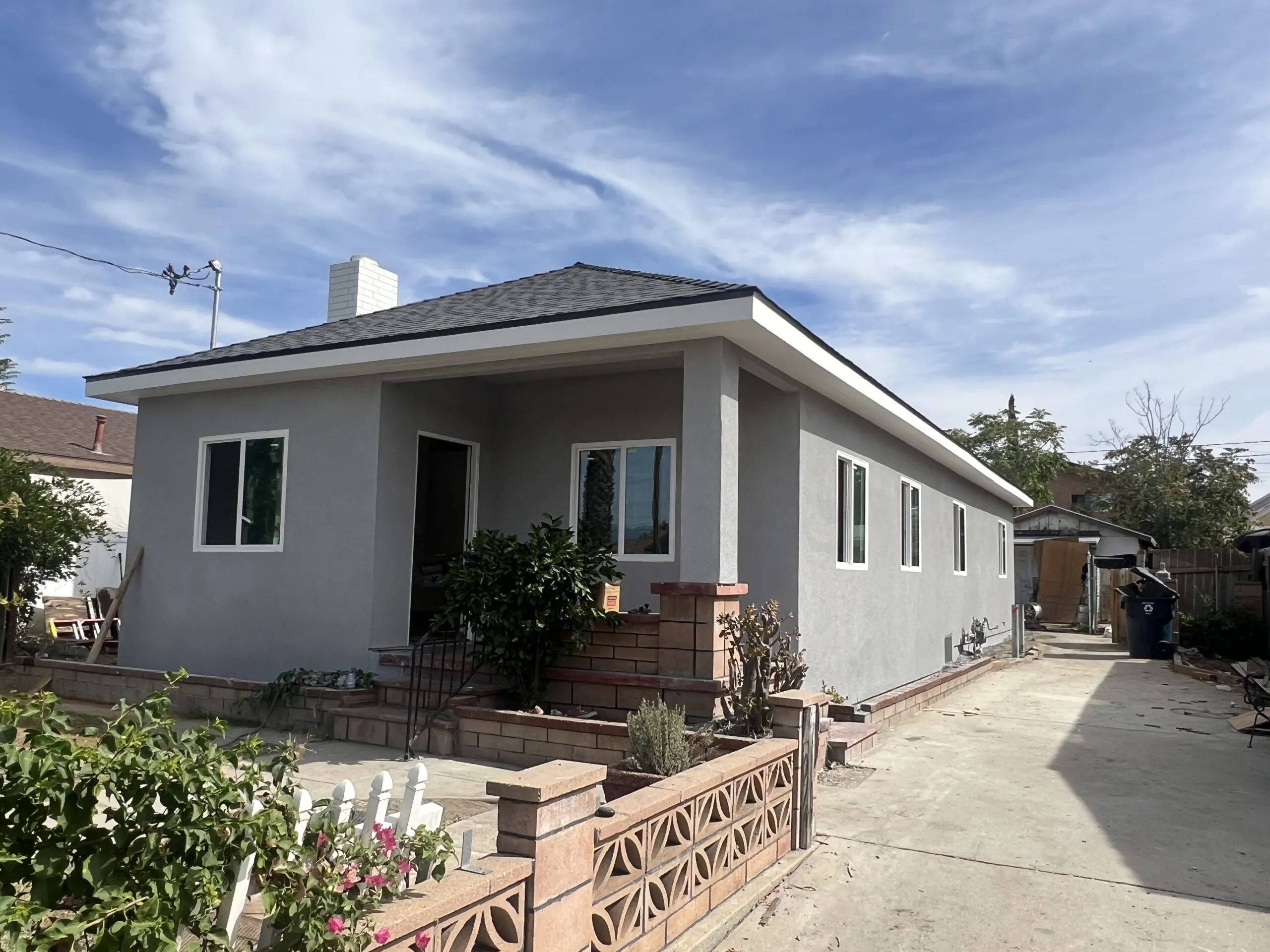

Property tax after remodel California questions often appear after a homeowner receives a permit, finishes an addition, or sees a supplemental assessment notice. Many California homeowners hear that any remodel will reset their Prop 13 assessment. That is not generally how the system works.
California usually protects the existing base-year value of your property. The county assessor may reassess the portion that qualifies as new construction, while the existing land and improvements keep their established Prop 13 value. The result depends on the actual scope, not simply the amount on your contractor’s invoice.
This guide explains how property tax after remodel California rules generally apply to homeowners in Ontario, Rancho Cucamonga, and the Inland Empire. If you are planning a kitchen, addition, ADU, or whole-home renovation, start with a clearly defined scope. You can also review our Rancho Cucamonga home remodeling services before speaking with your assessor or tax professional.
Property Tax After Remodel California Starts With the Scope
California Proposition 13 generally limits annual increases in a property’s factored base-year value to no more than 2 percent. The San Bernardino County Assessor explains that a property can be reappraised after a change of ownership or when new construction occurs. The county then establishes a new base-year value for the qualifying event.
Read the San Bernardino County Proposition 13 explanation and the California State Board of Equalization’s new construction guidance before assuming your entire home will be reassessed.
The key question is not whether your project feels major to your family. The key question is whether the work adds a new improvement, creates a different use, or turns an existing improvement into the substantial equivalent of a new one.
A project can include both protected maintenance and assessable new construction. For example, a remodel might replace worn flooring throughout the house while also adding a new bedroom. The flooring typically falls under normal maintenance. The new bedroom may receive its own assessment.
How Prop 13 Treats New Construction
The California BOE describes new construction as an addition to land or improvements, including certain alterations that qualify as major rehabilitation or convert property to a different use. The BOE defines major rehabilitation as work that makes an improvement or fixture substantially equivalent to a new improvement or fixture.
This definition matters because California does not use one universal dollar threshold for remodel reassessment. A $150,000 project does not automatically receive one tax result, and a $40,000 project does not automatically receive another. The physical scope, use, permits, plans, and completed condition matter more than the contract price alone.
Common scope factors include:
- Adding square footage, bedrooms, bathrooms, or another enclosed area
- Building a new garage, pool, detached structure, or ADU
- Converting a garage or other space into living area
- Changing a structure from one permitted use to another
- Rebuilding or substantially replacing an improvement
- Performing a major rehabilitation that creates the substantial equivalent of a new improvement
The BOE also explains that normal maintenance and repairs generally do not qualify as new construction. San Bernardino County gives painting and roof repairs as examples of work that does not cause a reappraisal.
Property Tax After Remodel California Does Not Usually Reset the Whole Home
A common homeowner fear is that one permitted remodel will erase years of Prop 13 protection. In many cases, the assessor adds the value of the qualifying new construction to the existing roll instead of reappraising the entire property.
San Bernardino County provides a clear example. If a homeowner adds a bedroom, the assessor generally assesses the new bedroom and adds that value to the current assessment. The county says the same principle can apply to a pool, second garage, or other major improvement. The assessor does not automatically reappraise the existing home that Prop 13 already protects. See the county’s real property FAQ for the detailed explanation.
The BOE describes the process through a supplemental assessment. The assessor determines the current market value of the newly constructed portion, subtracts the prior assessed value assigned to that portion, and enrolls the difference. The supplemental bill covers the period beginning on the first day of the month after the event through the end of the fiscal year. Depending on the completion date, the county may issue one or two supplemental bills.
A supplemental bill does not necessarily mean the assessor reassessed every room, wall, and piece of land. Ask the assessor to identify the specific improvement and valuation basis if you receive a notice.
Cosmetic Work Versus Structural Work
Homeowners often ask whether a kitchen or bathroom remodel will increase property taxes. The answer depends on how the project changes the property.
| Project scope | General treatment | What to verify |
|---|---|---|
| Interior paint and patching | Usually normal maintenance | Confirm that no structural work occurs |
| Roof repair or replacement | Usually normal maintenance | Confirm whether the work restores or substantially rebuilds the roof |
| Flooring and carpet replacement | Usually maintenance | Separate replacement from new structural work |
| Cabinet, countertop, and fixture updates | Often remodeling or maintenance | Ask whether the project changes layout, use, or building systems |
| Kitchen or bath reconfiguration | May include assessable work | Review plumbing, electrical, structural, and permitted scope |
| New bedroom or room addition | New construction component likely | Confirm the added square footage and completion date |
| Garage conversion | May qualify as new construction or change of use | Confirm legal use, permits, and assessor treatment |
| New pool, detached garage, or ADU | New improvement may be assessable | Ask how the county will value the improvement |
Do not label structural work as cosmetic work to avoid a tax conversation. Use accurate descriptions in your plans, permit applications, invoices, and closeout documents. Clear records protect you if the assessor requests information later.
Major Renovation Tax California Budget Planning
Major renovation tax California planning requires more than multiplying your construction budget by the local tax rate. The assessor may value completed new construction at fair market value, and that value may differ from your final invoice. San Bernardino County states that the assessor can use comparable sales to determine fair market value for residential improvements.
Treat the contractor’s proposal and the assessor’s valuation as separate decisions. Your proposal describes the work you plan to build. The assessor determines the taxable value under California property-tax rules.
For budgeting purposes, create a tax reserve when your project includes:
- New square footage
- A new ADU or detached living unit
- A garage or basement conversion
- A new pool or major site improvement
- Structural rebuilding after significant damage
- A major change in the property’s permitted use
Your tax professional can help estimate a range using your current assessed value, local tax rate, expected completion date, and likely assessable component. The San Bernardino County Assessor can explain the assessment process, but the office does not provide personalized tax planning.
ADU Property Tax Reassessment in California
An ADU creates a separate living area with sleeping, cooking, eating, and sanitation facilities. The California BOE’s current ADU guidance references the state definition of an attached or detached unit located on the same parcel as a primary residence. The City of Ontario also describes the requirements for an ADU and JADU in its official ADU information.
Because an ADU adds a previously absent improvement, homeowners should expect an assessor review. That review does not automatically mean a full reset of the primary home’s base-year value. The county may establish a value for the new ADU or other qualifying work while keeping the existing property value under Prop 13.
An attached ADU, detached ADU, garage conversion, and JADU can present different facts. The construction date, existing structure, permitted use, ownership history, and applicable exclusions can affect the result. Ask the San Bernardino County Assessor for written guidance before finalizing your plans.
If you are considering an ADU in the Inland Empire, review our ADU construction services and keep the ADU scope separate from unrelated maintenance work.
How San Bernardino County Finds New Construction
The BOE says assessors may identify new construction through building permits, inspection and approval documents, business property statements, aerial imagery, satellite imagery, and field inspections. That means a homeowner should assume that permitted work can become visible through ordinary government records.
Ontario’s building permit FAQs explain that permitted work receives inspections for items such as electrical, ventilation, and other building systems. Permit and inspection records help the city confirm code compliance, and assessors may use government records when reviewing improvements.
San Bernardino County does not publish a simple “remodel cost above this amount” reassessment cutoff. Instead, the county and BOE focus on whether the project created new construction, added an improvement, changed use, or completed a major rehabilitation. That scope-based approach is the most reliable way to evaluate property tax after remodel California questions.
How to Ask the Assessor Before Work Starts
Prepare a short written packet before contacting the assessor. Include:
- The property address and assessor’s parcel number
- Existing square footage and room count
- Proposed square footage and room count
- A room-by-room scope of work
- Site plans and floor plans
- Permit descriptions and estimated completion dates
- Separate descriptions for additions, ADUs, conversions, and maintenance
- Photos showing the existing condition
Ask focused questions:
- Which parts of this scope appear to qualify as new construction?
- Will the county assess only the new improvement or review another portion?
- When will the supplemental assessment begin?
- Could the project generate one or two supplemental bills?
- What documents should I retain after final inspection?
- Does the proposed ADU or conversion require a separate valuation review?
Save the assessor’s written response with your project documents. Tax rules can change, and project details can change during construction.
Tax Aware Scope Planning for an Ontario Remodel
Tax-aware planning does not mean avoiding valuable improvements. It means understanding which parts of the project may affect your future assessment.
Start by separating the scope into three categories:
- Maintenance and repair
- Renovation that changes finishes or systems
- New construction or change of use
For example, a kitchen project might include cabinet replacement, a new electrical panel, a relocated wall, and a new addition. Each item deserves its own description. A clear schedule helps your contractor, designer, lender, insurer, and assessor understand the project.
If your project includes an addition, review our home additions service early. For a kitchen-focused project, see our kitchen remodeling services in Rancho Cucamonga.
WM Construction can help you organize a practical construction scope, identify questions for the assessor, and coordinate the appropriate licensed professionals. We do not provide tax or legal advice, and you should confirm the final treatment with the San Bernardino County Assessor and your tax professional.
Book a Consult for Tax Aware Scope Planning
A well-documented scope gives you better control over construction decisions and future questions about property tax after remodel California projects. WM Construction has served Ontario, Rancho Cucamonga, and Inland Empire homeowners since 2014. We are a licensed residential remodeler, CSLB #1104199, and we provide clear proposals, 3D design before payment, and regular project updates.
Book a consultation through our contact page or call 951-310-3458. Bring your plans, permit information, and questions about additions, ADUs, kitchens, bathrooms, or whole-home remodeling.
Frequently Asked Questions
Does every remodel trigger property tax after remodel California reassessment
No. Normal maintenance such as painting and roof repairs generally does not trigger a new assessment. Additions, new improvements, changes in use, and major rehabilitation may qualify as new construction. The assessor decides based on the actual scope.
Will a kitchen or bathroom remodel raise property taxes
A cosmetic update may not create a new assessment. A project that adds square footage, changes use, relocates structural walls, or performs major rehabilitation may create an assessable component. Ask the assessor before work begins.
Does an ADU trigger reassessment
An ADU adds a new or converted living improvement, so the assessor may review it. The county may assess the ADU or qualifying new work without resetting the protected value of the existing home. Confirm the treatment for your parcel and project.
Does a room addition trigger reassessment
A room addition commonly qualifies as new construction. San Bernardino County explains that the assessor generally assesses the new bedroom or addition and adds it to the current roll instead of reappraising the entire existing home.
Can Prop 13 protect my remodeled home
Prop 13 generally protects the existing base-year value from annual increases above the statutory limit. It does not prevent the assessor from establishing a new base-year value for qualifying new construction.
Who decides whether remodeling work counts as new construction
The county assessor makes the property-tax assessment decision. Contractors can describe the scope accurately, but they cannot issue a binding tax ruling. Contact the San Bernardino County Assessor for parcel-specific guidance.
Educational Disclaimer
This article provides general educational information for California homeowners. It is not tax, legal, appraisal, or financial advice. Property-tax treatment depends on your ownership history, permits, project scope, completion date, and county records. Confirm your situation with the San Bernardino County Assessor and a qualified tax professional.