
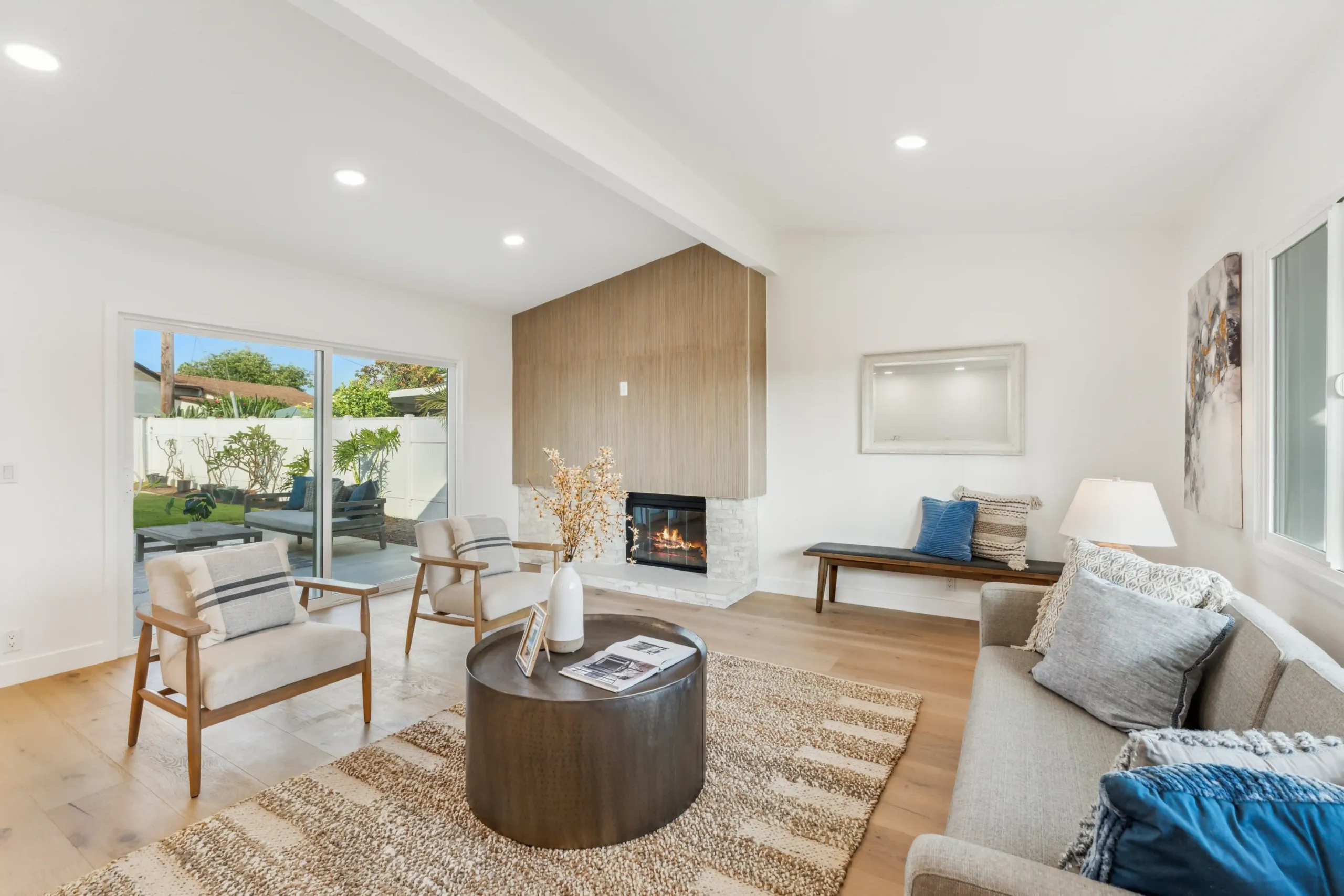
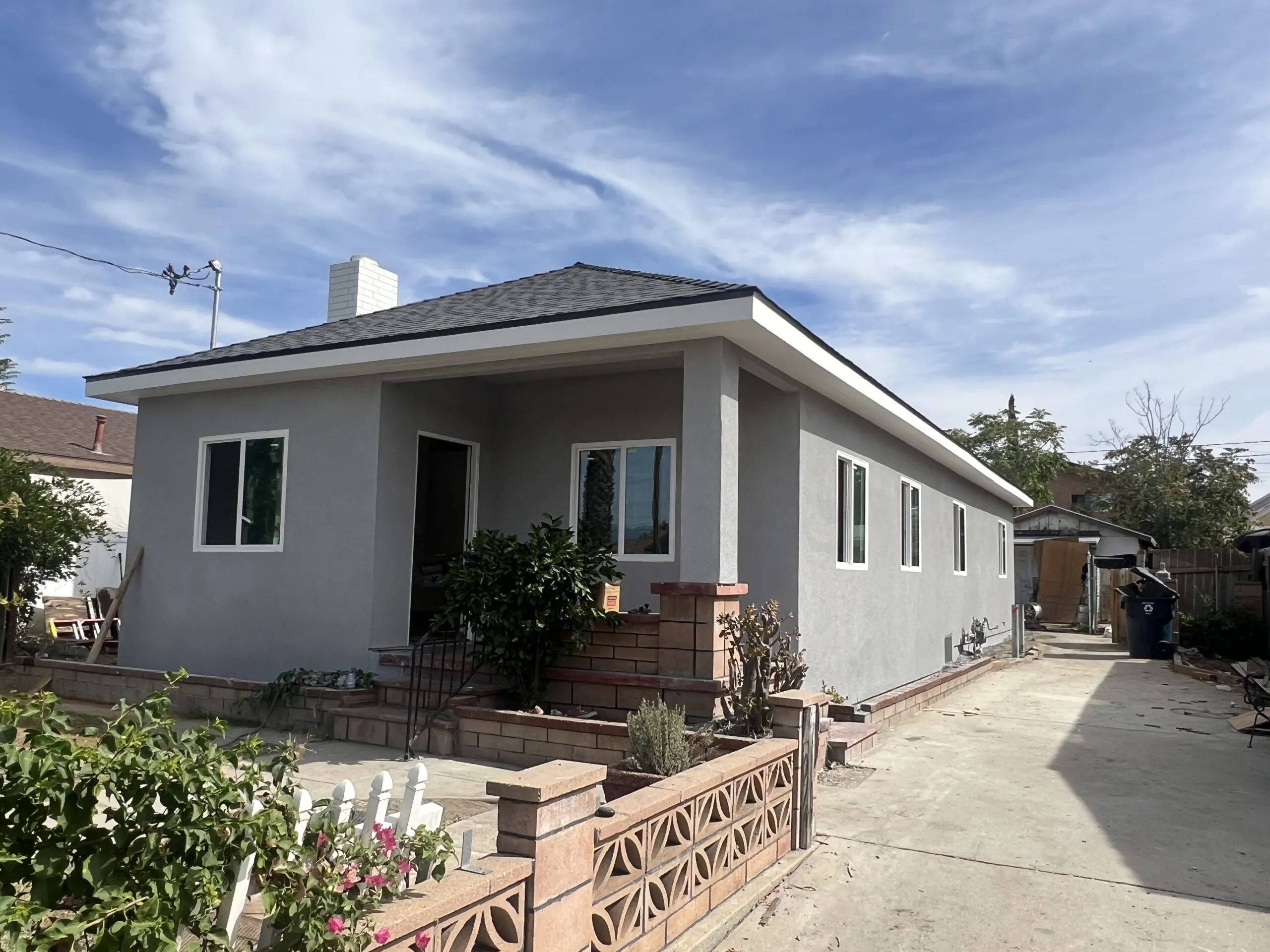

A contractor can have a polished website, a competitive price, and attractive project photos and still be difficult to communicate with once construction begins. That is why one of the smartest things an Inland Empire homeowner can do before signing is test how the contractor communicates while there is still no contract pressure. The best questions to ask contractor before hiring are not only about price — they reveal whether the contractor explains scope clearly, documents changes, gives realistic timelines, answers permit questions, provides proof of licensing, and tells you exactly how updates will work after demolition starts.
California’s Contractors State License Board calls a written agreement one of the most important communication tools between a homeowner and a licensed contractor. Use the following eight-question communication check before you hire anyone for a kitchen, bathroom, ADU, room addition, or full remodel in Rancho Cucamonga, Ontario, or the Inland Empire.
Question 1 — Who Is My Main Contact After Signing?
This is one of the most revealing contractor interview questions. Ask who will answer questions after signing, who will be on site, and who has authority to make scheduling or scope decisions.
A strong answer should identify a communication path instead of saying, “Just call the office.” You should know whether updates come from a project manager, superintendent, owner, office coordinator, or another named role. Ask what happens if that person is unavailable.
Then test the answer: send one normal follow-up question after the meeting. Notice whether the contractor replies clearly, answers what you asked, and follows through when promised. Communication before the sale often previews communication after the sale. For a broader framework, see WM Construction’s guide on how to choose a remodeling contractor in Rancho Cucamonga.
Question 2 — How Often and How Will You Update Me?
Do not accept “we keep you posted” as the entire answer. Ask for the frequency and format. Will you receive weekly updates? Photos? Videos? A schedule for the coming week? Notice when a selection or decision is needed?
A useful update should tell you what was completed, what is next, whether the schedule changed, and whether the contractor needs a decision from you.
WM Construction states that its process includes weekly photo and video updates. You can see how that fits into the company’s broader home renovation project management approach in Rancho Cucamonga.
Question 3 — What Is Included and Excluded in the Price?
Ask the contractor to walk through the scope line by line and identify exclusions, allowances, owner-supplied materials, permit responsibility, cleanup, and likely extras.
California CSLB guidance says a home-improvement contract should clearly describe the work, materials, price, payment schedule, permits, and completion timing. If something important was promised verbally, CSLB recommends putting it in writing.
Before signing, compare your proposal with WM Construction’s guide to what should be in a home remodeling contract. A detailed contract is not a substitute for communication; it is the written record of good communication.
Question 4 — How Do You Handle Change Orders?
Every remodel can change. The real test is what happens next.
Ask whether the contractor uses written change orders before changed work begins, how pricing is presented, who must approve the change, and how the schedule impact is documented. California CSLB guidance says changes or additions to a home-improvement contract should be put in writing, helping reduce later disputes.
If the answer is, “We usually work it out at the end,” treat that as a warning. A good contractor communication check should show you how money, scope, and schedule changes are documented before they become arguments. Locking scope into a fixed-price quote can also reduce the number of surprise change orders in the first place.
Question 5 — Who Pulls Permits and Reports Inspections?
Permit responsibility should never be vague. Ask whether the contractor will obtain required permits, whether permit costs are included or separate, and how inspection results will be communicated.
CSLB’s homeowner checklist specifically asks whether the contract requires the contractor to get needed permits before work starts and whether permit fees are included. For Inland Empire homeowners, this question matters especially for structural changes, additions, ADUs, and many electrical, plumbing, and mechanical scopes.
If you are planning larger work, review the San Bernardino County remodeling permit requirements before comparing bids. For an ADU in Rancho, you can also review the Rancho Cucamonga ADU regulations guide.
Question 6 — What Happens If the Schedule Slips?
Ask the contractor how delays are reported, who updates the schedule, and how far in advance you will know about a material delay, inspection issue, or trade rescheduling. Do not demand an impossible promise that nothing will ever change. Instead, look for a process that makes changes visible early.
For a kitchen project, compare the answer with WM Construction’s kitchen remodeling timeline guide. A realistic contractor should be able to explain both the normal sequence and the conditions that can move it.
Question 7 — Can You Prove License, Work, and References?
CSLB recommends checking the contractor’s license status, getting at least three local references, and reviewing recent similar work.
Ask for the exact business name and license number you should verify. Make sure the business on the contract matches the company you researched. Ask for recent projects similar to yours and, where available, references who can tell you how the contractor handled communication, changes, schedule problems, and closeout — not only whether the finished kitchen looked good.
You can also compare claims with a contractor’s actual project gallery and company background.
Question 8 — How Do You Close Out Punch-List Items?
The final communication test is about the last 5% of the work. Ask what happens at the final walkthrough, how punch-list items are documented, who schedules corrections, what closeout documents you receive, and when the project is treated as complete.
The closeout process should be as clear as the sales process. Ask about final inspections, warranties, lien releases, and the written process for remaining contracted items.
This question also reveals how a company defines satisfaction. WM Construction’s stated process includes a final walkthrough and a guarantee that it will not treat the project as finished until the homeowner says the agreed work is right.
Score the 8-Question Contractor Communication Check
Once you have asked these questions to ask a contractor before hiring, score how each company answered.
| Score | What It Means |
|---|---|
| 2 points | Clear, specific answer supported by a written process, document, or verifiable proof |
| 1 point | Reasonable answer, but vague on who, when, or how |
| 0 points | Avoids the question, becomes defensive, contradicts the proposal, or relies only on verbal promises |
The maximum score is 16. It is not a legal rating; it simply helps you compare how clearly each contractor communicates.
If one company scores 14 and another scores 7, do not ignore the difference because the second bid is cheaper. Communication failures can later become scope disputes, missed selections, unexpected change orders, schedule confusion, or unfinished closeout items.
Three Follow-Up Checks Before Hiring a Contractor
- Verify the license yourself. Use the official CSLB contractor license lookup; do not rely only on a number printed on a proposal.
- Compare at least three written bids. CSLB recommends comparing identical plans, specifications, and scope rather than automatically choosing the lowest price.
- Read the contract before paying. Confirm scope, materials, payment schedule, permits, approximate start/completion dates, change-order rules, and cleanup responsibilities.
These are the hiring contractor questions that turn a friendly sales meeting into a useful risk check. If you want a deeper vetting framework, review what to check before hiring a renovation company.
How WM Construction Answers the Communication Test
With over 10 years of experience, we’ve been remodeling homes in Rancho Cucamonga and Ontario since 2014 — more than a decade of real work, one home at a time.
Customer satisfaction is our #1 priority. Every project we finish comes with a signed client form, and we’ve completed 127+ home remodels since 2014. We get the job done right.
WM Construction is licensed by the California State License Board — License 1104199. You can check it online.
WM Construction’s current site states that the company offers:
- A free 3D Design before you pay a dime
- Weekly photo and video updates — so you always know what’s happening
- A written contract — no hidden changes, no surprises
- A guarantee: we won’t finish until you say you’re happy
The site also describes a process that starts with a free consultation, moves into the 3D Design, then a written contract, construction updates, a final walkthrough, and a signed completion form.
Review WM Construction’s home remodeling services or see examples in the project gallery before your interview.
Questions to Ask a Contractor Before Hiring FAQ
I want to remodel my kitchen — what’s the first step?
We come to your home for a free meeting. We review what you want, measure the space, discuss the 3D Design, and build it exactly how you want it according to the approved scope. You can also review the Rancho Cucamonga kitchen remodeling process.
Can you help me build an ADU on my property?
Yes. We specialize in ADUs in Rancho Cucamonga and Ontario — from the first sketch to the final inspection. We help coordinate design, permit requirements, construction, and closeout.
How long does a full home remodel take?
Most projects take 8 to 12 weeks, depending on scope, permits, inspections, material selections, and site conditions. You won’t be left wondering what’s happening because the process includes regular project updates.
What makes you different from other contractors?
We don’t disappear after you pay. WM Construction uses a written contract, free 3D Design, and weekly photo and video updates. We don’t say “it’s done” until you say it’s right.
I’m scared to pay upfront — what if you disappear?
We start with a written contract — every detail is there. WM Construction’s current website lists California State License Board License 1104199, and the process includes documented progress updates and a final walkthrough. We won’t finish the job until you’re happy with the agreed work.
Ask the Right Questions Before Hiring a Contractor
The smartest questions to ask contractor before hiring are designed to reveal behavior, not produce rehearsed yes-or-no answers. Ask who communicates with you, how updates work, what the quote includes, how changes are documented, who handles permits, what happens when the schedule changes, what proof you can verify, and how the contractor closes punch-list items.
Then compare the answers in writing. A contractor who can explain the process clearly before signing is easier to evaluate than one who asks you to trust vague promises.
Interview WM Construction — free consult. Bring these eight questions. Call +1 (909) 906-6166 or schedule a free consultation with WM Construction for a home remodeling, kitchen, bathroom, ADU, or addition project in Rancho Cucamonga, Ontario, or the Inland Empire.