



A new shower, fresh tile, and upgraded fixtures can transform an older Ontario home. But when the bathroom wall opens, homeowners often find aging galvanized water pipes behind it. That discovery creates an important question before the new finishes go in: should you replace the pipes now or leave them in place?
A galvanized pipe replacement remodel should never rely on fear or a blanket rule. Some existing lines may still function adequately, while others show corrosion, restricted flow, or a history of leaks that makes replacement the smarter investment. The right answer depends on the pipe condition, the remodeling scope, access behind the walls, and the recommendation of a qualified plumbing professional.
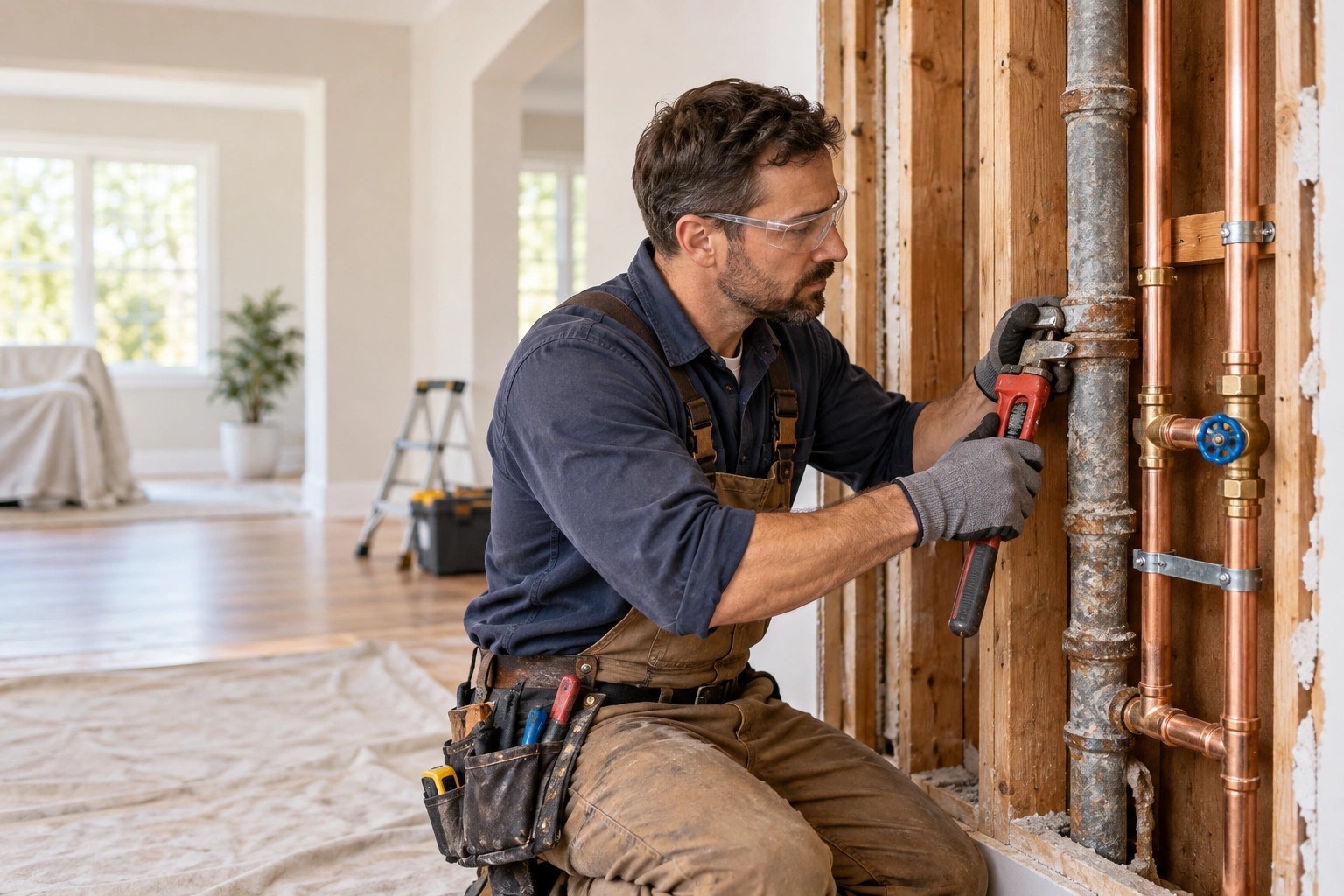
Galvanized pipes are iron or steel pipes with a zinc coating intended to slow corrosion. Once that coating wears away, the iron can corrode, accumulate deposits, restrict flow, and eventually leak. East Bay Municipal Utility District explains that old corroded galvanized pipes can contribute to low pressure and discolored water.
The Galvanized Pipe Replacement Remodel Decision
Do not assume every galvanized line must come out. Also, do not cover old pipe behind expensive tile without understanding its condition.
A sensible galvanized pipe replacement remodel starts with an inspection of the accessible supply lines and a conversation about what the remodel will expose. California’s C-36 plumbing classification covers water piping and its maintenance and replacement, so use a properly licensed plumbing professional for the plumbing scope. Review the CSLB C-36 classification here.
| What the assessment finds | Usually worth discussing | Why it matters |
|---|---|---|
| Sound-looking pipe with no leak history and no flow concerns | Leave it in place and document the condition | A remodel does not require unnecessary work |
| Visible corrosion, mineral buildup, weak flow, or old repairs | Replace affected runs while the wall is open | Access is easier before drywall, waterproofing, and tile |
| Several leaks, widespread low pressure, or heavily corroded lines | Price a broader repipe | A small repair may leave other weak sections in service |
| Pipe behind a new shower wall or major wet-wall renovation | Compare replacement now with future access costs | Future repairs can damage newly completed finishes |
The goal is not to sell a full repipe automatically. The goal is to avoid spending on a beautiful bathroom today, then cutting into it months later because the plumbing decision was skipped.
What to Check Before a Galvanized Pipe Replacement Remodel
Ask for more than a quick look at one exposed section. An inspection should connect what the plumber can see with the condition you experience at fixtures throughout the home.
Check the Lines You Can See
Visible pipe near a water heater, under a sink, in a utility area, or inside an opened bathroom wall can provide useful clues. Look for exterior rust, corrosion at threaded joints, moisture marks, or white mineral deposits. These signs do not prove that every concealed pipe has failed, but they justify a closer review.
A contractor should also identify where the lines serve the home. Replacing a short run to a shower is different from replacing a shared branch that supplies multiple bathrooms or a kitchen.
Check How the Water Performs
Pay attention to changes that affect daily use:
- Low pressure at more than one fixture
- A shower that weakens when another fixture runs
- Rust-colored or discolored water that keeps returning
- Recurring leaks at older fittings or shutoffs
- Previous spot repairs on several different sections
- A major difference between hot- and cold-water flow
These galvanized pipe warning signs need a diagnosis, not a guess. Low pressure can also come from a fixture, valve, water heater, or another plumbing issue. A qualified plumber should locate the actual cause before recommending replacement.
Check the Remodeling Scope
If demolition exposes the shower valve wall, vanity wall, or a kitchen wall, this is the moment to ask whether aging supply lines sit in the project area. The answer may be different for a simple vanity replacement than for a full bathroom remodeling project with a new shower layout and waterproofing system.
Why a Repipe During Bathroom Remodel Can Protect New Finishes
A repipe during bathroom remodel is not always necessary, but it often makes practical sense when old galvanized lines sit behind the work area.
Before tile goes up, the project already includes controlled demolition, access to framing, and a sequence for plumbing, inspection, backer board, waterproofing, and finish installation. After tile goes up, a leak investigation can require removing a finished wall, opening waterproofed areas, replacing tile, and trying to match materials that may no longer be available.
| Replace before finishes | Wait until a later failure |
|---|---|
| Uses wall access already created for the remodel | Requires new demolition after the room is complete |
| Lets plumbing work happen before waterproofing and tile | Can disrupt tile, paint, cabinetry, or flooring |
| Allows testing and required inspections before concealment | May start as an urgent leak repair |
| Makes costs easier to define in one project scope | Can add restoration costs beyond the plumbing repair |
This is why a galvanized pipe replacement remodel should be discussed before final material selections and installation dates. The choice may change the sequence, the estimate, and the location of access panels or valves.
What Drives Galvanized to PEX Repipe Cost
There is no reliable one-price answer for galvanized to PEX repipe cost. A small accessible replacement and a whole-home repipe are fundamentally different projects.
A complete quote should explain:
- Whether the work replaces one branch, several bathroom lines, or the full supply system
- The proposed pipe routing and how many walls or ceilings need access
- Whether the home has one story or multiple stories
- The number of fixtures, bathrooms, and water connections involved
- Permit, inspection, testing, and reconnecting requirements
- Drywall repair, texture, paint, tile repair, and finish restoration
- Material choices and who holds responsibility for the plumbing work
Do not compare a low plumbing number with a full remodel-ready number unless both quotes include the same restoration work. One proposal may include only pipe installation, while another includes access, testing, patching, and coordination with the bathroom rebuild.
A fair galvanized to PEX repipe cost conversation looks at the full project outcome. It asks what will be opened, what will be restored, and what old pipe remains after the work ends.
Choose Between Leaving Partial Replacement and a Broader Repipe
Most homeowners have three realistic paths.
Leave the Existing Lines
Leaving galvanized lines can make sense when the plumbing professional finds no active concern, the remodel does not expose those runs, and the homeowner understands the remaining system condition. Document the findings with photos and keep them with your remodeling records.
Replace the Lines in the Opened Area
A targeted replacement can work when the concern is limited and the remodel gives direct access to the affected lines. Ask whether the new section will connect to sound existing pipe and whether the remaining branch has a history of pressure or leak problems.
Plan a Larger Repipe
A broader repipe deserves consideration when several areas show recurring leaks, corrosion, weak pressure, or a pattern of patch repairs. It can also be efficient when a large renovation already opens multiple wet walls, such as a bathroom remodel combined with kitchen remodeling or a home addition.
PEX may be one option, but it is not an automatic answer for every home. Ask the licensed plumber to explain material choices, routing, fittings, shutoff locations, and the testing plan for your specific scope.
Permits and Inspections in Ontario
Confirm permit requirements before work begins. The City of Ontario states that permit-required construction is subject to inspection and specifically lists plumbing among common inspection items. It also notes that work should not continue past a required inspection point without approval. Read the City of Ontario building permit FAQs.
Your written agreement should clarify:
- Whether the plumbing scope needs a permit
- Who pulls the permit
- Which contractor holds responsibility for the plumbing work
- When pressure testing and inspections occur
- Whether walls stay open until approval
- Who restores drywall, waterproofing, tile, and paint afterward
Do not rely on a verbal promise that “permits are handled.” Get the sequence and responsibility in writing.
Plan the Work in the Right Order
A well-managed bathroom project protects the plumbing decision before it protects the finish materials.
- Review the remodel layout and identify wet walls.
- Inspect accessible existing supply lines and document findings.
- Decide whether to leave, partially replace, or repipe based on condition and access.
- Complete plumbing work with the appropriate licensed professional.
- Test the work and complete required inspections before walls close.
- Move to backer board, waterproofing, tile, cabinetry, fixtures, and final finishes.
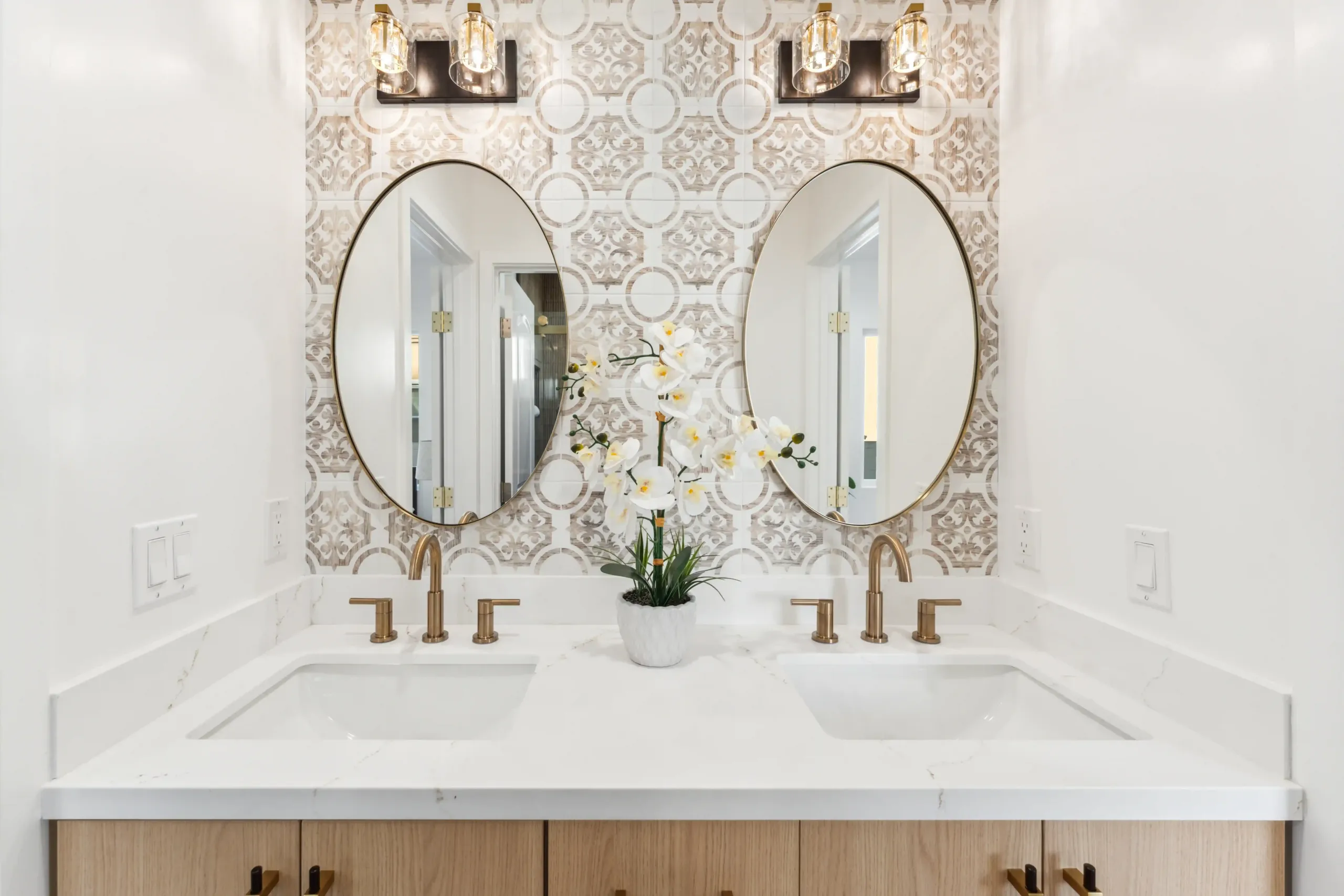
This sequence is particularly important in showers. Once a waterproofing system and tile installation are complete, access becomes more expensive and disruptive. You can see how careful planning supports finished spaces in the WM Construction remodeling gallery.
Frequently Asked Questions
Can I leave galvanized pipes behind new shower tile
You can, if a qualified plumbing assessment supports that decision and the remodel does not expose a concern. However, if the lines show corrosion, recurring leaks, or restricted flow, replacing them before tile installation can reduce the risk of damaging the new bathroom later.
Does every bathroom remodel need a full repipe
No. A bathroom remodel may require only targeted work, especially when the rest of the home has sound plumbing. A full repipe becomes more relevant when multiple areas show symptoms or when the renovation opens several wet walls.
What are common galvanized pipe warning signs
Common galvanized pipe warning signs include recurring leaks, rust or mineral buildup around fittings, low water pressure, discolored water, and a pattern of past repairs. These signs require a plumbing evaluation because several other conditions can produce similar symptoms.
Is a galvanized pipe replacement remodel worth it
It can be worth it when the existing pipe sits behind an expensive new finish and the assessment identifies a credible risk. The decision should compare replacement access during demolition with the possible cost and disruption of opening the finished room later.
What affects galvanized to PEX repipe cost
The main factors include the replacement scope, home layout, access points, fixture count, permit and inspection requirements, pipe routing, and restoration of walls and finishes. Request an itemized scope so you can compare quotes accurately.
Can WM Construction coordinate the remodeling work after plumbing assessment
Yes. WM Construction can help plan the remodel sequence around the plumbing scope, then coordinate the construction work that follows, including walls, waterproofing, tile, cabinetry, and finishes. Plumbing work should remain with the appropriately licensed professional.
Plan the Plumbing Before the Pretty Finishes
WM Construction has served homeowners in Ontario, Rancho Cucamonga, and nearby Inland Empire communities since 2014. As a licensed residential remodeling contractor, CSLB #1104199, the team approaches bathrooms, kitchens, additions, and ADUs as coordinated projects rather than disconnected tasks.
Before new tile or drywall closes a wall, ask the right question about the pipes behind it. A thoughtful galvanized pipe replacement remodel can help protect the investment you are about to make in the finished space.
Book Plumbing Assessment
Planning a bathroom or kitchen remodel in Ontario or the Inland Empire? Contact WM Construction to discuss your project and arrange a plumbing assessment before the finish work begins. Call 951-310-3458.